A220 Newcomer: Ethiopian Eyes Airbus' Smallest Narrowbody For Regional Dominance
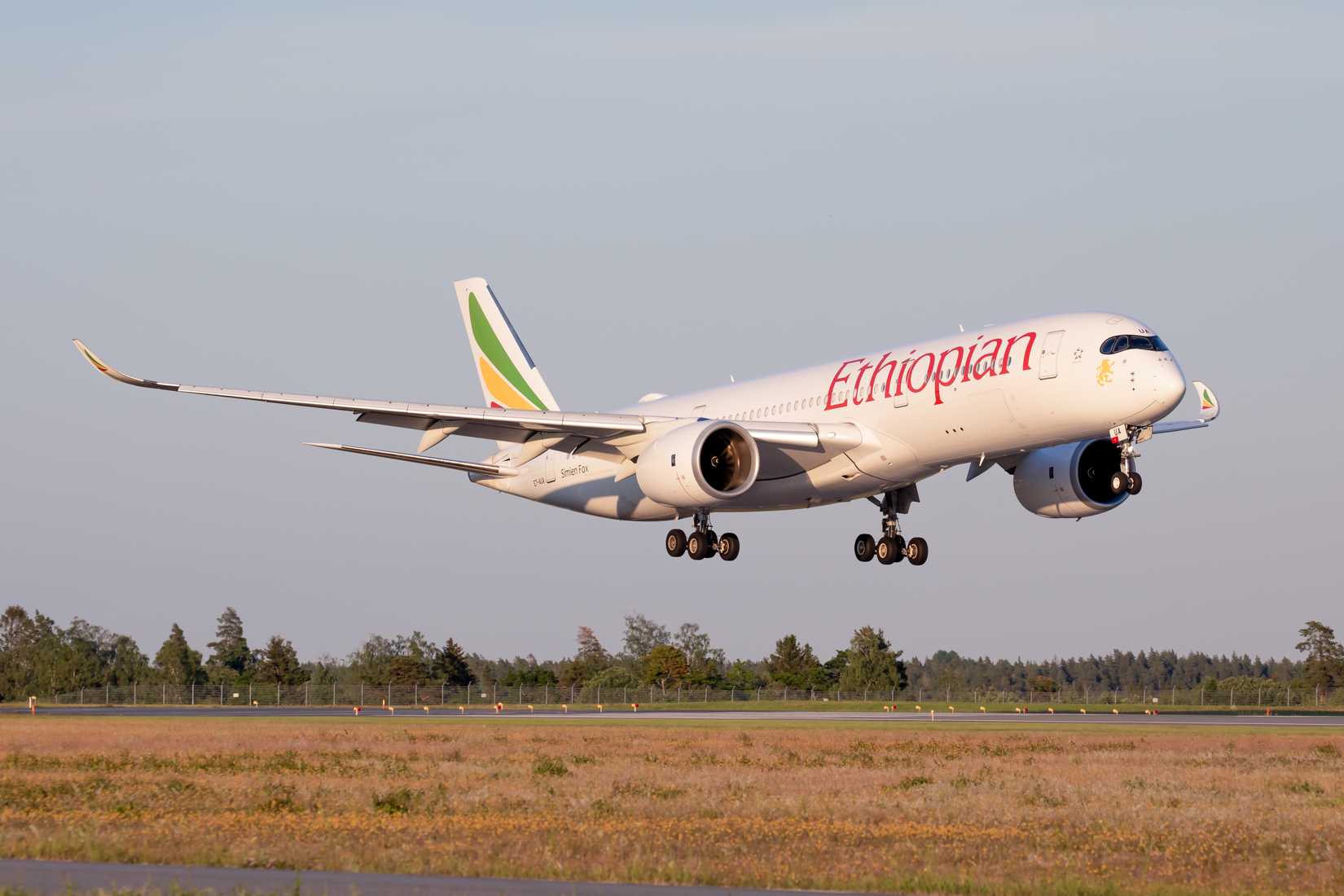
Ethiopian Airlines, Africa's largest carrier by fleet size and network reach, is engaged in early-stage discussions with Airbus for an order of approximately 20 A220 regional jets, according to Bloomberg reporting. The potential acquisition would mark Ethiopian's entry into the A220 program as a new customer and would position it among a small group of African operators flying the type. The airline currently relies on the Boeing 737 family — comprising the 737-700, 737-800, and 737 MAX 8 — for short-haul narrowbody operations, supplemented by an aging de Havilland Dash 8-400 turboprop fleet serving thinner domestic and regional routes. An A220 order would introduce a third narrowbody platform into the fleet, adding maintenance and training complexity, but the aircraft's range and capacity profile suggest a well-defined strategic role that neither the 737 nor the turboprop can efficiently fill.
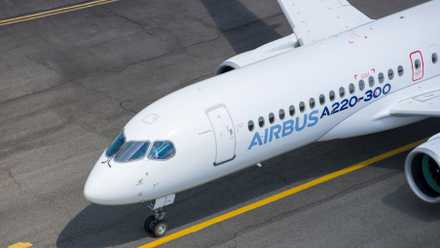
The operational case for the A220 rests on a gap in Ethiopian's current capacity matrix. The A220-100 seats 100–120 passengers with a range of approximately 3,600 nm, while the A220-300 stretches to 120–160 seats at 3,450 nm — figures that overlap with the lower end of the 737 family but with significantly better fuel economics at reduced load factors. Ethiopian's 737-700, configured at 118 seats, struggles to generate acceptable unit costs on routes where load factors are structurally low, and the Dash 8-400's range and speed are insufficient for many pan-African sectors. The A220's Pratt & Whitney PW1500G geared turbofan engines deliver roughly 20% better fuel burn per seat than previous-generation narrowbodies, a meaningful advantage on routes where yields are thin and fuel represents a disproportionate share of operating costs. For route planners, this translates to profitable frequencies on city pairs that currently cannot support 737 metal but generate enough demand to warrant more than a turboprop operation.
The potential A220 order sits within a notably aggressive broader fleet and infrastructure investment cycle at Ethiopian. The carrier has recently exercised options for additional Boeing 787-9 Dreamliners and is reportedly also in exploratory discussions with Airbus regarding further A350 widebody acquisitions — a dual-OEM widebody approach that would add considerable long-haul flexibility while introducing its own fleet management complexity. Simultaneously, Ethiopian is a major equity stakeholder in the development of a new Addis Ababa mega-hub airport, contributing 30% of project funding toward a facility designed to eventually process 110 million passengers annually by some point beyond its 2030 opening. The current Bole International Airport is capacity-constrained at approximately 25 million annual passengers, meaning the airline's long-range network ambitions are physically gated by infrastructure until the new hub comes online.
For aviation operators and pilots tracking African aviation development, Ethiopian's trajectory reflects a deliberate strategy to replicate the hub-and-spoke super-connector model executed by Gulf carriers over the prior two decades. By positioning Addis Ababa as a transfer hub between Europe, Asia, and intra-African destinations, Ethiopian requires a tiered fleet architecture: widebodies for intercontinental spokes, 737s for mid-density regional routes, and a right-sized narrowbody — potentially the A220 — to feed the hub from lower-density African markets. This model demands precise capacity management across aircraft types, and the A220's economics make it a credible tool for stimulating demand on routes that have historically been underserved or operated at a loss. Pilots and crew planners at Ethiopian would face expanded type-rating requirements across a more complex fleet, though the operational benefits of purpose-matching aircraft to route demand could support the airline's cost structure over the medium term.
The broader significance of Ethiopian's reported A220 interest extends to the competitive landscape for aircraft manufacturers in the African market, where Boeing has historically held a commanding presence among mainline carriers. Airbus has steadily grown its footprint on the continent through A220, A320neo family, and A350 placements, and a 20-aircraft Ethiopian commitment would further validate the A220's value proposition in high-altitude, high-temperature operating environments — conditions directly relevant to Addis Ababa's elevation of approximately 7,600 feet. Ethiopian's influence as a training hub and lessor of aircraft to other African carriers means its fleet choices often propagate across the continent, giving an A220 order implications well beyond the airline's own operations.





 Read original article