Future Fate: Why Alaska Airlines Says Hawaiian Needs More Airbus A321neos Or None At All
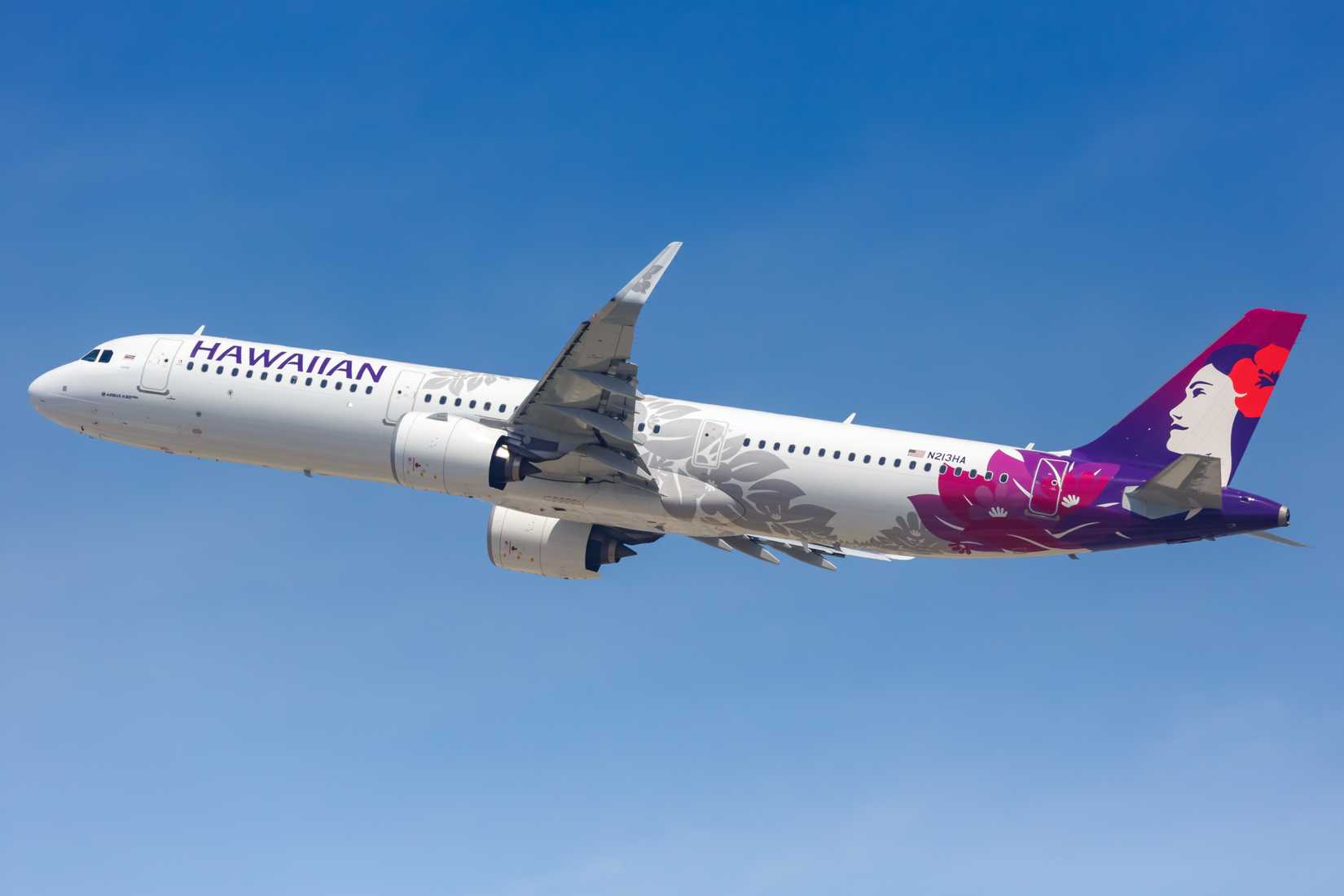
Alaska Air Group's post-acquisition integration of Hawaiian Airlines has surfaced a binary fleet decision with significant operational implications: either scale Hawaiian's Airbus A321neo fleet from 18 aircraft to roughly 36 or more, or retire the type entirely in favor of an all-Boeing narrowbody operation. CFO Shane Tackett's December 2025 comments to Aviation Week framed the choice in explicitly economic terms, noting that without a compelling case for the A321neo, the combined carrier would likely consolidate around a single narrowbody family over time. The 18 A321neos currently in service average just 7.4 years of age, making them Hawaiian's youngest assets and creating a genuine financial tension: retiring relatively young, high-value aircraft carries real balance-sheet costs, yet the alternative — maintaining a permanent dual-type narrowbody program — reintroduces exactly the complexity Alaska spent years eliminating after its Virgin America integration.
The operational stakes for pilots and maintenance crews are considerable. Following the 2016 Virgin America merger, Alaska inherited approximately 73 A320-family aircraft and operated them alongside its 737 fleet for several years before concluding that the training, type rating, and maintenance infrastructure required to sustain two narrowbody families was incompatible with its cost discipline. That fleet simplification, completed with the retirement of the last ex-Virgin A321 in early 2024, produced measurable gains in pilot scheduling flexibility, maintenance inventory consolidation, and training throughput. Now, with Alaska and Hawaiian operating under a single operating certificate, the same logic reasserts itself at scale. A mixed narrowbody operation requires separate pilot pools certified on different aircraft, distinct maintenance programs with separate parts provisioning, and simulator capacity for two type ratings — overhead that compounds as the combined network grows.
Hawaiian's A321neos, however, are not marginal assets. The aircraft serves a strategically important function connecting Hawaiian airports to secondary West Coast markets — Sacramento, Long Beach, Oakland, Las Vegas — where deploying an A330-200 would be economically unviable and where the 737 MAX 9's range and payload characteristics would need to be evaluated carefully against specific city-pair demands. The A321neo's long-range variant (XLR) and the standard LR configuration provide meaningful range flexibility for transpacific thin routes that neither the 737-900ER nor the MAX 9 can replicate without payload penalties. Pilots transitioning between types or managing irregular operations across a combined Hawaiian-Alaska schedule would face type-specific currency requirements that complicate assignment flexibility — a real-world scheduling burden that fleet planners weigh against the route economics.
The broader industry context makes Alaska's dilemma illustrative of a recurring post-merger tension in U.S. aviation. United's absorption of Continental, American's integration of US Airways, and Southwest's acquisition of AirTran all eventually converged on single-type or reduced-type fleet strategies, though timelines varied widely and transition costs were significant in each case. The article's truncated conclusion gesturing toward the Boeing 737 MAX as a potential A321neo replacement reflects an emerging industry consensus that the MAX 8 and MAX 9 can cover much of the A321neo's domestic mission profile, though at some range and capacity tradeoff on the longest segments Hawaiian currently operates. For business aviation operators and corporate flight departments watching the majors, the Alaska-Hawaiian integration serves as a case study in how fleet simplification decisions cascade from executive financial logic down through training pipelines, maintenance contracts, and individual pilot career pathways — choices made in conference rooms that manifest on the flightdeck years later.











 Read original article