Duncan Aviation Tackles BizAv Talent Gap Through High School Outreach
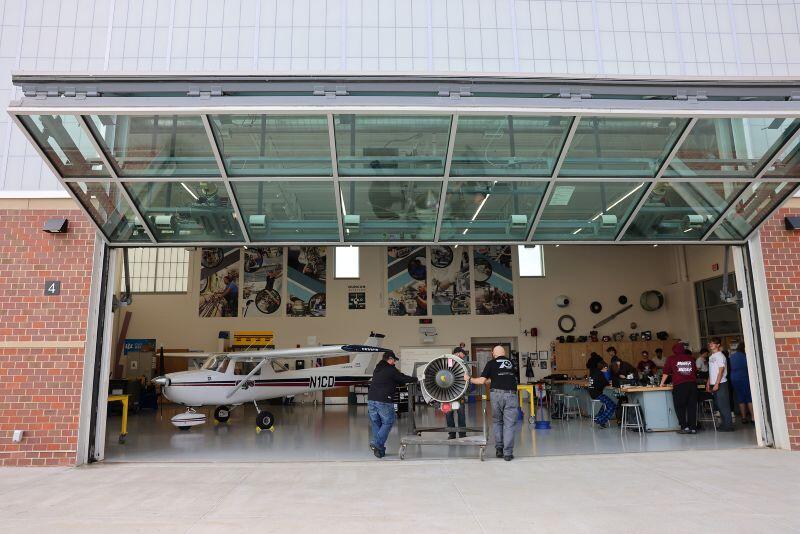
Duncan Aviation's partnership with Lincoln North Star High School represents a calculated response to one of the most pressing structural challenges facing business aviation MRO operations: a critically thin regional talent pipeline compounded by national technician shortages. The Lincoln, Nebraska-based company has moved well beyond passive recruitment, actively co-creating North Star's Aviation and Technical Education Focus Program, supporting a 13,000-square-foot hangar expansion in 2023, and most recently placing a Honeywell TFE731 turbofan engine on permanent loan to the school. That last move is particularly substantive — the TFE731 powers a wide range of business jets including the Falcon 20, Learjet 55, and Hawker 700/800 series, meaning students are gaining hands-on exposure to a platform with direct relevance to the commercial MRO market rather than a purely instructional prop. The company also operates a work-study program allowing students who complete aviation coursework to rotate through departments at Duncan Aviation's Lincoln facility, building applied experience and professional relationships before they reach college-age decision points.
The urgency behind Duncan's investment is driven by intersecting pressures that aviation operators are already feeling at the maintenance scheduling level. Nebraska's single in-state FAA-approved aviation maintenance technician school leaves the region structurally dependent on out-of-state graduates, who face competing offers from aviation hubs with stronger pull factors. At the same time, Duncan Aviation is competing not just within aviation but against automotive and agricultural equipment sectors for the same pool of mechanically inclined young workers — a dynamic that is equally relevant in markets across the Midwest and rural South. Human resources manager Jennifer Monroe's acknowledgment that a significant portion of the current technician population is approaching retirement age puts a finite timeline on the problem: the institutional knowledge embedded in experienced A&P mechanics does not transfer automatically, and the lead time required to produce a certificated technician — typically two years of AMT school plus post-hire development time — means the workforce gap cannot be closed reactively.
For flight departments operating under Part 91, 91K, or 135 certificates, the downstream consequences of technician shortages are already manifesting in extended AOG times, longer scheduled maintenance windows, and tightening MRO availability across the business jet segment. Duncan Aviation operates three main MRO facilities in Lincoln, Provo, and Battle Creek, Michigan, giving it significant capacity in the midcontinent corridor, but that capacity is only as reliable as the workforce sustaining it. When major MRO providers face technician gaps, the ripple effects reach operators through deferred squawk resolution, slipped inspection return dates, and reduced flexibility in unscheduled maintenance scenarios — all of which carry operational and regulatory implications for flight departments with hard scheduling commitments.
Duncan Aviation's approach mirrors a broader industry movement in which MRO providers, airlines, and aircraft manufacturers have concluded that waiting for AMT schools to produce graduates is insufficient. Companies including StandardAero, Textron Aviation, and several regional airlines have launched analogous K-12 pipeline programs, often structured around STEM frameworks that allow aviation content to be embedded in existing curricula. The use of a surplus TFE731 as a teaching tool is an efficient deployment of an otherwise idle asset and illustrates how the industry can reduce infrastructure barriers for underfunded school aviation programs. The oscilloscope inspection and safety wiring exercises planned by North Star's aviation educator align directly with real-world A&P skill sets, giving students a credible preview of the work rather than a sanitized promotional experience. For operators and chief pilots evaluating MRO vendor stability as a long-term operational variable, the depth of investment companies like Duncan Aviation are making in talent development is a meaningful indicator of organizational resilience — and a signal that the industry is beginning to treat the technician shortage with the systemic seriousness it demands.








 Read original article