11 Hours Of Fuel: American Airlines Boeing 777 Engine Failure Forces Heavy Landing In Phoenix
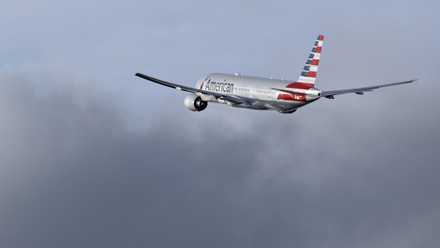
American Airlines Flight 194, a Boeing 777-200ER operating from Phoenix Sky Harbor International Airport (PHX) to London Heathrow, declared a mayday on Friday after suffering a failure of its left Rolls-Royce Trent 800 engine (#1) shortly after takeoff. The aircraft, registration N759AN and approximately 25 years old, became airborne at 4:49 PM local time before the crew confirmed the engine could not be restarted and initiated a return to PHX. The flight was carrying 283 passengers with roughly 11 hours of fuel aboard — consistent with a full transatlantic load. The aircraft leveled off at approximately 7,200 feet, flew a wide circuit north and west of the Phoenix metro area, and touched down safely on Runway 26 at 5:23 PM, just 34 minutes after departure. First responders were staged in advance, and the aircraft was held on a taxiway after landing due to severely overheated brakes and landing gear. N759AN is expected to be out of service for days to weeks pending inspection and repair.
The crew's decision to forgo fuel jettison is operationally significant and warrants careful analysis by operators of fuel-dump-capable widebody aircraft. Under standard overweight landing considerations, crews must weigh structural certification limits, available runway length, and the downstream inspection and maintenance burden against the risks and liabilities associated with dumping fuel over populated areas. The 777-200ER is equipped with a fuel jettison system, and Phoenix's surrounding airspace — including nearby Luke Air Force Base airspace to the west — offers potential jettison corridors away from dense population. Nevertheless, the crew elected to land overweight, utilizing PHX's longest runway, Runway 8/26, at 11,490 feet. That decision placed a significant thermal load on the braking system, a consequence entirely predictable under the physics of decelerating a fully fueled widebody. Per the 777 Airplane Flight Manual, an overweight landing triggers mandatory structural inspection requirements, adding to the aircraft's out-of-service timeline beyond what the engine event alone would demand.
The Delta Air Lines fuel dump lawsuit looms large as relevant industry context. Delta's former 777-200LR dumped fuel over a populated area near Los Angeles in January 2020 while returning to LAX after an engine compressor stall — a scenario strikingly parallel to Friday's American Airlines event — and Delta subsequently agreed to a nearly $80 million settlement covering more than 50 individuals who alleged respiratory and dermal injuries. That litigation has functionally altered how crews and dispatch departments frame the fuel-dump calculus on returns from long-haul departures. Whether AA194's crew acted on formal guidance, company policy, or crew judgment reflecting an awareness of that legal environment is unknown, but the parallel is not lost on the professional community. Operators should note that the absence of a fuel dump is not inherently the conservative choice — it trades one risk profile (environmental and legal exposure from jettison) for another (structural overload, hot brake events, and extended aircraft downtime).
The incident also highlights the operational realities of aging widebody fleets on premium long-haul routes. N759AN entered service nearly 25 years ago, placing it among the older airframes in American's 777 fleet. The Rolls-Royce Trent 800 has a long and generally reliable service history, but engine-related in-flight events on mature airframes serve as a consistent reminder that high-cycle, high-hour powerplants require rigorous monitoring and proactive maintenance decision-making. For Part 91 and Part 135 operators of large-cabin aircraft, as well as airline crews flying fuel-dump-capable equipment, Friday's event is a practical case study in emergency return sequencing, ATC coordination under single-engine conditions, overweight landing procedures, and the layered legal and operational considerations that now inform fuel jettison decisions in a post-Delta litigation environment. The FAA and American Airlines' internal safety review will likely scrutinize the crew's total fuel management strategy and the timeline between engine failure recognition and the mayday declaration.











 Read original article