Built For Combat: The Military Aircraft Defining Today's Most Intense Conflicts
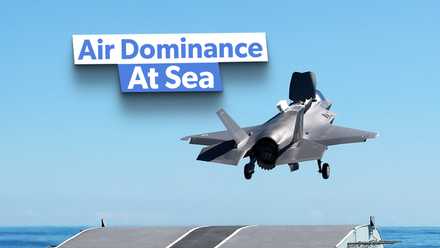
The operational arc of the Lockheed Martin F-35 has reached a decisive inflection point in 2026, transitioning from a program defined by developmental controversy to one defining the outcome of active high-intensity conflicts. With more than 1,300 airframes delivered across a growing multinational operator base, the F-35 has become the second most numerically prevalent fighter jet in the world, behind only the F-16. Its combat employment during Israeli and U.S. suppression and destruction of enemy air defenses (SEAD/DEAD) missions over Iran, combined with its role as a sensor-fused battle management node in East Asia deterrence operations, demonstrates that the platform's stealth and data fusion architecture are performing the precise mission for which they were designed. Israel's decision to expand its fleet toward 100 aircraft — following combat performance that confirmed the type's effectiveness in highly contested airspace — represents one of the most consequential procurement endorsements in recent memory.
The complementary relationship between the F-35 and the F-15E/EX has emerged as the defining tactical pairing of the current conflict environment. Where the F-35's internal weapons bay limits its payload to preserve its low-observable profile, the F-15E operates as a high-capacity munitions truck, exploiting the battlespace access the F-35 creates. The U.S. decision to double its planned F-15EX procurement to 267 aircraft signals that planners view the fourth-plus-generation heavy strike platform as a long-term complement to both the F-35 and the forthcoming F-47, rather than a transitional asset. Qatar's F-15QA variants downing Iranian Su-24 Fencers adds a notable operational data point for partner nation operators. Meanwhile, the article's loss accounting is stark: the Russian Air Force has suffered 161 confirmed fighter and bomber losses since 2022 against zero Israeli losses and five U.S. aircraft — a lopsided attrition rate that reflects not only tactical and doctrinal disparities but the cumulative degradation of Russian air combat capacity.
The F-16's continued relevance is equally significant. Despite being the oldest design among the article's featured platforms, the Fighting Falcon now anchors the Ukrainian Air Force's daily air defense operations and is simultaneously expanding within Eastern European NATO member air forces while being modernized by Turkey, Greece, and Taiwan. The type's affordability, interoperability, and widespread support infrastructure make it the logical choice for nations building or sustaining credible air arms under budget constraints, a dynamic that continues to drive global procurement decisions. Ukraine's experience operating F-16s against a sophisticated adversary is generating a body of real-world data on fourth-generation fighter survivability, electronic warfare effectiveness, and sortie generation rates in high-threat environments — data points that Western air forces and their industrial partners are closely monitoring.
For commercial and business aviation operators, the conflicts documented in this article carry direct airspace and operational implications. The active military operations over Iran, the Middle East broadly, and Eastern Europe have resulted in persistent NOTAM-driven airspace closures, rerouting mandates, and overflight restriction expansions that continue to affect international routing across large portions of the Middle East, Black Sea region, and central Asian corridors. Operators flying ETOPS routes, international charter, or fractional programs into the Gulf, Mediterranean, and Asia-Pacific regions are navigating a layered airspace environment shaped in real time by conflict activity. The proliferation of one-way attack drones — which F-15Es and even the A-10 have been tasked with defeating — has also expanded the threat envelope that civil aviation planners must account for when operating in or near conflict-adjacent airspace, reinforcing the importance of current threat briefings and dynamic routing tools for dispatch and flight operations teams.
The broader trend visible across all platforms covered is the industrialization of high-end air combat at a scale not seen since the Cold War. The ramp-up in F-35 deliveries across a dozen-plus nations, the doubling of F-15EX orders, and the continued expansion of F-16 fleets in NATO's eastern flank collectively reflect a Western defense industrial base retooling for sustained production. At the same time, Russia's 161 confirmed combat aircraft losses represent an attrition rate that is straining its aerospace manufacturing capacity and pilot training pipelines, with direct implications for the long-term balance of air power in Europe. For aviation professionals tracking the industry, the convergence of combat-proven data from actual conflicts with active procurement decisions is reshaping the fighter market and, by extension, the defense priorities and budgets of governments whose airspace commercial operators depend on for safe, stable access.





 Read original article