Is It True That The Boeing 737 MAX & Airbus A320neo Are Powered By The Same Engine?
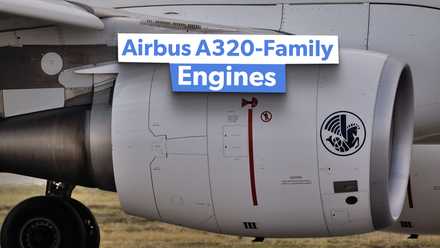
The CFM International LEAP-1A and LEAP-1B engines, while sharing a manufacturer, a product family name, and a common design philosophy, are distinct powerplants engineered to different specifications for two different narrowbody airframes. Both the Airbus A320neo and the Boeing 737 MAX advertise approximately 20% fuel burn improvements over their predecessors, and both achieve a significant portion of those gains through their respective LEAP engines. However, the two engines diverge meaningfully in fan diameter, bypass ratio, thrust output, and nacelle geometry — differences that stem not from arbitrary engineering choices but from the physical and regulatory constraints imposed by each airframe. The LEAP-1A, installed on A320neo variants, features a 78-inch fan diameter and an 11:1 bypass ratio, while the competing Pratt & Whitney PW1100G-JM option on the same aircraft offers an even larger 81-inch fan and a 12.5:1 bypass ratio, reflecting the A320neo's design latitude for larger underwing clearance. The LEAP-1B fitted exclusively to the 737 MAX is a notably smaller and lighter engine, with a 69.4-inch fan diameter and a 9:1 bypass ratio, constrained by the 737's historically low ground clearance — a legacy of the original airframe's design dating to the 1960s.
The engine selection architecture of the A320neo versus the 737 MAX carries direct operational significance for airline fleet planners and operators under Part 121, 135, and even large-cabin Part 91K programs that benchmark narrowbody economics. Airbus's dual-engine-option model allows fleet operators to standardize on either CFM or Pratt & Whitney across their fleets, enabling MRO consolidation, parts commonality, and negotiating leverage with engine OEMs — a flexibility that Boeing deliberately did not pursue with the MAX. The 737 MAX's exclusive LEAP-1B arrangement simplifies Boeing's supply chain and certification pathway but leaves MAX operators entirely dependent on CFM International for powerplant support. For flight departments and charter operators evaluating used narrowbody acquisitions or wet-lease arrangements, understanding which variant of the LEAP family is installed has direct implications for maintenance scheduling, spare engine availability, and engine shop access, particularly in regions where one OEM's service network is more robust than the other's.
The ground clearance constraint that produced the LEAP-1B is more than an engineering footnote — it is central to understanding the 737 MAX's ongoing airworthiness and public perception challenges. To accommodate the larger, more fuel-efficient LEAP-1B engine on the low-slung 737 airframe, Boeing repositioned the engine nacelles forward and upward, altering the aircraft's aerodynamic handling characteristics and contributing to the development of the Maneuvering Characteristics Augmentation System. The MCAS software, designed to compensate for pitch-up tendencies introduced by the repositioned engines, was implicated in the Lion Air Flight 610 and Ethiopian Airlines Flight 302 accidents in 2018 and 2019. The grounding that followed — lasting until late 2020 in most jurisdictions — remains the most consequential airworthiness event in commercial aviation in decades. Professional pilots operating the MAX today do so under revised training requirements, updated MCAS logic, and enhanced flight crew alerting systems mandated by global regulators including the FAA and EASA, all of which trace their origin to the aerodynamic compromise forced by fitting a larger-diameter engine to a legacy low-ground-clearance airframe.
Broadly, the LEAP engine family exemplifies a wider trend in commercial and business aviation where propulsion technology is advancing faster than airframe design. Both CFM and Pratt & Whitney have pursued higher bypass ratios, composite fan blades, advanced ceramics, and improved thermal efficiency as the primary levers for emissions reduction and fuel economy, rather than pursuing entirely clean-sheet aircraft programs. For professional pilots and aviation operators, this trend has practical consequences: newer variants of familiar airframes increasingly require specific type endorsements or differences training, and the engine itself — rather than the airframe designation — is often the critical variable in performance planning, dispatch reliability analysis, and MEL applicability. Understanding that the LEAP-1A and LEAP-1B are purpose-built, non-interchangeable engines tailored to their respective airframes is foundational knowledge for any aviation professional working with, evaluating, or flying the two most commercially significant narrowbody families currently in production.












 Read original article