This Mom's Awkward Onboard Request & The Flight Attendant Who Handled It Perfectly
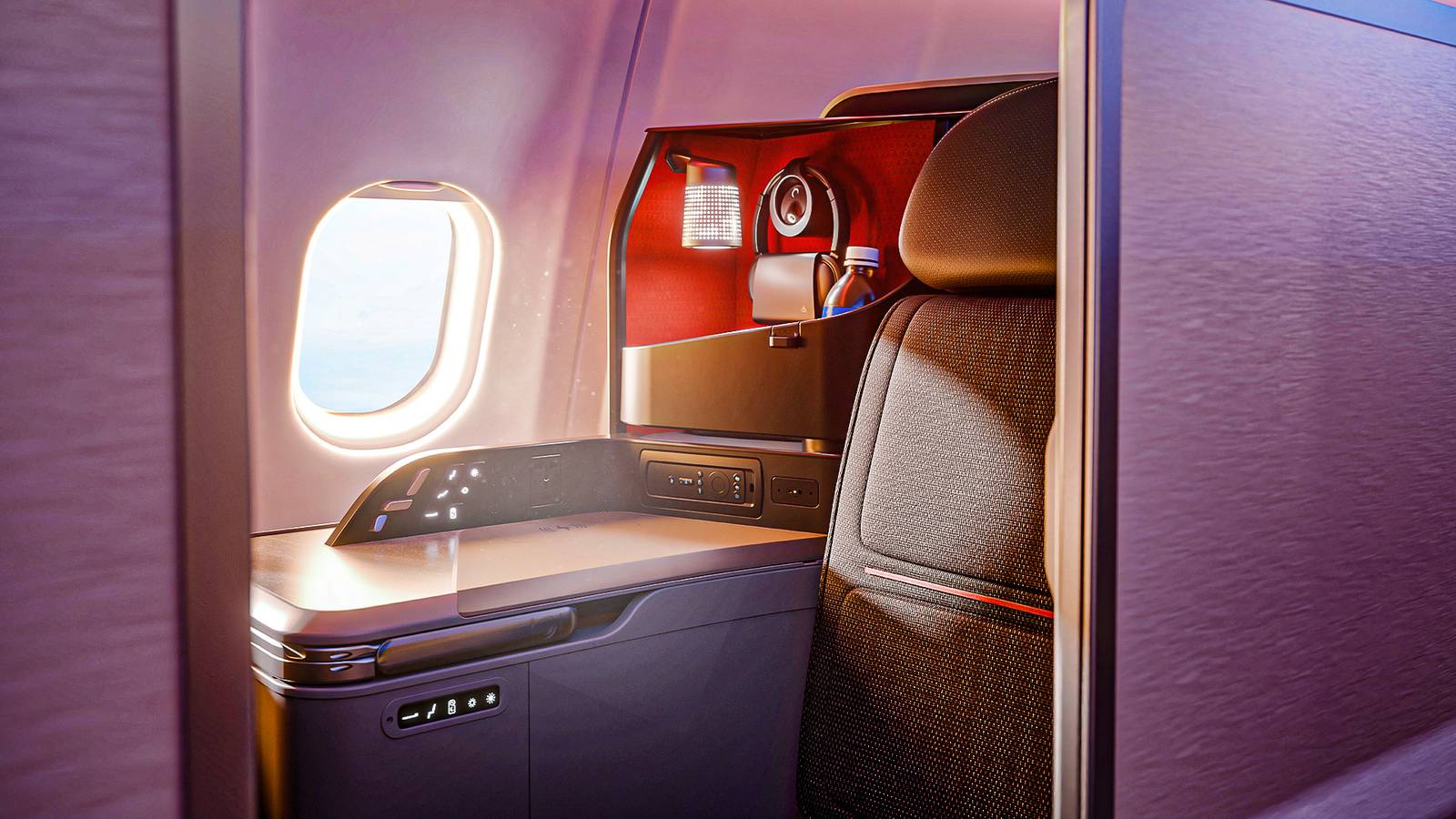
A viral Reddit thread originating from a Delta Air Lines international flight has reignited debate over passenger upgrade etiquette and, more significantly, drawn attention to the professional discretion cabin crew exercise when managing awkward interpersonal situations in the cabin. During boarding, a mother traveling with her teenage son flagged down a flight attendant and requested that her son be allowed to occupy a Delta One seat — the carrier's premium international product featuring lie-flat beds, privacy doors, and curated amenity offerings — at no cost. The flight attendant declined, visibly taken aback by the request, but returned approximately ten minutes after boarding completed to personally explain the reasoning, engage both passengers in a relaxed manner, and commit to making their economy experience as positive as possible. The exchange was witnessed by a nearby passenger, whose account of the interaction spread widely online.
The incident is instructive from a crew resource management standpoint. Flight attendants routinely navigate requests that fall outside their authority or operational scope — upgrade decisions are processed at check-in, managed through loyalty programs, handled via airline-specific bid systems, or in limited cases executed through onboard payment platforms, but they are not within cabin crew discretion to grant unilaterally. What distinguished this crew member's response was not the refusal itself, which was procedurally correct, but the deliberate follow-through: rather than leaving the interaction at a blunt denial, he returned to reframe the exchange, reduce social friction, and reorient the service relationship toward what he could offer. For cabin crew and those who manage them, this represents a textbook application of de-escalation paired with proactive service recovery — skills that are increasingly formalized in airline human factors and crew effectiveness training.
For aviation operators across commercial and business segments, the episode surfaces a persistent tension between passenger expectations shaped by social media and the operational realities of premium cabin inventory management. The "just ask" culture encouraged across travel forums treats cabin crew as informal concierge agents with discretionary authority they do not possess. On Part 91K and Part 135 business aviation operations, where crew-to-passenger ratios are far higher and the service relationship is more intimate, the dynamics differ considerably — but the underlying challenge of managing requests that exceed operational scope while preserving client relationships is directly analogous. Flight departments and charter operators regularly train crew on boundary-setting within a hospitality framework, and the Delta incident illustrates why that training matters even when the stakes appear minor.
The broader context is one of evolving premium cabin economics. Delta One, along with comparable international business products from United Polaris, American Flagship, and the major Gulf carriers, represents a significant revenue tier built on substantial fare premiums and loyalty currency redemptions. The commenter who characterized the mother's request as asking to substitute a $1,500 seat for a $15,000 one was not engaging in hyperbole — long-haul international Delta One fares routinely fall in that range, and the product's operational cost relative to economy is proportionally significant. Airlines have responded to upgrade culture partly by hardening access controls and partly by monetizing the aspiration through dynamic bidding platforms and last-minute upgrade pricing, tools that redirect passenger energy toward revenue-generating channels rather than informal crew lobbying. The flight attendant's mention of onboard pricing — which typically carries a premium over pre-departure rates — reflects that institutional posture.
Ultimately, the thread resonated not because the upgrade request was unusual, but because the crew member's response to it was. Professionalism in the cabin is often invisible when it functions correctly; this instance made it visible by contrasting a socially awkward moment with a measured, empathetic, and service-oriented recovery. For pilots and aviation professionals who interact with cabin crew in joint crew resource management frameworks, the episode reinforces that effective cabin management extends well beyond safety compliance into the interpersonal and situational judgment competencies that define passenger experience — and that those competencies are neither incidental nor automatic, but the product of training, temperament, and institutional culture.











 Read original article