MD-11 Flies Again: FedEx Completes First Trijet Flight In 6 Months Since UPS Crash
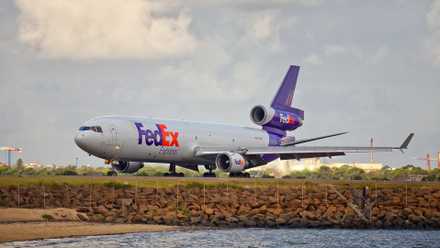
A FedEx Express MD-11 trijet completed its first flight in six months on May 10, 2026, lifting off from Memphis International Airport at 5:39 PM local time and logging 70-plus minutes aloft before returning to MEM — the first movement of the type since a UPS MD-11 crashed shortly after takeoff from Louisville Muhammad Ali International Airport in November 2025. The test aircraft, N621FE, climbed to 29,000 feet on an eastbound track before descending to perform two circuits around Huntsville Airport, a profile consistent with systems and handling evaluations following extended ground storage. The flight was made possible by replacement hardware developed by Boeing to reinforce a hinge on the engine bearing within the left engine pylon — an area that the investigation identified as being subject to significant stress concentrations. FedEx has indicated it is targeting a return to MD-11 revenue operations in late May 2026, though each of its 29 airframes will be required to complete individual flight tests before re-entering commercial service. The FAA has not yet formally approved Boeing's proposed fix and maintenance inspection plan, meaning fleet-wide implementation is contingent on that regulatory clearance.
The structural vulnerability at the center of the grounding carries a detail that will draw scrutiny from safety professionals across the industry: Boeing and the MD-11's operators were aware of the stress concentrations in the left engine pylon as far back as 2011, but the condition was assessed at that time as not constituting a safety risk. That determination now appears to have been revisited in the aftermath of the Louisville accident, resulting in both a new hardware solution and a revised maintenance and inspection protocol. For pilots and operators, this sequence illustrates a recurring challenge in aging fleet management — the gap between known structural margin degradation and the threshold at which remedial action becomes mandatory. The MD-11 fleet operated by FedEx carries an average airframe age of approximately 32 years, a figure that places it firmly in the category of legacy assets requiring intensive continued airworthiness oversight. The divergent responses of the two remaining major MD-11 operators are themselves significant: UPS has elected to accelerate retirement of the type entirely, while FedEx has committed to returning its 29-aircraft fleet to service through a capital investment in modification and flight testing — a decision that reflects the difficulty of rapidly replacing large-capacity widebody freighters in a tightening cargo market.
The logistical dimension of this grounding has been operationally severe. Because the FAA declined to issue ferry permits for unmodified MD-11s following the November 2025 crash, FedEx's 29 airframes have remained stranded at 16 airports spanning from Singapore and Tokyo to domestic U.S. stations since the grounding was imposed. The airline must now dispatch technicians to each of those locations to retrieve engine pylons and transport them to its modification bases in Memphis and Indianapolis — a recovery operation of considerable complexity and cost. For operations and maintenance professionals, this scenario highlights the cascading consequences that can follow a single-event type grounding when a fleet is geographically dispersed across a global route network: aircraft cannot be consolidated for maintenance without the very ferry permits that safety concerns preclude, creating a logistical stalemate that can only be resolved through on-site work at each stranded location.
The MD-11's return, however partial, occurs at a moment of notable transition for large trijet cargo operations globally. The type's passenger career ended in October 2014 with KLM's final MD-11 service, and it has since survived exclusively in the freighter role, primarily with FedEx and UPS. UPS's decision to retire the type entirely in the wake of the Louisville accident effectively makes FedEx the sole remaining large-scale MD-11 operator, a position that concentrates both the type's airworthiness record and its reputational risk on one carrier. For Part 135 and airline operators monitoring cargo market capacity, the six-month absence of nearly 30 large widebody freighters has had measurable effects on available lift, and FedEx's urgency to restore the fleet underscores how critical the MD-11 remains to its network throughput despite the aircraft's age. The broader industry trend toward retiring trijets — driven by fuel efficiency, parts supportability, and regulatory complexity — continues unabated, but the FedEx case demonstrates that economic necessity can sustain aging platforms well beyond the point where newer-generation alternatives might otherwise have displaced them.








 Read original article