The US Navy's Next Trainer Jet Won't Need To Land On A Carrier: Here's Why
The U.S. Navy's Undergraduate Jet Training System program represents the most significant structural change to naval aviator training in decades, formally severing the link between earning the wings of gold and completing arrested landings aboard an aircraft carrier. Requirements finalized in March 2026 confirm that the UJTS aircraft will not be carrier-capable, eliminating the need for tailhook systems, reinforced landing gear, and the structural beef-up required to survive the 700-plus feet-per-minute descent rates of actual carrier touchdowns. The final competition now stands at three contenders following Lockheed Martin's withdrawal of its TF-50N this month: the Boeing-Saab T-7B Redhawk, the Sierra Nevada Corporation Freedom Trainer, and the Textron Leonardo M-346N. Core performance requirements of Mach 0.9 top speed, sustained 6-G capability, a 41,000-foot ceiling, and a fifth-generation cockpit environment with Precision Landing Mode and large-area displays mirroring the F-35C and F/A-18E/F Block III define the envelope. The Navy plans to acquire 216 aircraft to sustain over 76,000 annual student flight hours, with a contract award expected no earlier than 2027 and initial aircraft deliveries likely stretching to the early 2030s.
The operational logic driving this shift is rooted in mathematics and carrier availability rather than sentiment. Aircraft carriers are among the most operationally constrained assets in the U.S. fleet, and every day a ship spends cycling student aviators through carrier qualification is a day it is not deployed to the South China Sea or the Persian Gulf. The old T-45 Goshawk pipeline was notorious for qualification bottlenecks, with students waiting months for a carrier deck slot that blocked them from receiving their wings. The enabling technology that made the policy change defensible is Precision Landing Mode — the automated approach system known informally as "Magic Carpet" — which dramatically reduces the manual stick-and-rudder workload of flying the meatball on a conventional glideslope. Since the Navy formally shifted carrier qualifications to Fleet Replacement Squadrons beginning in March 2025, the carrier qualification failure rate in F/A-18 FRS programs has dropped from 18 percent to 4.5 percent, a data point the service is citing to validate the new paradigm. Student pilots now complete Field Carrier Landing Practice to wave-off in the UJTS phase and finish actual arrested landing qualification later, in the FRS, flying the combat aircraft they will operate operationally.
For working professional pilots and aviation operators outside the Navy, the UJTS competition and its underlying rationale illuminate several trends with direct commercial and business aviation relevance. The deliberate integration of fifth-generation cockpit geometry — large-area touchscreen displays, synthetic vision, and automation-first approach logic — into the training environment from day one reflects an industry-wide recognition that trainees must build mental models compatible with the aircraft they will actually fly, not analog predecessors. The parallel in commercial aviation is the ongoing debate about ab initio training on glass-cockpit aircraft versus traditional steam-gauge instruction, and the associated concerns about automation dependency and manual flying proficiency. The Navy's PLM failure-rate reduction data will likely be cited in future arguments supporting automation-assisted training across platforms, while the residual risk — pilots who cannot execute a manual approach when the automation degrades — remains the counterargument regulators and operators in both military and civilian contexts must actively manage.
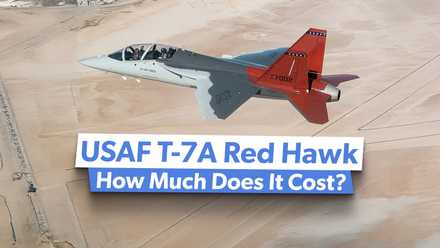
The broader competitive dynamics of the UJTS program also carry implications for the defense industrial base and, indirectly, for the advanced trainer market that feeds both military and civilian high-performance jet training. Lockheed Martin's withdrawal narrows the field and strengthens the position of the T-7B Redhawk, which already carries significant development momentum from the U.S. Air Force's T-7A Red Hawk program. Sierra Nevada's clean-sheet Freedom Trainer is notable as the only design purpose-built around the Navy's revised FCLP-to-wave-off requirement. The Textron Leonardo M-346N brings Italian-developed heritage and operational history in several NATO air arms. Whichever design wins, the downstream effect will be felt in the global advanced jet trainer market, as a UJTS contract of 216 aircraft establishes a domestic reference customer that other nations routinely evaluate when making their own trainer procurement decisions. For corporate flight departments and Part 91 operators whose pilots may include former military aviators trained under the new system, understanding this generational shift in how carrier pilots are credentialed — and where their manual approach currency actually comes from — will become increasingly relevant during hiring and standardization.








 Read original article