Why The Airbus A220 Is Becoming One Of The Most Profitable Narrowbodies In North America
The Airbus A220 has moved decisively from a promising but troubled clean-sheet design into a financially proven fleet anchor for North American carriers, with Delta Air Lines and Breeze Airways providing the clearest validation of its commercial case. Delta's Q1 2026 earnings — reporting $15.9 billion in revenue against a 3.2% operating margin — reflect what happens when a carrier systematically replaces legacy inefficiency with a purpose-built platform. The A220-300's reported 12% cost-per-seat advantage over the Boeing 737 MAX 7 is not a rounding error; it is a structural advantage that allows Delta to operate high-frequency service on business-heavy routes without absorbing the yield dilution of flying oversized equipment at low load factors. With nearly 100 A220s now in its fleet, Delta has also reached the scale threshold where crew training and MRO standardization generate their own compounding savings — the indirect cost benefits that mixed-fleet operators routinely underestimate.
For professional pilots and aviation operators, the A220's rise carries direct fleet and career implications. On the pilot side, Delta's aggressive A220 expansion represents one of the more active narrowbody type-rating pipelines in North American aviation. The aircraft's Pratt & Whitney PW1500G geared turbofan, while historically a source of durability and AOG concerns in the type's early service life, has matured considerably, and operators report improved dispatch reliability as the engine's maintenance intervals stabilize. The cockpit architecture — a fly-by-wire design with sidestick controls and a glass flight deck informed by Bombardier's C Series lineage — demands a genuine type rating transition, and carriers are investing heavily in simulator infrastructure to keep pace with fleet growth. For pilots already operating the type, the range envelope is particularly relevant: 3,400 nautical miles of certified range means the A220 is being tasked with six-hour transcontinental and thin international routes that previously required larger airframes and the operational complexity that comes with them.
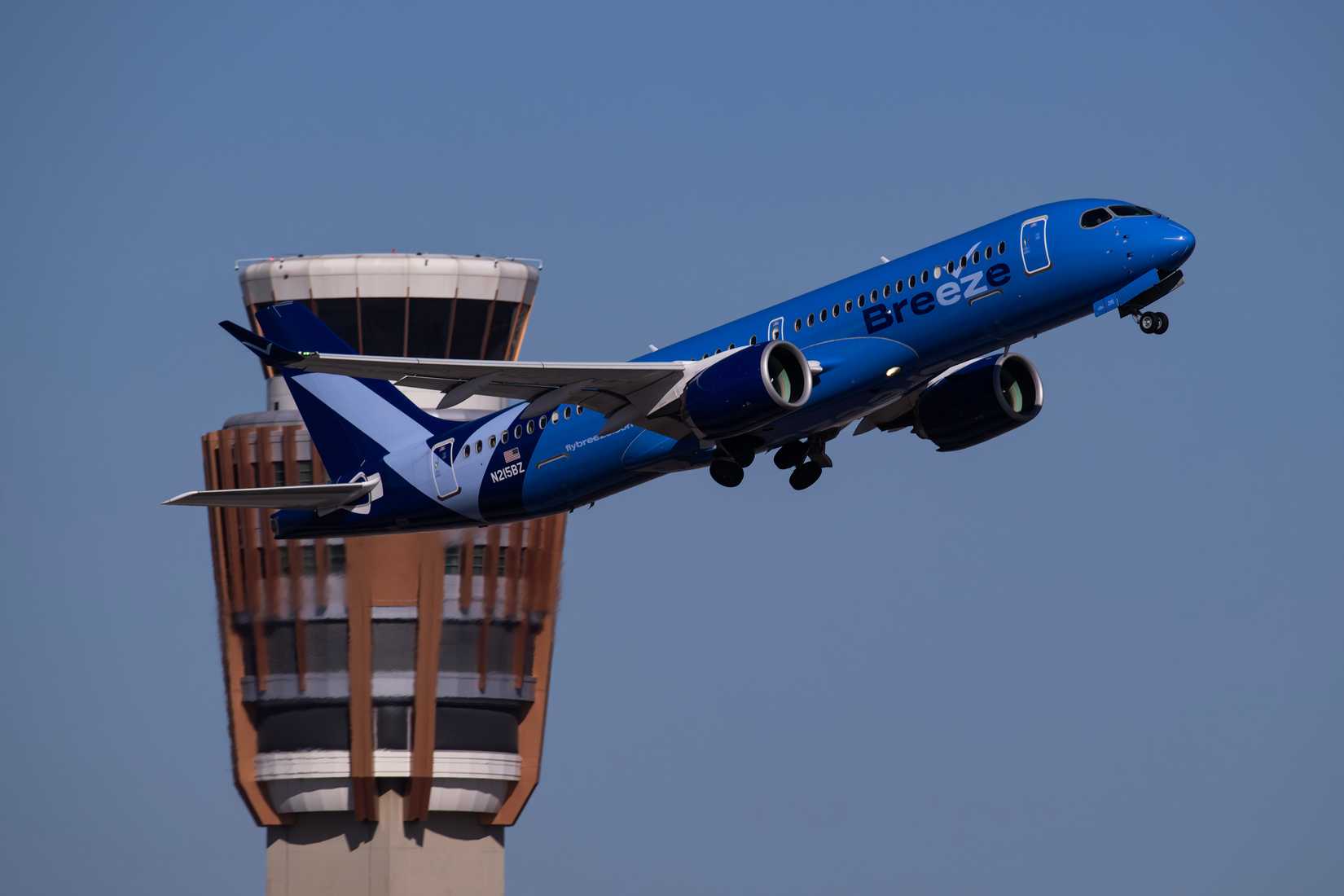
Breeze Airways represents the more disruptive application of the A220's economics, and its 2025 profitability milestone carries lessons that extend beyond the startup carrier segment. Operating approximately 90% of its routes without direct nonstop competition, Breeze has demonstrated that the A220's low trip cost fundamentally redefines the breakeven calculus for point-to-point service in secondary markets. The ability to sustain profitability with 6% fewer passengers than a comparable narrowbody translates directly into route risk management — a new market that underperforms does not become a catastrophic loss event. This dynamic is reshaping how network planners at both legacy and low-cost carriers evaluate route viability, lowering the passenger load threshold that justifies nonstop service and effectively expanding the map of commercially viable city pairs. Air Canada's use of the type on thinner transborder and Central American routes reinforces the same logic at a network carrier scale.
The operational efficiency gains highlighted in the article — particularly the 10-to-15-minute turnaround improvement over a 737 MAX 8 — translate into measurable block-hour productivity. Moving from four daily segments to five per hull is not a marginal improvement; at current domestic yield levels, that additional segment represents meaningful annual revenue per aircraft. For flight operations departments, this efficiency premium places pressure on scheduling assumptions inherited from previous narrowbody generations and rewards carriers willing to retime their block planning around the A220's actual ground performance rather than legacy assumptions. Combined with the type's demonstrated hot-and-high performance capability — relevant for high-elevation western U.S. airports and Central American destinations alike — the A220 presents a compelling operational profile that narrows the traditional gap between what regional jets can do and what mainline narrowbodies are asked to do, a convergence that is quietly reshaping how North American networks are structured.










 Read original article