Australian Ryanair? Former Qantas Exec Plans All-A321neo ULCC At Sydney’s New Airport
Zinc Airlines, a proposed ultra-low-cost carrier conceived by former Qantas executive Peter Kelly, represents the most structurally ambitious challenge to Australia's entrenched aviation duopoly in several years. Kelly, who previously ran the Qantas Frequent Flyer program and Ansett's Golden Wings Club, is seeking AU$200 million (approximately US$143 million) in combined equity and debt to stand up the operation, with the initial tranche targeting aircraft deposits and pre-launch costs. The carrier would operate an all-Airbus A321neo fleet configured at high-density single-class seating of up to 244 seats per aircraft, with a minimum aircraft utilization target of twelve hours per day — a figure consistent with the operational philosophy of the European ultra-low-cost carriers Zinc explicitly intends to replicate. Initial route focus would concentrate on the trunk routes connecting Sydney, Melbourne, Brisbane, and the Gold Coast, the same high-frequency corridors where Qantas, Jetstar, and Virgin Australia generate the majority of their domestic revenue.
The central strategic enabler for Zinc is Western Sydney International Airport, formally known as Western Sydney International (Nancy Bird Walton) Airport and designated YSWS, scheduled to open in October 2026. Unlike Sydney Kingsford Smith, which operates under a strict 6:00 AM to 11:00 PM curfew and faces chronic slot scarcity, WSI has no curfew restriction, unconstrained access, and no legacy carrier entrenched gate control. For any new entrant, Kingsford Smith has historically been an insurmountable structural barrier — acquiring slots at SYD requires displacing existing incumbents or paying a significant market premium, costs that have contributed to the failure of previous challengers. WSI eliminates that barrier entirely and opens access to a metropolitan catchment of over 5.5 million people. Air New Zealand and Singapore Airlines have already confirmed service beginning in late 2026, providing early international connectivity that could support Zinc's connecting passenger flows if the carrier eventually pursues partnerships or interline arrangements.
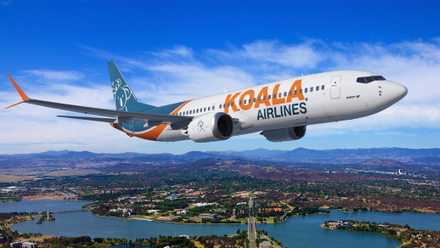
For professional crews and operators monitoring Australian airspace, the Zinc proposal signals a potential shift in the crew hiring and contract landscape, particularly for pilots qualified on narrow-body Airbus equipment. Should the airline advance beyond the concept stage, it would join Koala Airlines — which has already secured three Boeing 737s — as a second independent entrant attempting to break the Qantas Group and Virgin Australia duopoly, which collectively controls approximately 98.8% of domestic passenger traffic. That concentration level is extraordinary by global standards and reflects a market that has consistently defeated challengers, including most recently Rex Airlines and Bonza, both of which collapsed under the pressure of competing on price against carriers with far deeper balance sheets, more established loyalty programs, and superior slot access. Kelly's explicit Ryanair modeling suggests awareness of those failure modes — Ryanair's profitability is predicated not on low fares alone but on extreme cost discipline, very high aircraft utilization, ancillary revenue maximization, and airport cost negotiation leverage, all of which require patient capital and experienced operational management.
The broader implication for the Australian aviation market is that WSI's opening in October 2026 creates a narrow window in which new entrants have a structural advantage they have never previously enjoyed. With Qantas and Jetstar signaling WSI service but publishing no confirmed routes or dates, and with no legacy carrier yet entrenched at the facility, the airport's early months represent an opportunity for a well-capitalized newcomer to establish network presence before the incumbents fully deploy resources. Whether Zinc can raise the required capital — particularly the equity tranche, which demands investor confidence in a market with a demonstrably poor track record for start-up carriers — remains the critical open question. No launch date has been announced, and the carrier remains in the concept and fundraising phase. For pilots, dispatchers, and operators watching the Australian market, Zinc is one to monitor closely through late 2026, particularly as WSI's opening approaches and the competitive dynamics of Sydney's air access begin to shift.









 Read original article