Massive 5,800 Miles: Dublin's New Longest Nonstop Route
China Eastern Airlines is set to inaugurate nonstop service between Shanghai Pudong International Airport (PVG) and Dublin Airport (DUB) on July 20, 2026, operating three times weekly on Mondays, Wednesdays, and Fridays aboard Airbus A350-900 equipment. The route, measuring approximately 5,819 nautical miles along the great-circle track, will immediately become Dublin's longest nonstop service, displacing the Aer Lingus Los Angeles operation from that distinction. Westbound block time is scheduled at 13 hours and 20 minutes, with the return Shanghai leg allocated 12 hours and five minutes — an asymmetry consistent with the prevailing upper-level wind patterns along North Atlantic and Eurasian tracks. The service is enabled by a bilateral Air Service Agreement recently formalized between Ireland and China, a regulatory development that carries significance beyond this single launch.
A critical operational factor distinguishing this route from comparable ultra-long-haul services operated by Western carriers is China Eastern's continued access to Russian airspace. European and North American airlines have been excluded from Russian overflights since early 2022, forcing significant route extensions and fuel burn penalties on competing services between Europe and East Asia. China Eastern's ability to track close to the geodesic between PVG and DUB provides a material competitive advantage in both block time and operating economics on this corridor, an advantage that will persist as long as current overflight restrictions remain in place. For crews and dispatchers at airlines evaluating competitive positioning on Europe-Asia routes, this structural asymmetry remains one of the defining operational realities of the post-2022 environment.
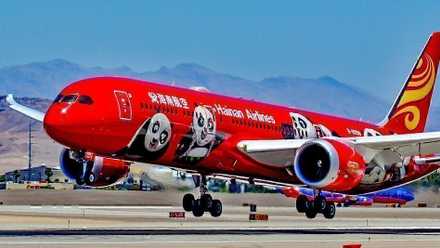
Dublin's growing role as a transatlantic and intercontinental hub warrants attention from business aviation and airline planning communities. The airport's US Customs and Border Protection Preclearance facility — one of only a handful worldwide — allows outbound passengers to complete US immigration formalities before departure, arriving stateside as domestic passengers with unrestricted access to connecting flights. This facility has long underwritten Aer Lingus' commercial strategy on North American routes and is increasingly relevant as Dublin attracts new long-haul carriers. The simultaneous expansion of China Eastern service to Shanghai, Hainan Airlines' planned capacity increase on the Dublin-Beijing route to daily frequency from late June through early September, and Aer Lingus' new Pittsburgh and Raleigh-Durham launches collectively reflect a deliberate positioning of Dublin as a dual-hub gateway connecting North America to continental Europe and, increasingly, to far-east Asia.
For professional operators flying corporate or charter missions into Ireland, these developments signal improving connectivity options for transiting passengers and reinforced demand for ground handling, FBO services, and positioning flights at DUB. The A350-900 platforms China Eastern and Hainan are deploying represent modern, high-efficiency widebody assets well-matched to ultra-long-haul economics, and their increasing presence on Ireland routes reflects a broader trend of Chinese carriers aggressively rebuilding and expanding their international networks following the COVID-era suspension of most long-haul China operations. The expansion of China Eastern's European network to 14 destinations across 12 countries, anchored within the SkyTeam alliance, also creates additional codeshare and interline connectivity that affects hub routing decisions across the alliance partner network, including Air France-KLM and Delta — carriers with significant corporate customer bases relevant to this readership.





 Read original article