Qatar Airways' Airbus A380 Is Back: These 2 Routes Resume In June
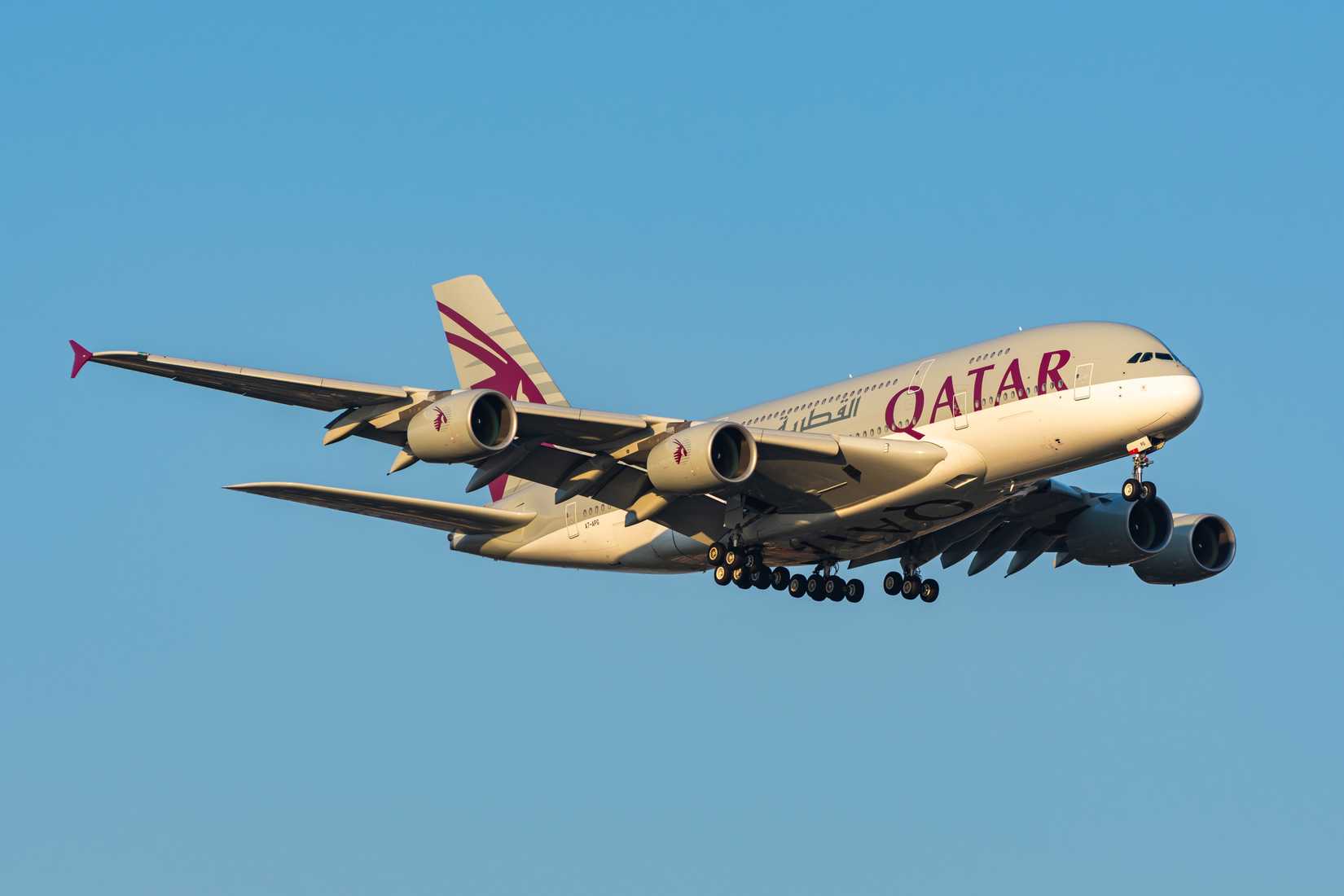
Qatar Airways is returning its Airbus A380 fleet to revenue service beginning June 16, 2026, following a period of fleet-wide temporary storage triggered by operational disruptions stemming from the regional conflict in the Middle East. The Doha-based carrier, a oneworld alliance member operating from Hamad International Airport (DOH), will initially resume the type on two of its highest-demand long-haul corridors: London Heathrow (LHR) and Bangkok Suvarnabhumi (BKK). Both routes will see two daily round-trip frequencies from the outset, a scheduling posture that reflects strong underlying passenger demand on these trunk routes despite the geopolitical turbulence that forced the fleet into short-term storage as recently as April 2026. The DOH-LHR pairing will operate as QR103 (0115 departure) and QR3 (0800 departure), while the DOH-BKK rotation will deploy QR834 at 0200 and QR836 at 0230, the latter pair separated by just 30 minutes—a tight bank structure suggesting careful slot management at Suvarnabhumi.
The current state of Qatar Airways' A380 fleet carries operational significance for crews and flight operations professionals tracking widebody quadjet deployments. Of 10 registered aircraft, two have been in long-term storage since April 2020 and appear unlikely to return, while the remaining eight are being prepared from short-term storage for the June resumption. The fleet averages 10.8 years of age, placing these airframes well within their productive service lives under normal circumstances, though the global A380 landscape is shrinking: 27 of the 251 production aircraft have already been permanently retired. Qatar's three-class cabin layout—First (8 seats), Business (48 seats), and Economy (461 seats)—yields a total of 517 seats per aircraft, making high load factors essential to justify deployment economics on these frequencies. Operators and schedulers should note that this configuration, with its premium-heavy forward cabin, is optimized for high-yield corporate and leisure travelers on routes where Qatar competes directly with carriers such as British Airways, Emirates, and Thai Airways.
For professional pilots and aviation operators, the Qatar A380 resumption signals a cautious but meaningful recovery in ultra-long-haul widebody utilization after a period of acute demand uncertainty driven by airspace closures and rerouting requirements across the Middle East. Airlines operating in or through the Gulf region have had to contend with increased flight times, fuel burn penalties, and crew duty-time implications as routing over Iranian airspace became untenable. Qatar's willingness to restore its highest-capacity aircraft on two flagship routes suggests internal load factor projections have recovered sufficiently to support the additional per-departure cost burden of a four-engine superjumbo relative to twin-engine alternatives. The timing—with the European summer travel peak beginning—reflects standard demand seasonality, but the airline's explicit acknowledgment that operations remain subject to change given ongoing geopolitical conditions is a notable caveat for codeshare partners and contract operators building long-range schedules around these services.
Looking further into 2026, Qatar Airways' planned A380 network expansion to five destinations across three continents by year-end illustrates the staged, demand-contingent approach major carriers are taking with their remaining superjumbo capacity. A mid-September addition of daily Paris Charles de Gaulle (CDG) service, coinciding with a reduction of London A380 frequencies to a single daily rotation, suggests the airline is treating its eight-aircraft active pool as a rotatable asset rather than a fixed fleet assignment—allocating superjumbo capacity where seasonal yield data justifies the premium operating cost. The planned reactivation of daily Singapore (SIN) and Sydney (SYD) services in September, combined with Bangkok's gradual drawdown to daily frequency by November, reflects a hub-and-spoke optimization strategy that business aviation operators and airline network planners will recognize as a disciplined response to capacity constraints. In the broader context of the A380's future, Qatar's continued investment in the type—rather than accelerating retirement in favor of A350s or 777Xs—reinforces the aircraft's enduring commercial viability on the world's busiest long-haul trunk routes, even as the global fleet slowly contracts and the window for new A380 orders has permanently closed.






 Read original article