Insider Articles Archive
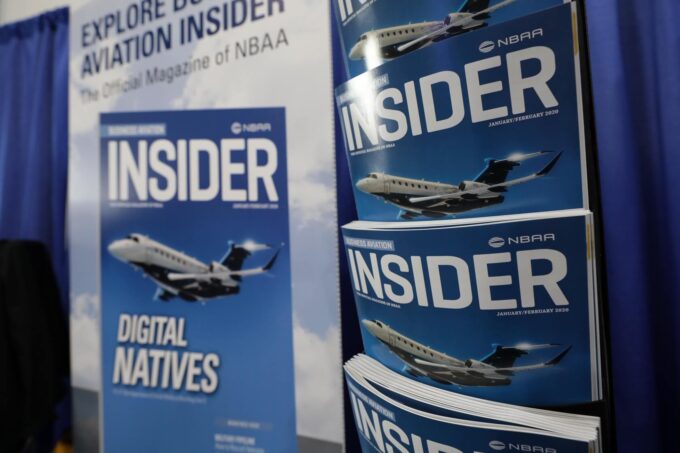
The National Business Aviation Association's *Business Aviation Insider* archive spanning mid-2025 through mid-2026 reflects a publication responding in real time to the most consequential pressures facing business aviation operators: deteriorating safety culture indicators, workforce instability, regulatory flux, and rapid technological change. The recurring structure of the magazine—bimonthly issues organized around safety, international operations, technology, leadership, and workforce themes—mirrors the operational calendar of a working flight department and underscores NBAA's role as the primary editorial voice for Part 91, 91K, and 135 business aviation professionals. Taken collectively, the issues from this period represent one of the more turbulent editorial cycles in recent memory, with nearly every issue addressing a topic of immediate operational consequence rather than aspirational or forward-looking content alone.
Safety dominates the most recent editorial content in ways that suggest industry-wide concern. The May/June 2026 Safety Issue centers on accident analysis across three business aircraft events, with dedicated coverage of loss-of-control inflight (LOC-I) prevention and safety standdown planning—two subjects that historically spike in editorial prominence following clusters of high-profile hull losses. LOC-I remains the leading cause of fatal general and business aviation accidents according to FAA and NTSB data, and its reappearance as a feature topic in 2026 indicates that despite decades of awareness campaigns, the threat profile has not materially diminished. The safety standdown framework, popularized partly through military aviation culture and adapted by NBAA for flight departments, represents a structured operational pause that Part 91 and 135 operators can execute without regulatory mandate, making editorial guidance on structuring effective standdowns directly actionable for chief pilots and directors of aviation.
The January/February 2026 Workforce Issue addresses two subjects with profound regulatory and cultural implications for flight departments: FAA policy changes regarding pilot mental health treatment, and the growing norm of guaranteed days off for business aviation crew members. The FAA's evolving posture on pilot mental health—particularly its movement toward BasicMed accommodations, special issuances for treated conditions, and the HIMS AME pathway—represents a significant shift from a decade ago, when the culture of non-disclosure was reinforced by legitimate fear of certificate action. Operators who do not understand these updated pathways risk both retaining impaired crew members who fear disclosure and losing qualified pilots who seek treatment voluntarily. The guaranteed days-off data point addresses a parallel retention and fatigue-risk problem: business aviation has historically demanded scheduling flexibility that commercial operators regulated under Part 117 do not face, and as the pilot shortage compresses labor supply, operators offering structured rest guarantees are increasingly competitive in recruiting from regional and mainline pipelines. The just culture framework discussed alongside these topics provides the psychological safety architecture that enables both disclosures and honest fatigue reporting.
The technology and international threads running through the July/August 2025 and March/April 2026 issues reflect structural changes in the operating environment that affect trip planning and airspace management at the dispatch and flight crew level. AI integration into avionics systems, powerplant monitoring, and navigation technology—covered in the July/August 2025 Technology Issue—is no longer speculative content for business aviation; platforms like Honeywell Forge, Pratt & Whitney's predictive maintenance ecosystem, and emerging EFB integrations are already deployed across managed fleets. The cybersecurity content in that same issue speaks to a threat vector that became undeniable after several high-profile avionics and FBO network intrusions in 2023 and 2024. On the international side, the March/April 2026 issue's focus on increasingly complex airspace—likely addressing ICAO airspace changes in Europe, Persian Gulf routing volatility, and overflight permit complications in post-conflict corridors—provides schedulers and dispatchers with frameworks that matter on the day a trip is planned, not merely in theory.
The November/December 2025 Convention Issue's focus on taxes, tariffs, and trade signals that NBAA's policy agenda entering the 2026 legislative cycle was shaped by a business aviation community facing cost-structure threats from multiple directions simultaneously. Import tariffs affecting aircraft parts, avionics, and new aircraft transactions—particularly for operators sourcing European-manufactured platforms or MRO components—have a direct P&L impact on flight departments and managed charter operators. The Alaska aviation segment in that same issue connects the broader industry narrative to a domestic context in which aviation infrastructure is not a luxury but a literal lifeline, reinforcing the public-benefit arguments NBAA and regional advocacy groups make before Congress when defending fuel tax treatment and user-fee proposals. Across all seven issues reviewed, the magazine's consistent editorial thesis is that professional business aviation is a discipline requiring continuous learning, proactive regulatory engagement, and cultural investment—a thesis that remains as operationally relevant in 2026 as at any prior point in the industry's history.








 Read original article