777X change incorporation will take years to complete; Boeing mum on details
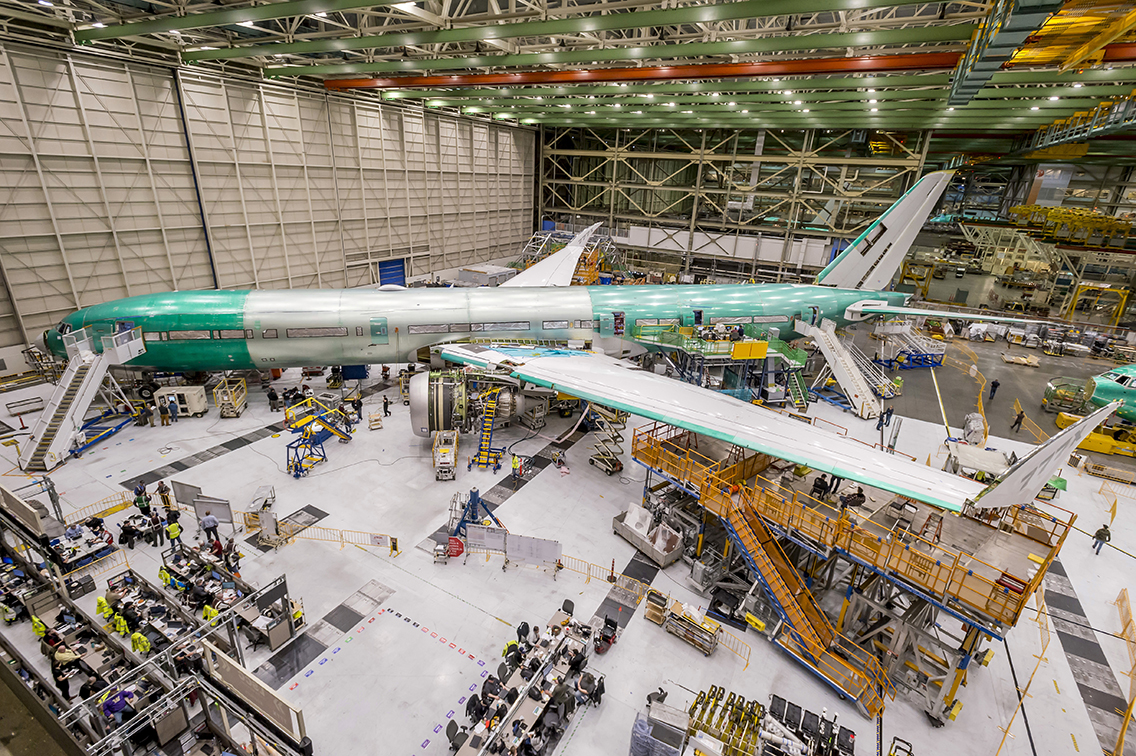
Boeing's 777X program faces a multi-year change incorporation effort affecting more than 30 stored 777-9 aircraft, CEO Kelly Ortberg confirmed during the company's first-quarter 2026 earnings call. The disclosure marks one of the most candid public acknowledgments yet of the scope of rework required before the wide-body twin can enter commercial service. Some airframes in inventory date to 2019, meaning they predate years of certification-driven design changes, productivity revisions, and process improvements that have since been incorporated into newer production aircraft. Ortberg characterized the effort as "a pretty massive activity," with a dedicated team within Boeing Commercial Airplanes focused exclusively on the task, though the company has declined to specify the number or nature of changes required per aircraft, the estimated labor hours involved, or whether launch customers retain the contractual option to refuse delivery of early inventory units.
Perhaps most significantly for operators evaluating the program's schedule credibility, Leeham News and Analysis has independently learned that the first 777X deliveries are expected to come from new production rather than stored inventory. The first production aircraft currently in testing — line number 1781, destined for Lufthansa as the program's launch customer — is the likely candidate for the inaugural delivery, which is anticipated in 2027 following certification expected late this year. That sequencing carries real financial and planning implications for airlines that had positioned stored airframes as early fleet additions. Airlines planning network expansion or fleet transitions around 777X deliveries may find that the aircraft they expected first are, operationally speaking, the last to arrive. The strategic calculus for fleet planners at affected carriers — including those that placed orders a decade or more ago — becomes considerably more complex when the delivery queue is effectively inverted.
The article's historical framing is instructive for understanding what Boeing and its customers are actually facing. The 737 MAX grounding required months of change incorporation per airframe across 450 stored aircraft, a process that consumed years even with the program's infrastructure fully mobilized. The 787 fuselage barrel mating flaw resulted in a 20-month delivery suspension and 3-4 months of major rework per aircraft across 110 planes. The 777X inventory, while smaller in number than the MAX backlog, involves aircraft that have sat for as long as seven years — a duration that introduces its own maintenance and systems-currency concerns layered on top of design-change rework. The parallels are sobering, and they suggest that even optimistic internal timelines carry compounding risk.
The 2019 ultimate load test failure on the static test aircraft remains the most technically consequential unresolved question surrounding the program. Federal regulations require Boeing to demonstrate that the wing structure can sustain 150 percent of the design load; on the 777X, the fuselage ruptured aft of the wing at approximately 99 percent of that final test load, and a passenger door separated from the airframe. Boeing's public position — that reinforcements in the affected area are sufficient and no new ultimate load test is required — stands in apparent tension with reporting that EASA requested a repeat test through the FAA to establish a full 150 percent data point. No such test has been conducted in the intervening years. The FAA's documented posture, as described by a post-mortem participant, was that human error could not be accepted as explanation and that the data itself must prove compliance. Boeing characterizes the matter as a regulatory issue rather than a safety concern, a distinction that professional pilots and their unions are unlikely to find fully satisfying absent transparent disclosure of the structural remediation and its validation methodology.
For commercial operators, business aviation customers, and the broader industry watching the 777X program, the practical takeaways are several. The change incorporation timeline suggests that even after certification is granted, full fleet availability will lag by years rather than months. Airlines planning long-haul route launches or fleet retirements around 777X entry into service should treat any schedule as carrying material uncertainty. The program also reinforces a broader industry lesson that extended storage of complex fly-by-wire aircraft during active development programs creates compounding rework obligations that are difficult to estimate accurately from the outside. Boeing's opacity on the specifics of required changes — their nature, sequence, and per-aircraft duration — makes independent schedule assessment nearly impossible, which itself is a concern for lessors, financiers, and operators whose business cases rest on particular delivery windows.






 Read original article