How The Airline That Invented Premium Economy Continues To Innovate In Luxury Service
EVA Air's introduction of the Evergreen Deluxe Class on the Boeing 747-400 in 1992 stands as one of the most consequential product innovations in modern commercial aviation history. Operating initially on the transpacific corridor between Taipei Taoyuan International Airport and Los Angeles International Airport, the Taiwanese carrier identified a structural gap in the fare ladder that virtually no airline had formally addressed: the vast, uncomfortable distance between high-density economy seating and premium cabins priced beyond the reach of most corporate travel policies and leisure budgets. With 38 inches of pitch in a 2-4-2 configuration and individual seatback entertainment at a time when shared overhead screens were still common, EVA Air created a product that was meaningfully differentiated rather than marginally enhanced. That distinction proved decisive. Within years, legacy carriers and low-cost hybrid operators alike began adopting similar cabin categories, and what began as a niche route product on a single aircraft type became a structural pillar of long-haul revenue strategy across the global network.
The economics that made premium economy compelling in 1992 have only grown more pronounced for airline operators in the intervening three decades. The cabin occupies less real estate than business class while generating substantially higher yield per seat than economy, making it among the most revenue-efficient configurations available on widebody aircraft. For flight operations departments and route planners at airlines operating Part 121 international schedules, this yield compression dynamic has meaningful downstream effects: premium economy demand increasingly shapes decisions about aircraft selection, seat configuration density on specific international routes, and the configuration splits ordered on new narrowbody and widebody deliveries. EVA Air's current fleet order book — which includes 24 Airbus A350-1000s and 13 additional Boeing 787-series aircraft — reflects the airline's continued commitment to long-haul capacity where premium cabin economics are most advantageous. The airline entered the post-COVID recovery period with decades of product refinement already banked, giving it a structural advantage over carriers that only began seriously investing in premium economy after pandemic-era traffic patterns revealed the durability of premium leisure demand.
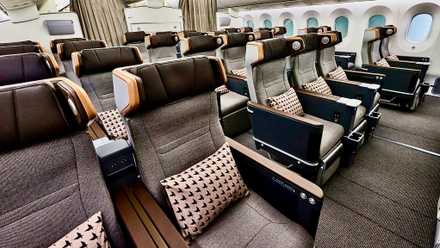
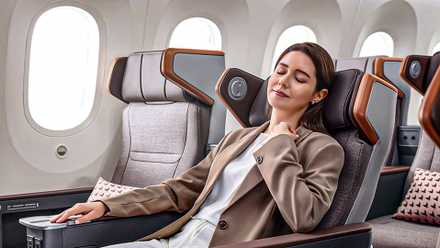
EVA Air's fourth-generation premium economy seat, introduced in 2025 aboard the Boeing 787-9, demonstrates how substantially the category has migrated toward business class territory in terms of design philosophy and passenger expectation. The 42-inch pitch figure is among the most generous in the market segment, exceeding many direct competitors, and the 2-3-2 configuration maintains aisle access for a meaningful share of passengers on ultra-long-haul sectors where fatigue management becomes operationally relevant. The cradle recline system addresses one of premium economy's persistent criticisms — that full recline directly degrades the experience for the passenger immediately aft — and the incorporation of side privacy panels, integrated lighting, upgraded leather, and additional stowage reflects an understanding that premium economy buyers increasingly arrive with near-business-class expectations around personal space and cabin environment. For crews operating these aircraft, the cabin redesign also signals a shift in service delivery expectations: the boundary between premium economy and business class service scripting is narrowing, requiring greater training investment and galley planning discipline on routes where both products are simultaneously active.
The broader trajectory EVA Air's evolution represents is one that commercial aviation operators across fleet types are navigating simultaneously. Premium leisure travel has demonstrated post-pandemic resilience that has outpaced recovery in economy class on many international corridors, and carriers from network majors to charter and ACMI operators are responding with configuration changes and service investment at a pace not seen since the widebody expansion of the 1990s. For flight departments operating business aviation under Part 91 or 135, the competitive pressure this creates is indirect but real: as commercial premium economy cabins increasingly approximate business jet cabin aesthetics — privacy, noise attenuation, personalized service, upgraded dining — the value proposition of charter or fractional travel on shorter-range international segments faces greater scrutiny from cost-conscious corporate travel managers. EVA Air's continued innovation in the category it invented is not merely a product management story; it is a reliable indicator of where commercial cabin investment and passenger expectation are heading across the full spectrum of premium aviation.












 Read original article