Why The Country That 1st Flew A 6th-Gen Fighter May Now Be A Decade Behind
China's early demonstration of sixth-generation fighter prototypes, while visually dramatic and strategically significant, has not translated into a meaningful lead in actual combat capability development. The People's Liberation Army's unveiling of what appear to be J-36 and J-50 technology demonstrators through Chinese social media leaks generated substantial geopolitical alarm, but Western defense analysts and program officials now assess that the gap between a flying prototype and a production-grade weapon system is precisely where China's aerospace industrial base faces its most serious structural limitations. Engine technology remains the core deficiency: Chinese aviation programs have historically relied on less powerful and less efficient propulsion than Western counterparts, even in mature frontline platforms like the Chengdu J-20 and Shenyang J-35A. A credible sixth-generation platform requires variable cycle engines capable of transitioning between efficient cruise regimes and high-speed dash performance — a propulsion challenge that Pratt & Whitney and General Electric are currently competing to solve for the U.S. Air Force's Boeing F-47, but one that Chinese manufacturers have yet to publicly demonstrate progress on. If China tracks the J-20's developmental timeline as a reference point, serial production of a sixth-generation type would not begin before 2031, with full combat squadron readiness unlikely before 2035.
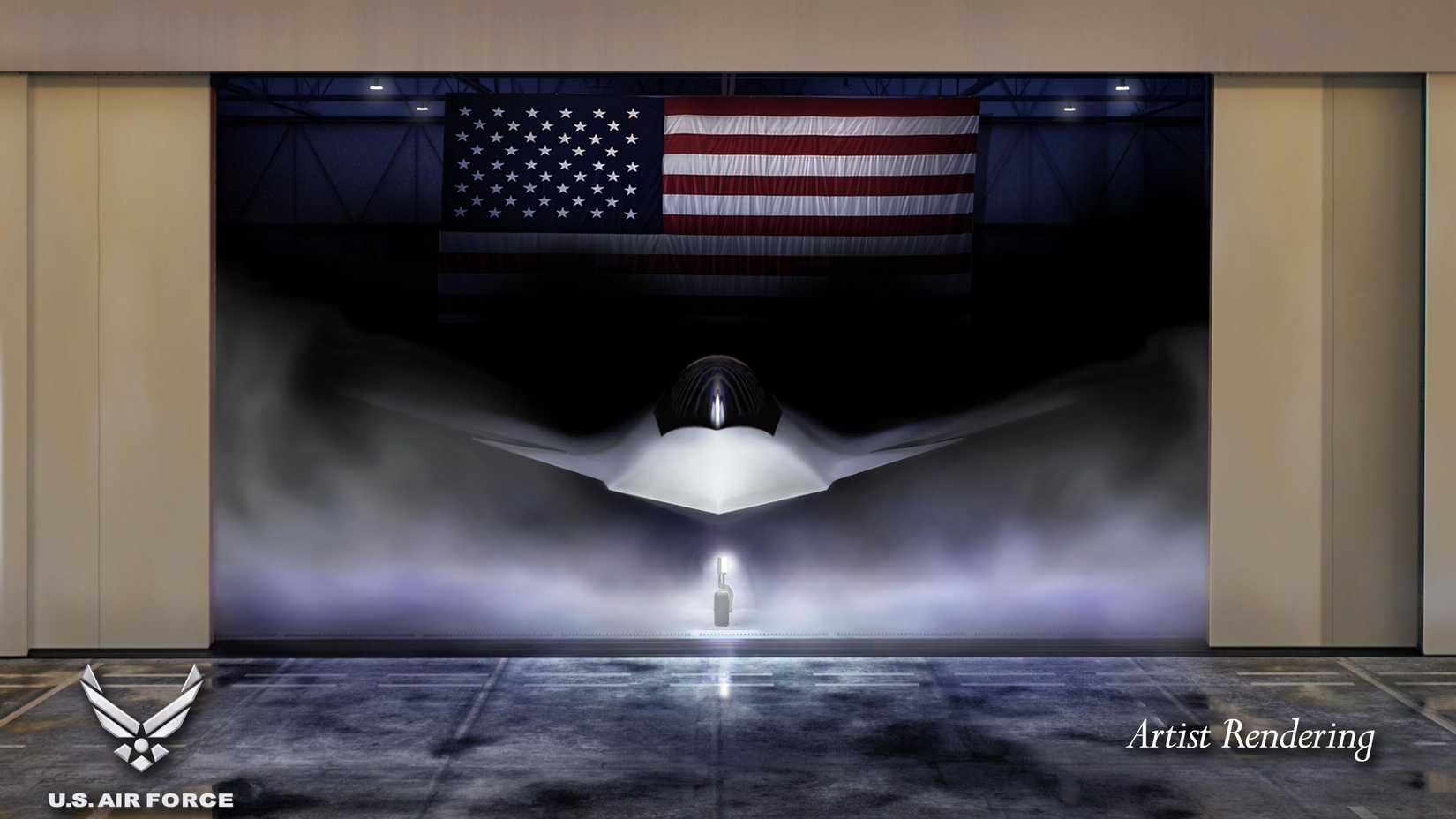
The United States is pressing a significant structural advantage through the Next Generation Air Dominance program, anchored by the F-47 following Boeing's $20 billion contract award in March 2025. Boeing's Phantom Works facility in St. Louis has already begun constructing the first production-representative airframe, with an initial flight targeted for 2028 and service entry projected for the 2029–2030 timeframe. The aircraft is designed from the outset as the crewed apex of a broader system of systems, intended to command semi-autonomous swarms of Collaborative Combat Aircraft in contested airspace. Multi-spectral stealth — sometimes characterized as "stealth++" — goes substantially beyond the all-aspect radar cross-section management of the F-35, extending low observability across infrared, acoustic, and visual detection bands. The U.S. Navy's parallel F/A-XX program, which includes competition between Boeing and Northrop Grumman, received a $1.69 billion Congressional funding boost after a brief pause threatened the program's continuity; a contractor selection decision is anticipated in August 2026. The possibility that a navalised F-47 variant could satisfy both services has entered the public discussion, which would carry significant implications for industrial base consolidation and cost structure.
For professional pilots — particularly those operating in defense-adjacent roles, conducting overseas ferry operations, or managing flight departments with international route exposure — the sixth-generation competition carries practical airspace and geopolitical relevance that extends beyond military platforms. The accelerating deployment of advanced integrated air defense systems correlated with sixth-generation development programs is steadily compressing the airspace in which non-stealthy civilian and business aviation can operate with historical assumptions of predictability in high-tension regions. The integration of artificial intelligence and autonomous collaborative combat aircraft into operational doctrine, a design centerpiece of both the F-47 and the UK-Italy-Japan Global Combat Air Program, signals a fundamental shift in how contested airspace will be managed — one with downstream implications for IFF procedures, electronic environment complexity, and contingency planning for operators flying through politically sensitive regions. Business aviation flight departments supporting multinational corporations with operations near the Taiwan Strait, East China Sea, or European flanks should be monitoring these program timelines as indicators of how regional threat environments will evolve through the 2030s.
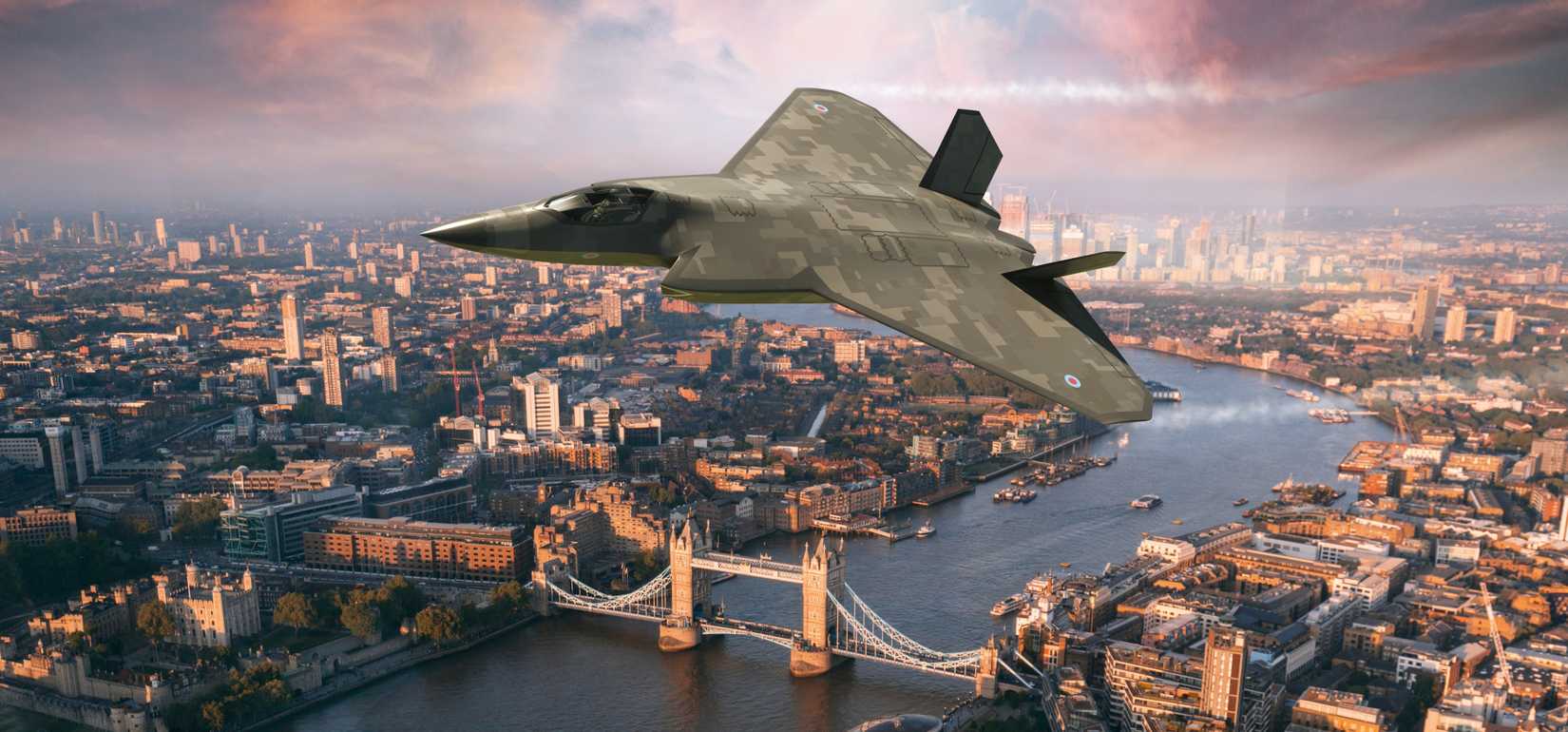
The European sixth-generation landscape illustrates how industrial and political friction can erode strategic intent regardless of financial commitment. The Global Combat Air Program, uniting the UK, Italy, and Japan with a demonstrator fly-off planned for 2027 and service entry targeted for 2035, has maintained relative programmatic cohesion by establishing clear leadership structures among BAE Systems, Leonardo, and Mitsubishi Heavy Industries. Canada's 2026 expression of observer interest is widely read as a precursor to full partnership, which would expand the program's industrial base and cost-sharing structure. By contrast, the Franco-German-Spanish Future Combat Air System remains mired in an unresolved impasse between Dassault Aviation and Airbus Defence and Space over design authority and work allocation, pushing realistic service entry estimates to 2040 or beyond. This divergence between GCAP and FCAS is not merely a procurement story — it reflects a broader pattern in which bilateral and multilateral defense programs succeed or stall based on the clarity of workshare agreements established at program inception, a lesson with direct applicability to any multinational aviation venture, including those in the civil sector.
The propulsion technology dimension of sixth-generation development deserves particular attention from operators and pilots tracking long-cycle aerospace trends. Variable cycle engine architecture — the ability to reconfigure thermodynamic cycle parameters in flight to optimize for different performance envelopes — represents the most consequential advance in jet propulsion since the high-bypass turbofan democratized long-range commercial flight. While the immediate application is military, the underlying technology developed through competition between Pratt & Whitney's Adaptive Engine Transition Program and General Electric's competing effort will almost certainly migrate into commercial and business aviation propulsion over the following two decades, as has been the pattern with virtually every major propulsion advance originating in military programs. The fact that this competition is actively funded and accelerating, rather than being deferred for budgetary reasons, suggests the propulsion technology readiness level is advancing on a timeline that could produce commercial derivatives earlier than prior cycle engine generations. For pilots and flight departments investing in long-term fleet planning horizons extending into the late 2030s and 2040s, the variable cycle engine's maturation trajectory is worth tracking as a leading indicator of next-generation business jet and commercial transport propulsion characteristics.









 Read original article