Delayed Again: Delta To Keep 44-Seat First Class A321neos Until 2028 As Lie-Flat Seats Slip Further
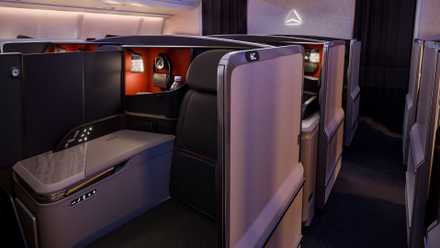
Delta Air Lines has extended its timeline for deploying lie-flat business class seats aboard its premium A321neo subfleet to at least 2028, marking yet another setback in a program that was originally slated for a late 2024 launch. The affected aircraft belong to Delta's "3NF" configuration, a narrowbody platform engineered specifically for high-yield transcontinental routes with only 148 total seats — compared to nearly 200 on standard A321neo deliveries — featuring 16 Delta One suites in a 1-1 reverse herringbone arrangement, 12 Premium Select recliners, and an expanded Comfort+ section. The seat product believed to be at the center of the certification impasse is the Safran VUE, a widebody-derived suite being adapted for narrowbody installation. Regulatory and technical challenges associated with that adaptation have proven more complex than anticipated, and Delta Chief Commercial Officer Joe Esposito has confirmed the product remains in active development and testing with no firm entry-into-service date established beyond the "about two years" guidance offered publicly. Rather than ground completed airframes, Delta has opted to place the jets into revenue service with a temporary 44-seat domestic first class recliner layout — one of the largest premium sections currently operating on any U.S. narrowbody — flying ATL-based routes to Los Angeles, San Diego, Seattle, and San Francisco.
For airline crews and aviation operators, the Delta situation illustrates a critical and increasingly common vulnerability in modern fleet planning: the aircraft itself is no longer the longest pole in the tent. Airframes are being delivered on schedule while interior components — particularly next-generation premium seats designed to achieve widebody-grade comfort within narrowbody structural constraints — are becoming multi-year program risks in their own right. The preinstalled seat track architecture on the 3NF aircraft reportedly precluded a clean redesign to an alternative product, leaving Delta with limited options beyond the expanded recliner workaround. Pilots operating these aircraft under the interim 3NP configuration should be aware that the expanded first class cabin — stretching across 11 rows — carries real-world implications for boarding sequencing, weight and balance distribution, and forward cabin service logistics that differ materially from the eventual 3NF layout. Flight department operators and schedulers tracking fleet reliability and cabin-product consistency should note that the temporary configuration is specifically route-tied to ATL transcontinental markets, creating a two-tier product reality that complicates passenger expectation management.
The delay directly undermines Delta's competitive positioning on premium transcontinental routes, a segment that has become one of the most aggressively contested battlegrounds in U.S. aviation. JetBlue's Mint product, carried aboard A321 aircraft on coast-to-coast routes, has operated with fully flat lie-flat suites since 2014 and has established durable brand equity in the premium leisure and corporate travel segments. United Airlines has moved aggressively with its own A321neo "Coastliner" configuration, further narrowing the window for Delta to differentiate. The 3NF aircraft, when finally equipped as designed, are meant to serve as successors to Boeing 757-200 and 767-300ER aircraft that have historically carried Delta's premium domestic load — airframes now aging past economic and operational sustainability on routes that demand a modern, competitive product. Every quarter of delay leaves Delta relying on widebody equipment or standard narrowbody configurations to hold yield on routes where competitors are offering dedicated flat-bed products.
The certification bottleneck Delta has encountered with the Safran VUE reflects a systemic pressure point that extends well beyond a single airline's program. Seat manufacturers developing widebody-derived products for narrowbody installation are navigating a genuinely novel engineering challenge: the structural assumptions embedded in certification frameworks for widebody floor architectures do not translate cleanly to single-aisle fuselage geometry, load paths, or emergency egress standards. The FAA's technical review process for such products has been slower than the industry initially projected, and Delta is reportedly not the only carrier facing extended timelines on this specific seat. For operators across the commercial and business aviation spectrum, this dynamic signals that premium cabin renovation programs — which have become central to fleet strategy at the major carriers and increasingly relevant to large-cabin business jet operators benchmarking against airline standards — carry certification risk that must now be modeled into project timelines with considerably more conservatism than was standard practice even five years ago. The post-COVID surge in premium travel demand has raised the stakes for every delay, as airlines competing for high-fare passengers cannot afford to offer a degraded product while their competitors operate purpose-built premium narrowbody fleets on the same routes.








 Read original article