Bombardier and Wheels Up: Parallel Paths To Profitability?
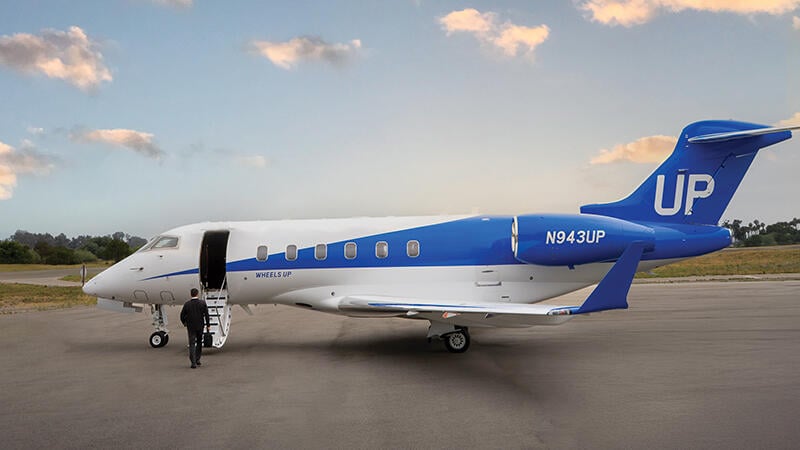
Bombardier and Wheels Up represent two of the most closely watched corporate turnaround stories in business aviation, and the structural similarities in how each organization approached its recovery illuminate a broader set of principles now gaining traction across the industry. Bombardier CEO Eric Martel inherited a heavily indebted manufacturer in 2020 and executed a five-year transformation that culminated in profitability in 2025, a milestone now documented in a Harvard Business School case study. Wheels Up CEO George Mattson, who took the helm of the debt-laden on-demand charter operator following its near-collapse and Delta Air Lines intervention in 2023, is executing a comparable playbook with a stated goal of sustainable profitability, though the precise timeline — 2026 or 2027 — remains unconfirmed. Both leaders inherited organizations that had over-expanded through acquisitions, carried unsustainable cost structures, and had drifted from customer-focused operations, and both responded by simplifying their core offerings while building revenue diversity around those cores.
Fleet rationalization proved central to both recoveries, and the operational logic is directly relevant to flight departments and charter operators evaluating lift options. Bombardier's decision to shutter the Learjet line and concentrate exclusively on Challenger and Global aircraft allowed the manufacturer to consolidate engineering, production, and aftermarket support resources around a coherent product family, improving parts availability, training standardization, and long-term residual value stability for operators. Wheels Up's April 2026 announcement that it had completed its own fleet transition — from five aircraft types down to the Embraer Phenom 300 and Challenger 300 series — mirrors that logic in the charter context. Fewer fleet types reduce maintenance complexity, allow crew training economies, and improve dispatch reliability, all factors that directly affect the service experience for charter clients and the unit economics that determine whether an operator can price competitively while remaining solvent.
The transparency initiatives both companies have adopted represent a notable strategic shift in an industry not historically known for openness. Bombardier's Environmental Product Declarations, which provide third-party-verified lifecycle emissions data for its aircraft, remain unique among business jet OEMs and carry increasing weight as corporate flight departments face sustainability reporting obligations under evolving ESG frameworks in North America and Europe. Wheels Up's publication of operational metrics — flight completion rates, fleet utilization, customer retention figures — serves a different but equally strategic purpose: rebuilding institutional credibility after a period of public financial distress that damaged customer and investor confidence. Mattson's challenge to competitors to publish comparable data, so far unmet, positions Wheels Up as a benchmark setter rather than a laggard, a significant reputational repositioning for a company that was the subject of widespread industry skepticism as recently as 2023.
Revenue diversification strategies at both companies reflect the maturing recognition that single-stream business models in aviation carry structural fragility. Bombardier's expansion into aftermarket services and defense contracts insulates it from the cyclicality of new-aircraft sales, which are highly sensitive to corporate earnings cycles and interest rate environments. Wheels Up's integration with Delta Air Lines — which holds a majority stake — creates a bundled travel ecosystem spanning charter, membership, and commercial airline connectivity that no pure-play charter operator can currently replicate. For corporate travel managers and Part 91 flight department chiefs weighing supplemental lift providers, that Delta relationship represents both a distribution advantage for Wheels Up and a potential differentiator for clients who value seamless itinerary management across aviation segments. Whether Wheels Up converts its restructured model into consistent profitability will serve as a meaningful data point for the broader on-demand charter sector, which continues to search for a sustainable operating formula following the demand volatility of the post-pandemic normalization period.







 Read original article