Marketplace: How Aircraft Charter Details Can Be Streamlined
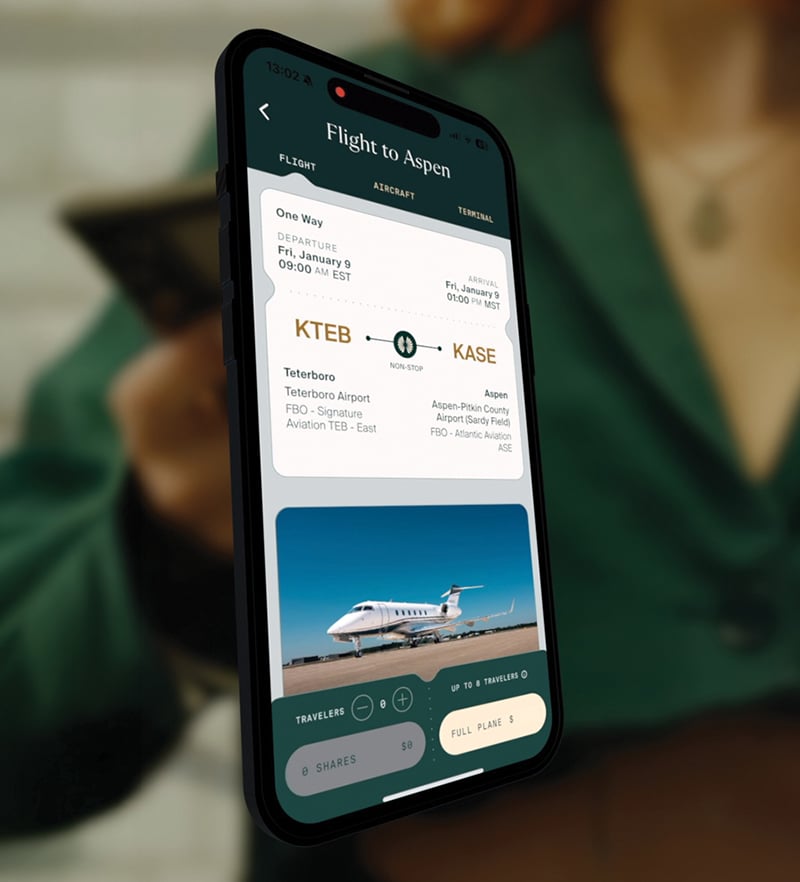
Four distinct technology platforms introduced across the business aviation charter sector signal a convergent industry push to reduce booking friction, improve financial transparency, and extract commercial value from underutilized capacity. Miami-based Elevate Jet's new mobile application centers on an embedded AI agent called Ruby, which evaluates range, fuel load, crew duty limits, airport constraints, and real-time availability to match trip requests with appropriate aircraft from a six-category fleet lineup spanning light jets to ultra-long-range platforms. The app's most operationally notable feature is a proprietary flight grading system that scores every departure on 300 discrete data points — including pilot and crew performance, FBO service quality, cabin condition, and on-duty management — a structured accountability framework that goes meaningfully beyond the anecdotal customer reviews common to consumer travel platforms. Separately, Revaire operates as a curated, invite-only intermediary that connects a vetted membership of executives, founders, athletes, and creators with shared charter segments and discounted empty-leg repositioning flights. Revaire explicitly disclaims any operational role, positioning itself strictly as a technology-enabled marketplace connecting travelers with certificated Part 135 operators who retain full regulatory and operational responsibility.
For working pilots and charter operators, the MySky–Talon Air partnership represents the most directly consequential development from an internal operations standpoint. Talon Air, a New York-based Part 135 operator, has deployed MySky's Spend and Quote modules specifically to eliminate manual accounting and sales workflows that have historically consumed staff time and introduced latency into cost reporting. MySky's platform, developed for the business aviation segment and headquartered in Hoboken, New Jersey, automates the financial data pipeline from quoting through reconciliation — a capability that becomes increasingly important as operators scale their managed fleets and face tighter margin environments. The ability to deliver accurate, real-time financial data to stakeholders without manual intervention addresses a structural inefficiency that has long characterized mid-size charter operations, where accounting systems often lag operational realities by days or weeks.
Jet Linx's MemberSeat Exchange represents a different but equally significant commercial innovation: a formalized, anonymized seat-sharing mechanism built within a closed, controlled ecosystem rather than exposed to the open spot charter market. Evolving from the company's earlier OpenSeat Exchange program, MemberSeat Exchange allows jet card holders to either request available seats on other members' confirmed flights or monetize empty capacity on their own bookings — with all participant identities withheld until a seat match is mutually confirmed. This design directly addresses one of the persistent reluctances among high-net-worth travelers toward seat-sharing arrangements, namely confidentiality, while simultaneously allowing the operator network to recover marginal revenue on repositioning legs that would otherwise generate no passenger yield. The program remains entirely within the Jet Linx platform, meaning operators retain scheduling control and clients retain service continuity expectations, distinguishing it from open-market empty-leg listing services where service standards can vary widely.
Taken together, these four platforms illustrate several converging pressures reshaping the business aviation transaction layer: increasing client expectation of consumer-grade digital booking experiences, growing regulatory and reputational incentive for charter brokers and intermediaries to make their liability separation from Part 135 operators explicit and transparent, and the ongoing effort by operators to convert fixed-cost assets into variable revenue streams through capacity sharing and dynamic pricing. The AI integration across multiple products — from Ruby's trip-matching logic at Elevate Jet to MySky's automated financial workflows — reflects a broader industry reckoning with the labor cost and error rate associated with manual quoting and operations management processes. For pilots operating within Part 135 environments, these platforms ultimately affect scheduling density, crew utilization patterns, and the speed at which trip confirmations flow from sales to operations, making familiarity with the technology layer increasingly relevant to day-to-day professional life.







 Read original article