AAM Pilot Pipeline Advances, But MRO Constraints Loom
The advanced air mobility sector's march toward commercial eVTOL operations is encountering a workforce bottleneck that threatens to constrain growth more immediately than certification delays or infrastructure gaps: a maintenance technician pipeline that is neither large enough nor properly trained for the demands of a new aircraft class. Industry analysts and OEM representatives are increasingly vocal that while pilot training programs have attracted regulatory attention and structured development pathways, maintenance readiness has received comparatively little coordinated investment. The existing airframe and powerplant workforce, already under strain from demand across traditional aviation segments, is now being asked to absorb high-voltage electrical systems, battery thermal management, power distribution architecture, and software-driven diagnostics — skill sets that sit largely outside the experience base developed under decades of turbine-centric training.
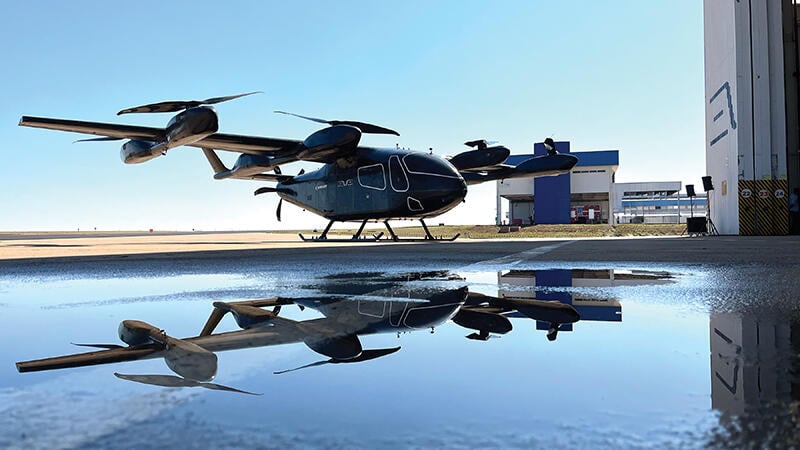
The technical distinction matters significantly for operators planning fleet transitions or evaluating AAM as a new service category. Electric propulsion's reduced mechanical complexity does not directly translate to simplified maintenance; it substitutes one set of technical demands for another. Where traditional A&P technicians are trained to troubleshoot mechanical systems through tactile inspection and established procedures, eVTOL maintenance will increasingly require the ability to interpret onboard data streams, recognize anomalous sensor patterns, and act on predictive diagnostics before hardware failures manifest. Eve Air Mobility's TechCare platform reflects this operational reality, positioning integrated data monitoring, parts provisioning, and technician training as a unified support package rather than discrete services. For operators accustomed to traditional MRO relationships, this bundled model represents a meaningful shift in how maintenance costs, availability guarantees, and technical support will be contracted and managed.
From a practical fleet-operations standpoint, the MRO constraint carries direct implications for dispatch reliability and aircraft utilization economics. Business aviation and regional airline operators evaluating eVTOL for short-haul or urban corridor operations will find that dispatch rates — not just acquisition costs or fuel savings — determine whether the business case holds. Early commercial deployments are expected to involve small, tightly managed fleets operating in controlled conditions, which temporarily insulates operators from the full force of this bottleneck. But as the sector scales and aircraft utilization increases, the gap between available maintenance capacity and operational demand will widen unless workforce development programs accelerate in parallel with fleet growth. Unscheduled maintenance events in high-frequency operations cascade quickly through tight schedules, and spare aircraft buffers in early AAM networks will be thin.
The structural parallel to the electric vehicle industry is instructive but imperfect. Automotive EV maintenance has already driven a reorientation of technician training toward software diagnostics, battery system management, and predictive fault identification — precisely the skill profile that eVTOL operators will require. However, aviation's regulatory environment, safety margins, and documentation requirements add layers of complexity absent from the automotive side. A technician transitioning from EV service work will carry relevant systems knowledge but will still require formal FAA certification pathways that have not yet been fully defined for this aircraft category. The industry's ability to draw from adjacent talent pools — EV technicians, electrical engineers, military avionics specialists — will depend in part on how quickly regulators and training providers establish clear, standardized certification routes for eVTOL maintenance work.
For professional pilots and aviation operators tracking the AAM sector, the maintenance workforce gap is not a background concern to be resolved by developers alone — it is a front-line operational variable that will shape fleet availability, contract negotiations, and service-level expectations from day one of commercial deployment. Operators building business cases around AAM platforms should treat MRO capacity as a critical dependency alongside aircraft certification and vertiport infrastructure, and should pressure-test OEM service commitments against realistic technician availability projections rather than theoretical fleet reliability numbers. The companies that move earliest to establish training pipelines, partner with technical schools, and develop predictive maintenance platforms will hold a meaningful competitive advantage as the sector scales — and the operators who align with those companies early will be better positioned to sustain dispatch reliability when utilization demands begin to test the limits of an undertrained workforce.









 Read original article