Textron Aviation opens expanded Melbourne service facility | Corporate Jet Investor | CJI news
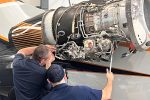
Textron Aviation has opened an expanded maintenance, repair, and overhaul facility at Essendon Fields Airport in Melbourne, Australia, more than doubling its previous footprint at the site to over 35,000 square feet. The new center, which became operational in early May 2026 ahead of a formal grand opening planned for August, provides factory-direct support for Cessna, Beechcraft, and Hawker operators across Australia and the broader Asia-Pacific region. The facility incorporates expanded aircraft servicing bays, an on-site parts stockroom stocked with Textron Aviation inventory, and upgraded customer amenities — all features developed in direct response to operator feedback. The investment follows a mid-2024 facility expansion at Jandakot Airport in Perth and traces its Australian roots to Textron's 2020 acquisition of Premiair Aviation Maintenance, which brought Melbourne, Perth, and Gold Coast service sites under the Textron Aviation banner.
For operators flying Cessna Citations, King Airs, or legacy Hawker jets in the Asia-Pacific theater, the practical significance of this expansion centers on reduced aircraft-on-ground time and faster parts access. Textron Aviation's regional fleet of more than 1,400 aircraft represents a substantial MRO market, and historically, operators in Australia have contended with long lead times for factory-direct parts and scheduling delays driven by limited regional capacity. The on-site parts stockroom at the new Melbourne facility directly addresses that bottleneck, enabling quicker turnarounds for both scheduled maintenance visits and unplanned AOG events — a critical capability for charter operators under Part 135-equivalent Australian regulations and for corporate flight departments where aircraft availability is directly tied to business continuity.
The choice of Essendon Fields as the host airport is strategically deliberate. Located closer to Melbourne's central business district than the primary international hub at Tullamarine, Essendon Fields functions as the de facto home for business aviation traffic serving the Melbourne metro area. Its positioning makes the Textron facility immediately accessible to transient and based business jet operators without the routing inefficiencies of a major international airport, and Essendon Fields Airport CEO Brandan Pihan's comments make clear that the airport views the Textron commitment as an anchor investment in its broader business aviation hub strategy. The retention of factory-trained, type-rated technical personnel at the site is equally significant, given the global shortage of qualified MRO technicians that has pressured operator maintenance scheduling across all market segments since the post-pandemic traffic recovery.
The Melbourne expansion is best understood within the context of Textron Aviation's deliberate build-out of its global authorized service network at a time when business jet utilization in Asia-Pacific has climbed steadily. Demand for light and midsize turbine aircraft — the core of Cessna's Citation and King Air product lines — has remained resilient in the region as corporations increasingly prioritize schedule flexibility over commercial airline dependence. Textron's two-pronged Australian investment, pairing the Perth upgrade with the Melbourne opening, reflects a calculated response to that demand curve and positions the manufacturer to compete more directly with independent MRO providers who have historically filled the gap left by limited OEM regional presence. For pilots and flight operations managers based in or regularly transiting Australia, the practical takeaway is a materially improved factory-support infrastructure that should translate to greater scheduling predictability and reduced reliance on third-party shops for warranty and type-specific technical work.