5 Reasons The US Air Force Continues To Operate The A-10 Warthog In 2026
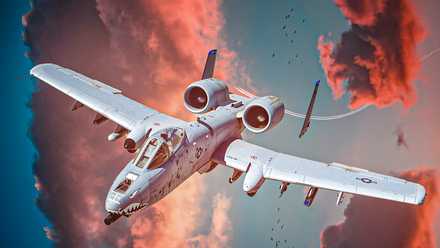
The A-10 Thunderbolt II, scheduled for full fleet retirement by 2030, continues to serve the U.S. Air Force in active combat roles despite more than four decades of institutional pressure to retire it, with recent operations in Syria in 2024 and the 2026 Iran air campaign demonstrating that the platform retains genuine operational utility in permissive and semi-permissive threat environments. Originally championed by the Fighter Mafia reformers of the 1960s and 1970s as a low-cost, purpose-built close air support aircraft, the Warthog entered service in the early 1980s and has outlasted nearly every contemporary platform that was supposed to replace it. The Air Force first formally requested retirement authority in 1984—the same year it accepted its final production airframe—and has been rebuffed by Congress repeatedly ever since, a dynamic driven as much by the aircraft's cultural resonance with veterans and the public as by any operational calculus. With approximately 200 airframes remaining after 39 were transferred to Davis-Monthan's boneyard in 2024, the fleet is contracting on a defined glide path, though the aircraft's actual combat employment continues to expand into new mission sets.
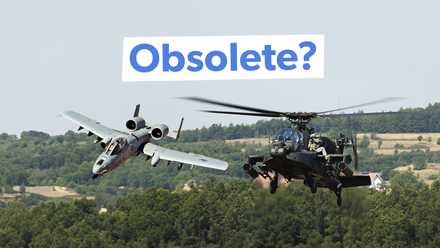
The survivability debate surrounding the A-10 has always been its central vulnerability in Pentagon budget arguments, and that debate has not been resolved by recent combat experience—it has simply been recontextualized. Critics who argue the Warthog is unsurvivable against peer adversaries are largely correct, but the aircraft has never been deployed into peer-contested airspace, and the operational reality is that its range limitations preclude meaningful employment in an Indo-Pacific contingency against China regardless. What the 2026 Iran campaign illustrated with uncomfortable clarity is the aircraft's actual threat ceiling: an A-10 was struck by hostile fire while supporting operations in Iraq, subsequently crashing in Kuwait with the pilot ejecting safely. That incident—alongside the aircraft's successful strafing of Iranian IRGC naval assets including fast attack craft—captures the platform's current operational envelope precisely: effective against low-to-mid tier threats, vulnerable when those threats include even man-portable air defense systems. The aircraft's participation in rescuing a downed F-15 pilot during the same campaign underscores that its value in permissive support roles remains real, even as its legacy anti-armor mission has been largely eclipsed by artillery, precision-guided munitions, and one-way attack drones operated by adversaries and allies alike.
The most consequential development in the A-10's twilight years is its emergence as a counter-UAS platform, a mission set that was entirely unanticipated in its original design requirements but has become operationally relevant given the proliferation of cheap one-way attack drones by Houthi and Iranian-backed forces. The aircraft's design flexibility—specifically its ability to transition from the GAU-8 cannon as a primary weapon to a missile-centric loadout including AGM-65 Mavericks and APKWS II 70mm precision-guided rockets—has allowed it to adapt in ways that its original critics did not foresee. Carrying more than 70 APKWS II rockets, the A-10 presents a cost-effective kinetic option against drone swarms that would be economically inefficient to engage with fifth-generation fighters and their associated sortie costs. This is a mission the Air Force did not plan for the Warthog, but it is one the aircraft can execute, and it speaks to a broader institutional lesson about the enduring value of platforms with high weapons capacity and long loiter times in counterinsurgency and irregular warfare contexts.
For professional pilots across military, charter, and corporate aviation, the A-10's ongoing story is instructive on several levels beyond mere platform history. The aircraft's continued relevance despite institutional opposition highlights how operational commanders in dynamic theaters will reach for available tools regardless of where those tools stand in a programmatic retirement queue—a dynamic that influences how the Air Force structures pilot training pipelines, type certifications, and currency requirements for a shrinking fleet. The broader trend of aging platforms persisting in service well past their originally planned retirement also reflects a recurring procurement reality: the gap between the capabilities a new platform theoretically provides and the fielded capacity to replace the missions of the platform it retires is rarely bridged on the schedule that acquisition programs promise. For the commercial and business aviation sectors, the A-10's counter-UAS evolution is separately notable, as the drone threat environment that produced the military's need for a low-cost interceptor is the same environment reshaping airspace management, UAM integration planning, and security protocols at major civilian airports and corporate flight departments operating in regions with elevated threat profiles.










 Read original article