Why The Boeing 777-9 Can't Fly Its Most Important Routes Without This Certification
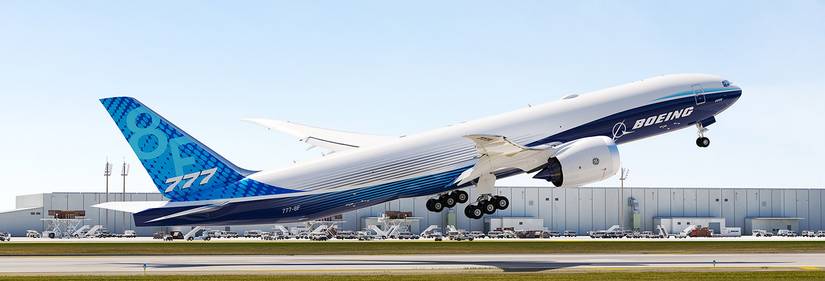
The Boeing 777-9 remains locked in the FAA's Phase 4A certification process as of mid-2026, with Boeing projecting type certification no earlier than 2027 — a timeline that represents a seven-year slip from the program's original target and places first delivery roughly 14 years after the aircraft's 2013 launch. Following Phase 4A and 4B systems evaluations, the program must complete Phase 5 final evaluation before entering systems and reliability testing. ETOPS evaluation will constitute the final major hurdle before the aircraft enters commercial service, and while its eventual certification is not in serious doubt, the rigor of that process will directly determine the operational envelope the 777-9 can offer launch customers from day one.
ETOPS — Extended Twin-engine Operations Performance Standards — governs how far a twin-engine transport aircraft may operate from an adequate diversion airport, measured in single-engine cruise minutes. The 777-9's predecessor, the 777-300ER, holds ETOPS-330, permitting operations up to five and a half hours from a diversion airport and covering effectively all commercially viable transoceanic routing except Antarctic overflights. This rating is the practical baseline requirement for the 777-9's intended mission set. ETOPS-330 enables full Pacific crossing utility, Indian Ocean routing, and South Atlantic operations — the exact long-haul sectors for which launch customers including Lufthansa, Emirates, and Singapore Airlines have ordered the type. A lower initial rating, even ETOPS-180, would technically permit North Atlantic and some North Pacific operations but would constrain routing flexibility and force suboptimal track selections over the Central and South Pacific, materially degrading the aircraft's value proposition on the routes it was purpose-built to serve.
The certification pathway for ETOPS-330 is not procedurally straightforward. The GE9X engine powering the 777-9 must demonstrate a turbine failure rate consistent with the FAA's benchmark of roughly one in-flight shutdown per 375,000 flight hours — a standard that modern high-bypass turbofans routinely meet but must still be demonstrated through an accumulation of certified flight data. Beyond engine reliability, the airframe itself must prove adequate systems redundancy to sustain safe single-engine operations for nearly six hours, including hydraulic, electrical, pneumatic, and flight control architectures that continue functioning under the degraded energy state a single-engine scenario creates. Equally important from a regulatory and operational standpoint, the pilot workload associated with single-engine diversion must not be characterized as excessive, as ETOPS certification evaluates the human factors dimension of managing a degraded aircraft over an extended period — a standard that touches crew training, checklist design, and cockpit automation philosophy simultaneously.
The broader competitive and strategic context matters considerably for operators evaluating widebody fleet planning. The Airbus A350 received ETOPS-370 certification from EASA in 2014, slightly ahead of its 2015 entry into service, giving it a meaningful capability advantage over 330-rated aircraft on the most remote Pacific and Indian Ocean sectors. Whether Boeing pursues ETOPS-370 for the 777-9 at initial certification or targets it as a post-entry service upgrade will influence how airlines schedule the aircraft on their thinnest, longest routes from day one. Given the 777-9's positioning as a direct successor to the 747-400 in terms of passenger capacity and range, operators expecting to fly it on ultra-long-haul routes — particularly Asia-to-North America great circle tracks that transit remote oceanic areas — will view the ETOPS rating number not as a regulatory formality but as a genuine determinant of route network flexibility.
The 777-9 program's extended certification timeline also reflects a broader structural reality in the current FAA oversight environment, where enhanced scrutiny of Boeing programs following the 737 MAX accidents and subsequent manufacturing quality issues has extended evaluation timelines across multiple product lines. For fleet planning chiefs at major carriers and large Part 91K and 135 operators managing large-cabin, long-range aircraft decisions, the 777-9's certification saga underscores the increasing importance of building schedule buffers into widebody delivery assumptions. The aircraft's eventual ETOPS rating, once granted, will be durable — historical precedent shows that once a type establishes an ETOPS baseline, upgrades to higher ratings follow relatively quickly as operational data accumulates — but the path to initial certification remains the critical near-term variable determining when the 777-9 can realistically begin generating revenue on the transoceanic routes that justify its acquisition cost.















 Read original article