Hera Flight targets new flyers with 10-hour Jet Card launch | Corporate Jet Investor | CJI news
Hera Flight, a Clearwater-based private charter operator, has introduced a 10-hour Jet Card programme structured around two aircraft categories — the Citation X super mid-size at $99,999 and the Gulfstream GIV heavy jet at $134,950 — with all-inclusive pricing that explicitly eliminates fuel surcharges, interchange fees, and overnight charges. The payment architecture is notable for its installment format: buyers commit to a substantial deposit plus Federal Excise Tax at signing, followed by four monthly payments spread across the card's activation period. All hours must be consumed within 150 days of activation, a window that compresses utilization pressure relative to some competing programmes that offer 12-month validity. Guaranteed availability is set at 72 hours' notice under standard conditions, extending to 96 hours during peak periods — a commitment that carries significant operational implications for the scheduling and positioning of the company's fleet.
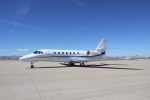
From an operator standpoint, the 150-day burn window and the guaranteed availability promise create a real scheduling obligation that must be backstopped either by owned or managed fleet capacity or through charter broker agreements with third-party operators. The Citation X — historically one of the fastest civilian jets in regular service — and the GIV represent meaningfully different mission profiles: the Citation X suits transcontinental domestic routing at high speed, while the GIV offers heavier payload capacity and transatlantic-range capability depending on configuration. Marketing both under a single jet card umbrella signals that Hera Flight is attempting to cover a broad segment of the Part 135 demand curve rather than specializing in a single market tier. The all-in pricing model, if it holds up operationally, removes the friction points — repositioning fees, peak-day surcharges — that have historically generated buyer complaints across the jet card industry.
The broader jet card market has undergone significant structural pressure since the 2020–2022 private aviation surge, when demand dramatically outpaced fleet supply and drove card prices and minimum-hour requirements upward across major providers. As that demand has partially normalized, operators have responded with differentiated product structures aimed at retaining new entrants to private aviation who were priced or intimidated out of the market during peak scarcity. Hera Flight's 10-hour minimum — below the 25-hour floor common at larger fractional and jet card providers — is a direct response to that dynamic, targeting buyers whose annual flight hours don't justify a larger commitment but who seek more predictability and service consistency than on-demand charter provides. The installment payment structure further lowers the immediate cash outlay threshold, which has become a meaningful lever in capturing first-time private flyers who are comfortable with the economics of private aviation in the abstract but resistant to writing a six-figure check in a single transaction.
For working pilots in the Part 135 environment, programmes like this one have downstream effects on fleet utilization patterns and crew scheduling demands. The 72-hour guaranteed availability window, while generous by retail standards, is operationally tight in a market where aircraft positioning, maintenance scheduling, and crew rest compliance under FAR Part 135 must all be coordinated simultaneously. Operators running these programmes must maintain either sufficient reserve capacity or robust interchange relationships to honor the guarantee without degrading duty-time compliance or driving up positioning costs that erode the all-inclusive pricing promise. Whether Hera Flight's fleet and network infrastructure can reliably absorb that commitment at scale — particularly during peak holiday and summer travel windows when the 96-hour buffer kicks in — will determine whether the programme survives contact with its own marketing claims.