Electric Seaplane Developer Eyes Multi-Mission Capability
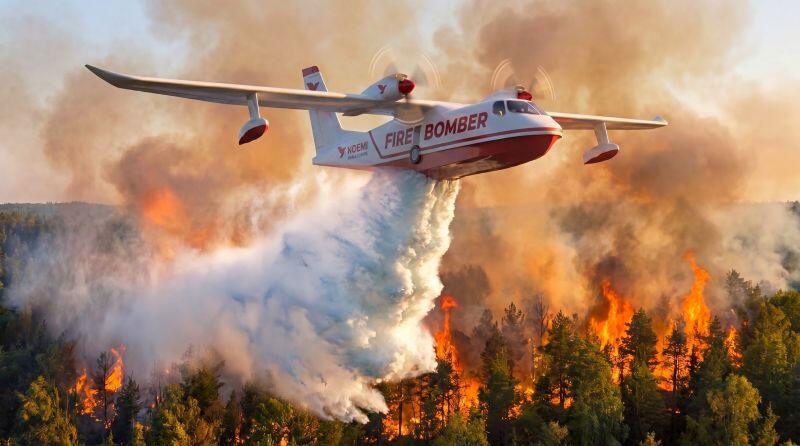
NOEMI Aerospace, the Norwegian startup formerly known as Elfly, is pursuing a clean-sheet electric flying boat platform called Noemi with a first prototype flight targeted for late 2027. The company has repositioned its mission profile significantly beyond its original concept of zero-carbon coastal transport between Norwegian fjord communities, now targeting skydiving operations, military applications, search-and-rescue, and aerial water-bombing for wildfire suppression. The rebranding and mission expansion coincide with an active Series A funding round, with founder Eric Lithun—currently the largest single investor—framing the broadened use cases explicitly as a business case strategy to attract capital and ensure commercial viability.
The technical foundation of the program distinguishes NOEMI from legacy seaplane operators and the broader electric aircraft field in several meaningful ways. Rather than adapting a land-based design with added floats—the approach used by most contemporary seaplanes—the company is engineering the hull geometry from the waterline up. The dual-chine hull configuration, developed through years of subscale model testing in open water, addresses spray suppression and hydrodynamic drag simultaneously, enabling faster water break and reduced aerodynamic penalty during the transition to flight. Published performance targets include a 58-knot stall speed and 110-knot cruise at less than 330 kilowatts of power draw, figures validated through simulation, wind tunnel testing, and flying subscale models. These numbers, if achieved in the full-scale prototype, would place Noemi within the operational envelope useful for short-to-medium range utility operations in coastal or island environments.
For professional pilots and aviation operators, the propulsion architecture decision carries particular significance. NOEMI is deliberately building TAC1 with commercially sourced automotive-industry powertrain components while preserving the option to develop or acquire a purpose-built aviation powertrain for certification and production. Chief Engineer Simon Bendrey, who brings over 30 years of experience from Airbus and Dufour, describes the aircraft as "agnostic" to its propulsion system—a design philosophy that insulates the airframe program from the still-evolving electric aviation powertrain market and mirrors the modular approach being pursued by several other advanced air mobility developers. Certification is planned under EASA CS-23 level three, accommodating up to nine seats and 5,670 kilograms maximum weight, but the wing structure is already sized beyond those limits, allowing a potential path to CS-23 level four certification with expanded seating up to 19 passengers or greater payload and energy storage capacity.
The broader context for operators is that the seaplane market has historically been constrained by the performance compromises inherent in float conversions of conventional airframes. Aircraft like the Cessna Caravan on floats or the de Havilland Beaver remain workhorses in remote and coastal operations precisely because no modern clean-sheet seaplane has emerged to displace them. NOEMI's architecture addresses that gap directly, and the multi-mission framing—particularly the aerial firefighting angle—is strategically astute given the documented global shortage of air tanker capacity and expanding wildfire seasons across Europe, North America, and Australia. Part 135 and equivalent operators in coastal, island, and remote markets will watch the TAC2 demonstrator program closely, as it will offer the first real-world indication of whether the hull design and performance projections translate from subscale testing to operational flight. The 2027 first-flight target remains several development milestones away, but the program's deliberate pace of subscale validation and its experienced engineering leadership give it more structural credibility than many early-stage eVTOL and electric aircraft announcements of recent years.







 Read original article