Airbus’ 27 year march to a new airplane
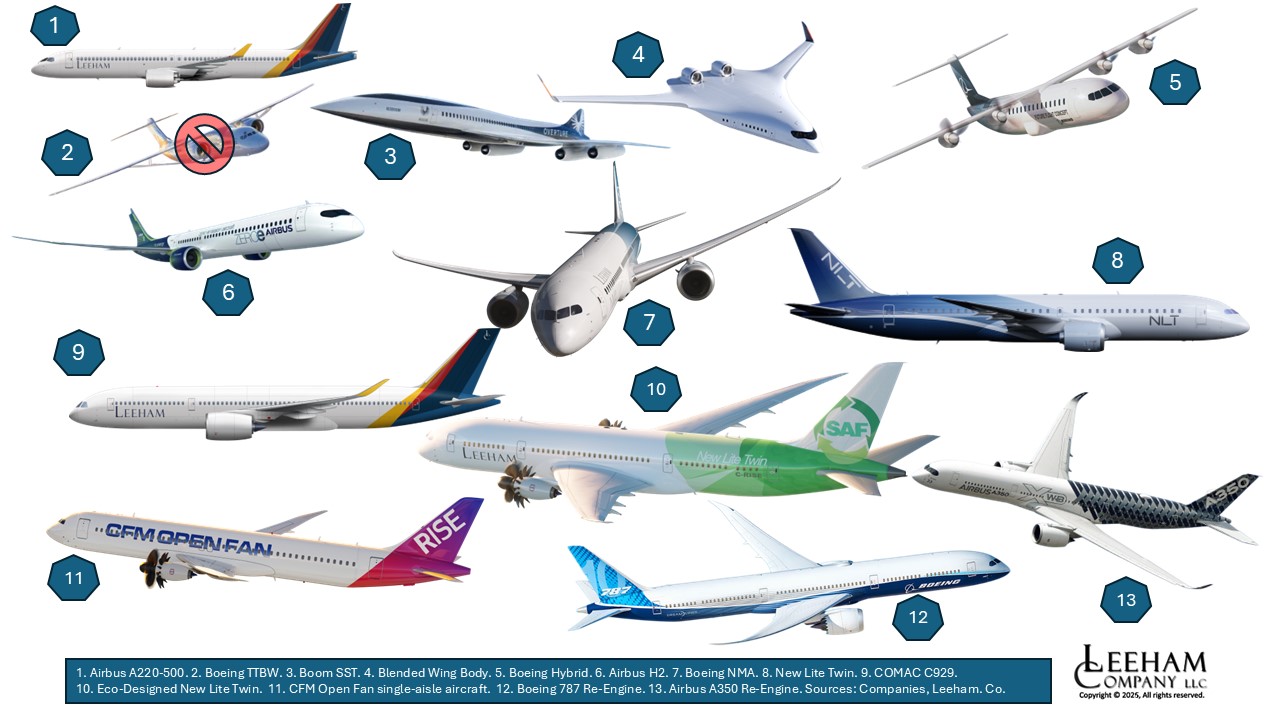
Airbus faces a roughly 27-year gap between new airplane program launches, a timeline that underscores the extraordinary complexity and capital risk associated with clean-sheet aircraft development in the modern era. The A350 XWB, launched in its revised form in 2006, remains Airbus's last all-new design — the A220 family, acquired from Bombardier, does not qualify as an Airbus-originated program. Former CEO Guillaume Faury had publicly targeted a 2030 program launch for an A320neo successor, predicated on CFM RISE Open Fan engine testing beginning in 2027. That testing schedule has since slipped to 2029, pushing any realistic program launch to 2031 at the earliest. The delay is not a minor administrative matter; engine maturity is the critical path variable, and without demonstrated double-digit fuel consumption improvements from a certified powerplant, no rational manufacturer will commit tens of billions to a new airframe.
The leadership transition at Airbus Commercial Aircraft carries significant strategic weight. Christian Scherer, who retired December 31, was a strong internal advocate for both the CFM RISE Open Fan and the A220-500 stretch variant, which Airbus internally designates the A220S. His successor, Lars Wagner, comes directly from MTU's engine unit — MTU being a major Pratt & Whitney GTF partner — which suggests a potentially different disposition toward engine selection. Pratt & Whitney has been openly dismissive of the Open Fan concept as a viable single-aisle solution, and Wagner's institutional background may tilt internal deliberations toward a GTF derivative or an alternative conventional turbofan architecture. An A220S announcement could come as early as this year, representing a near-term product move that would fill the lower end of the single-aisle market while the larger A320neo replacement decision matures. Hydrogen propulsion, once targeted for entry into service by 2035, now appears indefinitely deferred — a tacit acknowledgment that the infrastructure and certification frameworks required remain far too immature for a near-term program commitment.
For airline operators and fleet planners, the extended timeline carries concrete implications. The A320neo family, alongside Boeing's 737 MAX, will remain the dominant narrowbody platforms well into the late 2030s and likely beyond. Operators making fleet decisions today — whether for Part 121 carriers, charter operators under Part 135, or large-cabin business aviation companies evaluating cabin derivatives — are effectively committing to current-generation single-aisle technology for the full useful life of those assets. The GTF's decade-long durability and reliability problems, still not fully resolved in operators' confidence, loom as a persistent risk variable. CFM's LEAP engine has fared better operationally, but neither powerplant represents the step-change efficiency gain that next-generation airframes will require. Operators currently negotiating long-term agreements, power-by-the-hour contracts, or MRO arrangements should factor the likelihood of continued narrowbody engine evolution delays into their cost modeling.
The broader competitive landscape adds urgency to Airbus's decision calculus. Embraer's potential entry into a new single-aisle program could force Airbus's hand at the lower end of the market, particularly in the 100-150 seat segment where the A220S would compete. More consequentially, Boeing's possible launch of a New Midmarket Airplane or a lighter twin-aisle variant — potentially as early as 2028 — would directly threaten Airbus's dominance in the middle-of-market segment that the A321LR and A321XLR currently exploit. Boeing has a structural opportunity to reclaim leadership in that category, and a credible NMA or NLT program announcement would compel Airbus to accelerate its own response timelines regardless of engine readiness. For the business aviation sector, this competitive dynamic matters because widebody and large-cabin business jet derivatives frequently draw from commercial program investments; delays or redirections in the commercial pipeline have downstream effects on VIP and ultra-long-range platform development across the industry.
The 27-year march to a new Airbus airplane ultimately reflects a structural reality of 21st-century aerospace: the financial exposure of a clean-sheet program now routinely exceeds $20 billion, certification timelines stretch to a decade or more, and the propulsion technology required to justify replacing an incumbent family must clear an exceptionally high efficiency threshold. Airbus's openness about its Wing of Tomorrow research, alternative energy concepts, and blended wing body studies signals genuine long-term exploration, but none of those concepts are on a near-term certification path. The decisions made in the next 24 to 36 months — on the A220S, on engine partnerships, and on whether to respond to Boeing's potential NMA move — will define Airbus's commercial product portfolio for the 2030s and 2040s, directly shaping the aircraft that professional pilots across all operational segments will be flying for the bulk of their remaining careers.





 Read original article