Delta Air Lines To Restart LAX-London Flights "In A Few Years" With 70%-Premium Cabins
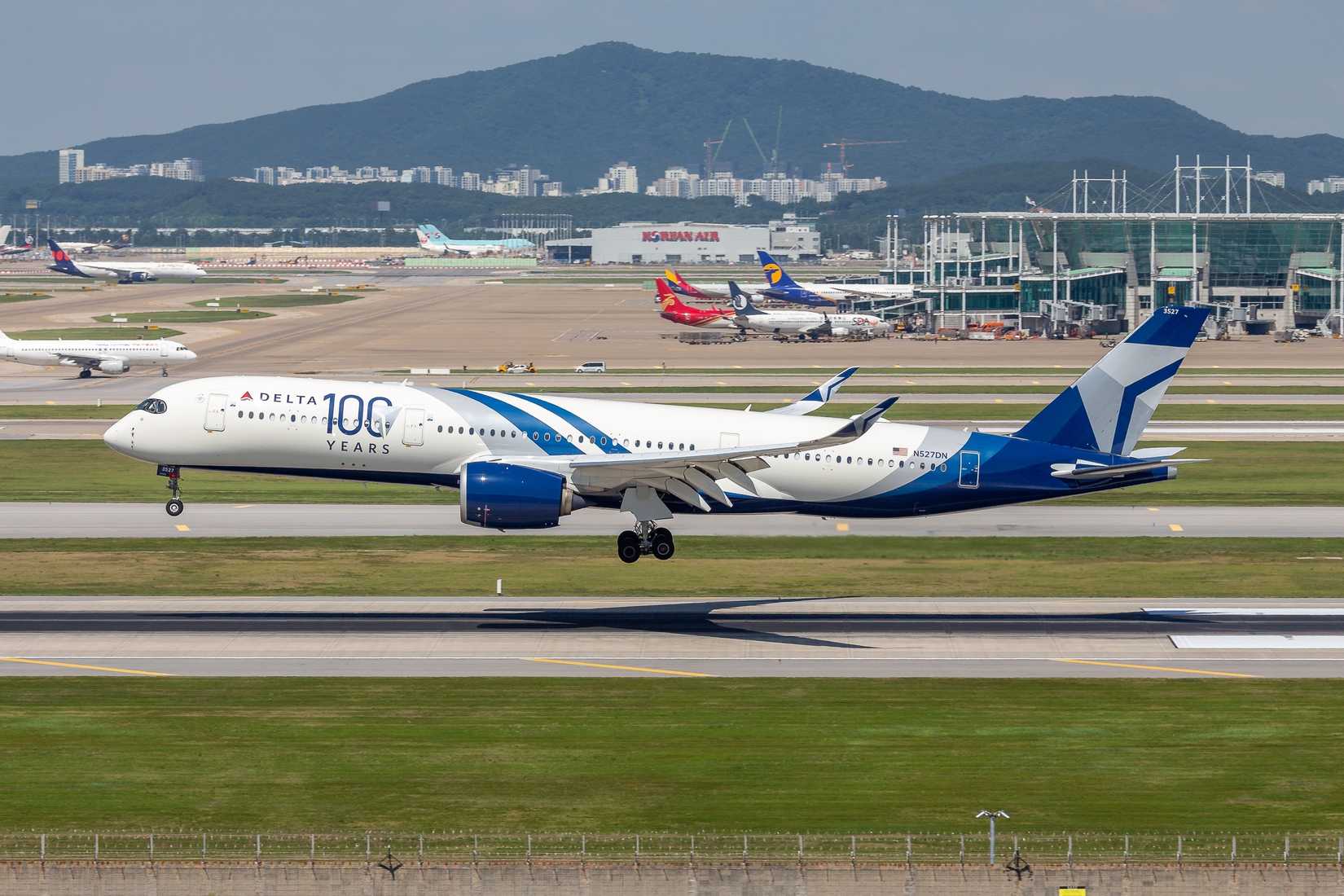
Delta Air Lines is positioning Los Angeles International Airport as a cornerstone of its long-term premium strategy, with plans to restart nonstop service to London Heathrow within the next several years using a cabin configuration approximately 70% dedicated to premium products. Chief Commercial Officer Joe Esposito confirmed the intent in a Business Traveler interview, citing incoming Airbus A350-1000 deliveries beginning in early 2027 as the likely platform for the route's relaunch. Delta suspended LAX-LHR service in May 2024, ceding the route to joint venture partner Virgin Atlantic, which currently operates three daily frequencies between the two airports. The reentry would place Delta directly back in competition with British Airways, American Airlines, and United Airlines on one of the highest-yield transatlantic corridors in the world, while leveraging the joint venture's commercial infrastructure that has kept Delta revenue-relevant on the route even without its own metal.
The 70% premium cabin target is a significant operational and commercial signal. Esposito referenced a configuration carrying 50 to 60 Delta One suite seats, which on the A350-1000 frame would suggest a drastically reduced economy section relative to conventional long-haul configurations. For corporate flight departments and travel managers routing executive traffic through LAX, this represents a meaningful shift in premium seat availability on a market that has historically been supply-constrained in business class during peak periods. Delta has already reached the halfway point of its fleet-wide Delta One suite rollout with sliding privacy doors, with full completion projected over the next five to six years across long-haul aircraft, including incoming A330-900neo and A350 variants replacing older widebody types. The commitment to hardware uniformity across the long-haul fleet reduces the product inconsistency that has historically frustrated corporate travel programs managing preferred-carrier agreements.
The competitive dynamics at LAX carry implications beyond individual route economics. Delta currently holds the top carrier position at LAX by passenger volume — 13.92 million in 2025 representing a 19% market share — while United sits second at 11.87 million and 16%, according to Los Angeles World Airports data. United's stated ambition, articulated by SVP of Global Network Planning Patrick Quayle, to become the leading carrier at the only hub where it does not hold that position sets up an escalating capacity and product war at one of the most premium-intensive airports in the country. For operators running corporate shuttle programs or positioning crews through LAX, the competition translates practically into improving schedule frequency, lounge access, and seat quality on transcontinental and transoceanic segments — as both carriers invest aggressively to capture the high-yield traveler who drives disproportionate revenue on those routes.
Delta's simultaneous move into LAX-Hong Kong beginning June 6 with the A350-900, combined with a planned frequency increase on LAX-Shanghai from three to five weekly departures in October, reflects a broader strategic thesis that transatlantic and transpacific long-haul connectivity must both originate from LAX to justify calling it a true hub rather than a focus city. Esposito's framing — that Delta's domestic feed is a structural advantage foreign carriers cannot replicate — underscores a hub connectivity argument that resonates directly with corporate aviation: a carrier that can bundle premium domestic feed, lounge access, and a suite product on the international segment into a single itinerary has a compelling case for managed travel programs that value seamlessness over price optimization. The acknowledged overcrowding at Sky Club lounges is the most visible friction point in this strategy, and Delta's stated intent to expand lounge capacity will be a factor operators weigh when benchmarking carrier performance for executive travel programs at LAX.







 Read original article