Why Southwest Airlines' Boeing 737s Make A First Class Cabin So Difficult To Build
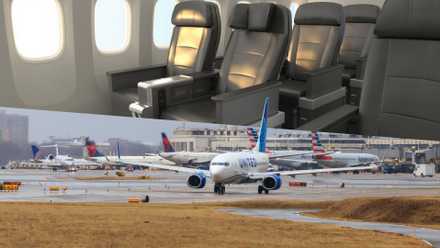
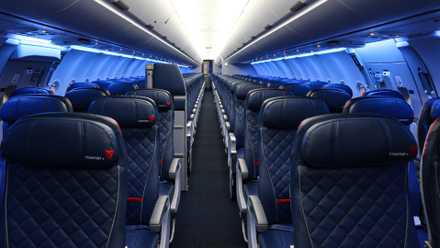
Southwest Airlines' gradual pivot away from its all-economy, single-cabin model has accelerated under CEO Bob Jordan, but the physical configuration of its existing 737 fleet presents significant structural obstacles to fielding a competitive domestic first class product. Unlike American, Delta, and United — all of which operate 737s with dedicated forward galleys, onboard ovens, and reduced seat counts to accommodate premium cabins — Southwest has historically maximized seating density by eliminating full-size forward galleys entirely. Its 737-700s carry only small rear galleys, while its 737-800s and MAX 8s have full-size rear galleys but nothing forward. The result is a cabin architecture optimized for low per-seat costs and high throughput, not differentiated service tiers. Retrofitting that infrastructure to support true first class service — with hot meals, dedicated galley trolleys, and the additional crew workflow space premium service demands — would require Southwest to install full-size forward galleys, directly displacing revenue seats and pushing its aircraft configurations closer to the 160–172 seat layouts its legacy competitors already operate.
The economics of this tradeoff are non-trivial for an operator managing one of the largest single-fleet operations in commercial aviation. Southwest currently squeezes 175 seats onto its 737-800s and MAX 8s, compared to 166 on United's equivalent variants and 172 on American's. That density advantage underpins Southwest's cost structure and load factor math. Giving up 10 to 15 seats per aircraft across a fleet of several hundred narrowbodies to install a premium cabin means the carrier must generate sufficient first class revenue and ancillary loyalty income to offset the lost economy capacity — a bet the legacy carriers have already made and which the data on credit card co-brand revenue clearly supports. U.S. airlines now derive the majority of their operating profit from loyalty programs, with frequent flyer mile sales to card issuers generating returns that dwarf what passengers actually redeem. Southwest's existing Rapid Rewards program lacks the aspirational premium redemption tier that drives high-spend card acquisition, which is precisely the gap a first class cabin would address.
For professional pilots and flight operations personnel, the galley and cabin reconfiguration implications carry direct operational relevance. Adding forward galleys and onboard ovens changes weight and balance calculations, alters catering loading procedures, and affects minimum equipment list items tied to galley power and ventilation. The introduction of a first class cabin also typically changes crew complement requirements and service choreography, particularly on short turns where ground time is constrained. Southwest's point-to-point network model, with some of the fastest turn times in domestic operations, will need to reconcile premium service expectations — boarding priority, pre-departure beverages, hot meal plating — with an operational cadence built around 25-minute turns. Legacy carriers have managed this tension for decades, but it required dedicated training programs, adjusted ground procedures, and in some cases modifications to gate infrastructure.
The prospect of lie-flat seating, which Jordan did not rule out, introduces an even more constrained set of engineering and route economics. Lie-flat products on narrowbodies are operationally viable only on longer transcon segments — typically transcontinental routes of four hours or more — where passengers are willing to pay meaningful premiums for the product and where dwell time justifies the seat weight and space penalty. Installing lie-flat seats on a 737 would force Southwest to cut economy capacity substantially below even legacy-configured layouts, making the unit economics work only on a narrow slice of its network. Frontier's planned premium cabin and Breeze Airways' existing offering demonstrate that the ultra-low-cost and hybrid carrier segments are converging toward premium differentiation, compressing the competitive space Southwest occupies in the middle. The broader trend across domestic aviation is unmistakable: the all-economy model that Southwest pioneered and defended for five decades is no longer a defensible standalone strategy in a market where loyalty revenue and premium cabin margins have become the primary drivers of airline profitability.










 Read original article