The US Air Force Retired Its Most Capable Tanker & Replaced It With A Downgrade
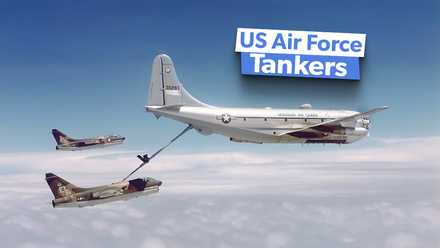
The United States Air Force's retirement of the McDonnell Douglas KC-10 Extender in September 2024 has exposed a significant capability gap in American aerial refueling operations, with the successor Boeing KC-46A Pegasus still mired in Category One deficiencies nearly a decade after entering service. The KC-10, which flew for 43 years beginning in 1981, was a dual-role tanker-transport built on the DC-10 airframe and capable of offloading up to 356,000 pounds of fuel while simultaneously hauling 170,000 pounds of cargo — figures the KC-46A cannot approach, with its 212,299-pound fuel capacity and 65,000-pound cargo limit. The Extender's design included both boom and drogue refueling systems simultaneously operational, enabling joint-service refueling compatibility without modification kits, a flexibility the KC-135 never possessed and one the KC-46A has struggled to reliably deliver. The last KC-10, tail number 79-1948, was formally retired on September 26, 2024, closing out a platform that had been central to every major American military operation from Desert Storm through Operation Allies Refuge in Kabul in 2021.
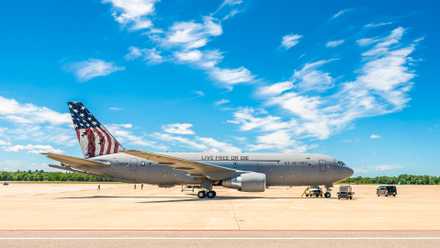
The KC-46A's problems extend well beyond early developmental teething issues and now represent a programmatic crisis with direct implications for operational readiness. The aircraft has been classified as a Category One deficient system, meaning its deficiencies seriously affect combat capability or safety. The remote vision system — a camera-based arrangement that replaced the traditional boom operator's rear-facing window station — has been the primary culprit in at least three confirmed refueling incidents that caused tens of millions of dollars in damage to fighter aircraft. Boeing is currently redesigning both the refueling boom and the remote vision system from substantive components outward. New procurement orders have been paused, and the geriatric KC-135 Stratotanker fleet, based on Boeing 707 architecture from the 1950s, is being held in service past its planned retirement specifically to compensate for the KC-46A's inability to fill the operational role the Air Force requires. The fleet stands at approximately 180 aircraft as of 2026, with a planned total purchase of over 250 units, yet the program's foundational systems remain unresolved.
For professional aviators — particularly those operating in international or high-density airspace environments where military tanker operations affect routing, NOTAMs, and airspace structure — this situation signals prolonged reliance on aging KC-135 airframes that now routinely require airspace accommodations due to their performance envelopes. The KC-135R's 580 mph maximum speed and 50,000-foot service ceiling constrain its operational flexibility in environments where modern fighter packages operate at the edges of its performance. The KC-46A's slower 530 mph maximum speed compared to even the KC-135R represents a step backward in receiver compatibility, a fact not lost on fighter communities. Boom operators and pilots who flew the KC-10 frequently describe its fly-by-wire digital boom as providing measurably superior stability during contact, a contrast that has become pointed given the receiver damage now attributed to the KC-46A's remote vision system latency and depth perception problems.
The broader context here touches on themes that resonate across both military and commercial aviation: the risks inherent in replacing proven analog or semi-analog systems with software-dependent architectures before those architectures are fully validated, and the compounding cost of program decisions that are made under acquisition pressure rather than operational maturity. The KC-46 was awarded to Boeing in 2011 as a fixed-price contract intended to control costs, but the arrangement largely transferred risk to the government in operational terms while Boeing absorbed financial losses on the development side. The result is an aircraft certified for global combat deployment since 2022 that nonetheless cannot safely perform its primary mission without ongoing restrictions. Commercial aviation professionals and corporate flight departments operating internationally should note that USAF tanker availability and mission limitations increasingly affect international route planning in theaters where aerial refueling and tanker-borne cargo previously provided rapid logistics flexibility — a capability that, for now, remains substantially degraded compared to the platform the Extender represented.










 Read original article