Bjorn’s Corner: Aircraft Structures Part 2. The History is governed by Materials.
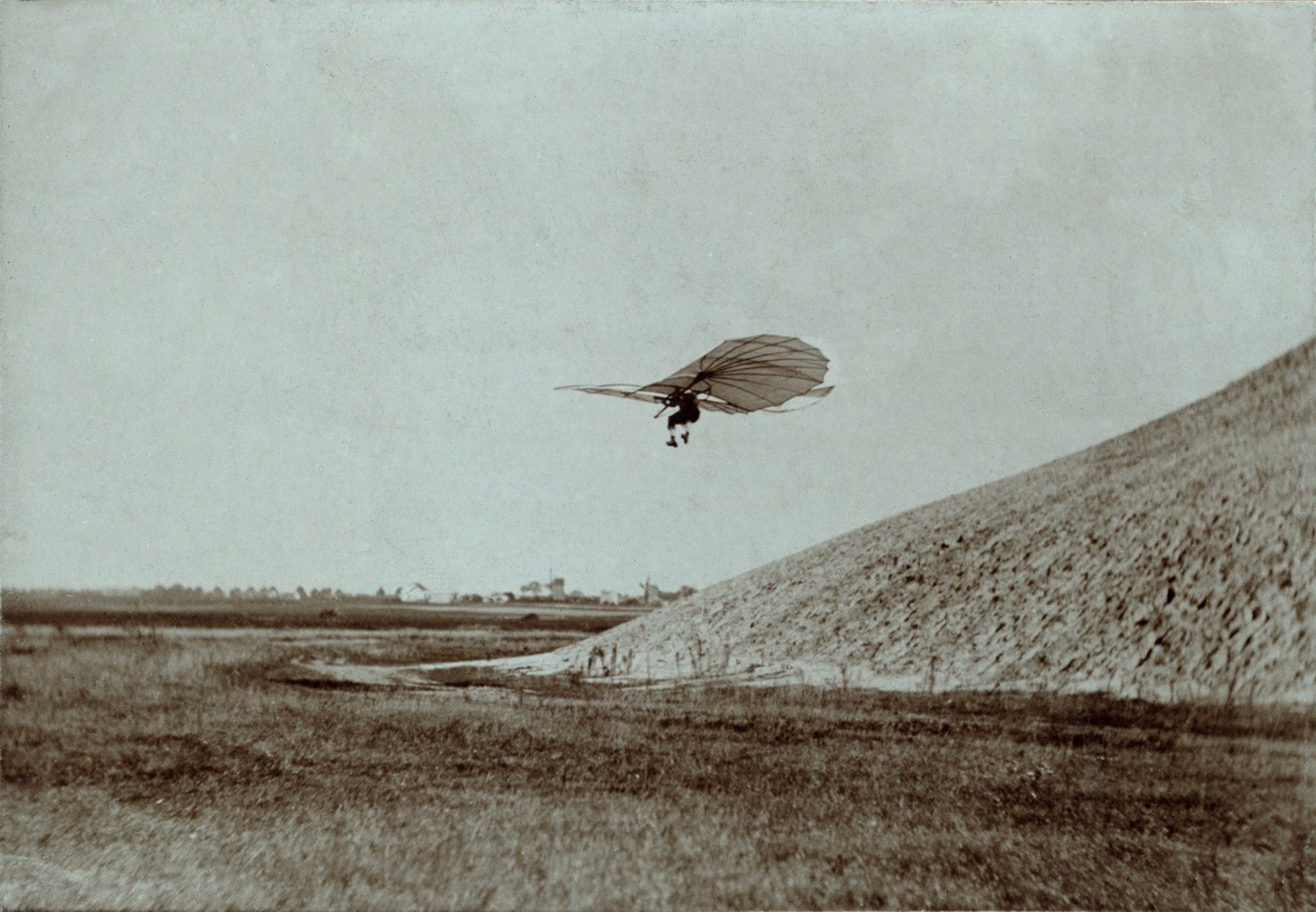
Aircraft structural design history is inseparable from the history of materials science, and Bjorn Fehrm's second installment in Leeham News' structures series traces that evolution from Otto Lilienthal's bird-inspired bamboo-and-cloth gliders in 1895 through the aluminum monocoque fighters of World War II. The earliest powered aircraft relied on rectangular wooden frames cross-braced with steel wire — a technique visible in the Sopwith Camel's structure, where virtually every structural rectangle, including the gun mounts, carried diagonal wire bracing to resist racking loads. That approach worked at low speeds but generated substantial parasitic drag, and as military and early commercial operators demanded higher performance after WWI, designers were forced to abandon the wire-braced biplane configuration entirely. The transition required both a cleaner aerodynamic philosophy and a fundamentally stronger, lighter structural material to replace wood.
That material arrived in the form of Duralumin, a copper-aluminum alloy developed by Alfred Wilm in Berlin in 1903 and commercialized by Dürener Metallwerke AG beginning in 1909. Its significance to aviation cannot be overstated: with roughly six to eight times the strength of pure aluminum and one-third the density of steel, Duralumin gave designers a path to rigid, load-bearing structures that could replace wooden longerons and fabric-covered wing ribs with machined metal spars and skins. German manufacturers were first to exploit it operationally, producing the Junkers D.I — the first all-metal monoplane fighter — in 1918. By 1935, Duralumin and its variants had displaced wood as the dominant structural material across both military and commercial aviation worldwide. The copper-based alloy family Wilm pioneered survives today in the internationally designated 2000-series alloys, with 2024 remaining one of the most widely specified alloys for fuselage structures and general airframe use due to its balance of tensile strength and fatigue resistance — properties that are directly relevant to the pressure-cycle fatigue environment that every pressurized airliner operates within.
The article's treatment of the Hurricane and Spitfire offers a precise and practically instructive contrast between two structural philosophies operating simultaneously. The Hawker Hurricane retained a fabric-covered, skeleton-framed fuselage inherited from earlier Hawker designs, transitioning only gradually to stressed-skin wing covers. The Supermarine Spitfire, like the Messerschmitt Bf 109, was designed from the outset as a full monocoque — or stressed-skin — structure, in which the outer skin itself carries primary loads rather than acting merely as an aerodynamic fairing over an internal framework. The practical consequence was significant: the Spitfire's stressed-skin architecture allowed designers to absorb successive engine power increases throughout the war, because the skin and underlying structure could be engineered to handle higher bending, torsional, and inertial loads as the aircraft evolved. The Hurricane, despite its structural conservatism limiting its development ceiling, had well-established production tooling that enabled rapid manufacturing scale-up, making it the numerically dominant platform during the Battle of Britain's critical early phase.
For working pilots and aviation operators, this historical framing is more than academic. The 2024-T3 aluminum found in the fuselages of aircraft ranging from legacy Boeing 737 Classic airframes to Citation jets is a direct descendant of Wilm's 1903 alloy, and the heat treatment temper designations that maintenance personnel reference when assessing repairs and structural data have a direct lineage to the quench-hardening process Duralumin required at 450–500°C. Understanding that stressed-skin structures carry loads in the skin and frames simultaneously — rather than in discrete internal members — underpins how pilots should interpret airworthiness directives related to skin corrosion, lap joint cracking, and pressurization-cycle fatigue damage. Fuselage skin that is visually thinned, corroded, or improperly repaired is not a cosmetic issue but a primary structural degradation. The structural logic established in the 1930s remains the governing principle of virtually every metal airframe in commercial and business aviation service today.
Fehrm's series arrives at a moment when the aviation industry is actively debating the limits of aluminum-dominated airframe design. The Boeing 787 and Airbus A350 demonstrated that carbon fiber reinforced polymer composites could displace aluminum as the primary structural material for widebody airframes, offering significant weight and fatigue-life advantages — particularly in the pressurization cycle environment where aluminum's fatigue behavior historically set design limits. Narrowbody and business jet manufacturers have adopted composites more selectively, often in control surfaces, empennages, and nacelles while retaining aluminum in fuselage primary structure. Understanding the material history Fehrm is tracing provides the foundation for evaluating those tradeoffs: why composites require different damage-detection methodologies, why their repair protocols are more complex, and why the transition from one structural paradigm to another — just as the transition from wood to Duralumin was — is neither instantaneous nor without operational consequence for the pilots and mechanics who work with those airframes every day.







 Read original article