JetBlue Selects Fort Lauderdale For New Airbus A220 Base Opening In January 2027
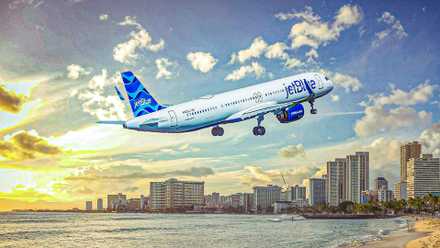
JetBlue Airways is establishing a new Airbus A220 pilot domicile at Fort Lauderdale-Hollywood International Airport (FLL), with the base set to open effective January 1, 2027. The move, confirmed through an internal pilot vacancy bid reported by aviation insider JonNYC rather than a formal airline announcement, represents a significant expansion of JetBlue's crew infrastructure in South Florida. It follows the carrier's earlier decision to base JetBlue Mint cabin crewmembers at FLL as well, signaling that the airline is building out the full operational apparatus typically associated with a primary hub rather than a secondary focus city. Cirium schedule data shows JetBlue already operating the A220 on 25 routes from FLL, spanning Northeast corridors, Caribbean leisure markets, Gulf Coast cities, and select mid-continent destinations — a network scope that rivals the FLL footprints of far larger carriers.
The strategic logic behind the base is inseparable from the collapse of Spirit Airlines, which left a structural void across one of the country's most active leisure aviation markets. Spirit's failure freed up gates, slots, and latent passenger demand at FLL, and JetBlue has moved decisively to absorb that capacity, adding 11 new destinations from FLL in the immediate aftermath of Spirit's shutdown, including Baltimore, Charlotte, Columbus, Indianapolis, and multiple Latin American markets. The airline has also increased frequencies on existing routes and reallocated aircraft from underperforming stations elsewhere in its network. Establishing a local pilot domicile removes a significant constraint on that growth trajectory: crew based in South Florida can be scheduled more efficiently, reducing deadhead costs, improving reserve coverage, and enabling faster turn times across a dense local flying program.
The A220's role in JetBlue's network architecture deserves close attention from industry observers. The aircraft fills what the airline's route planners characterize as "middle market" flying — demand levels that cannot economically justify A321 or A320 deployment year-round but that have outgrown regional jet capacity. The A220 burns substantially less fuel than previous-generation narrowbodies, carries lower trip costs, and delivers a cabin product — larger windows, quieter interior, 2-3 seating, seatback IFE, and generous overhead storage — that differentiates JetBlue from the ultra-low-cost carriers most directly competing for the same FLL passengers. That product differentiation matters particularly on Caribbean and Northeast leisure routes where Spirit's price-anchored model previously suppressed yield expectations across the entire market.
For pilots and aviation operators tracking fleet and domicile trends, the FLL A220 base reflects a broader industry pattern of carriers using type-specific bases to concentrate pilot populations around their most productive aircraft-route pairings. JetBlue retired its Embraer fleet last year, making the A220 the airline's sole smaller-narrowbody type, which concentrates all sub-A320 flying into a single fleet pool and simplifies scheduling logistics considerably. The concentration of A220 operations at FLL — 25 routes, high-frequency Northeast banks, daily Caribbean departures — creates a natural center of gravity for that fleet, and a dedicated domicile formalizes what the schedule data already implied. For pilots holding or pursuing A220 type ratings, the new base represents a meaningful expansion of direct-entry opportunities within JetBlue's system, particularly for those already based in South Florida.
The broader implication for commercial aviation is that FLL is undergoing a structural elevation in its network hierarchy, not simply a temporary beneficiary of a competitor's failure. JetBlue becoming the number one carrier at the airport, combined with multi-year infrastructure investments in crew bases across both mainline and premium cabin operations, suggests the airline views South Florida as a durable competitive position rather than an opportunistic fill. If JetBlue's FLL expansion continues at its current pace, the airport could emerge as one of the more consequential leisure-aviation hubs in the eastern United States — a development that will carry implications for slot competition, ground infrastructure planning, and competitive dynamics among the carriers, including American and Southwest, that also maintain meaningful FLL presences.








 Read original article