How 1 Engine's Failures Quietly Redrew The Boeing 787's Entire Market Map
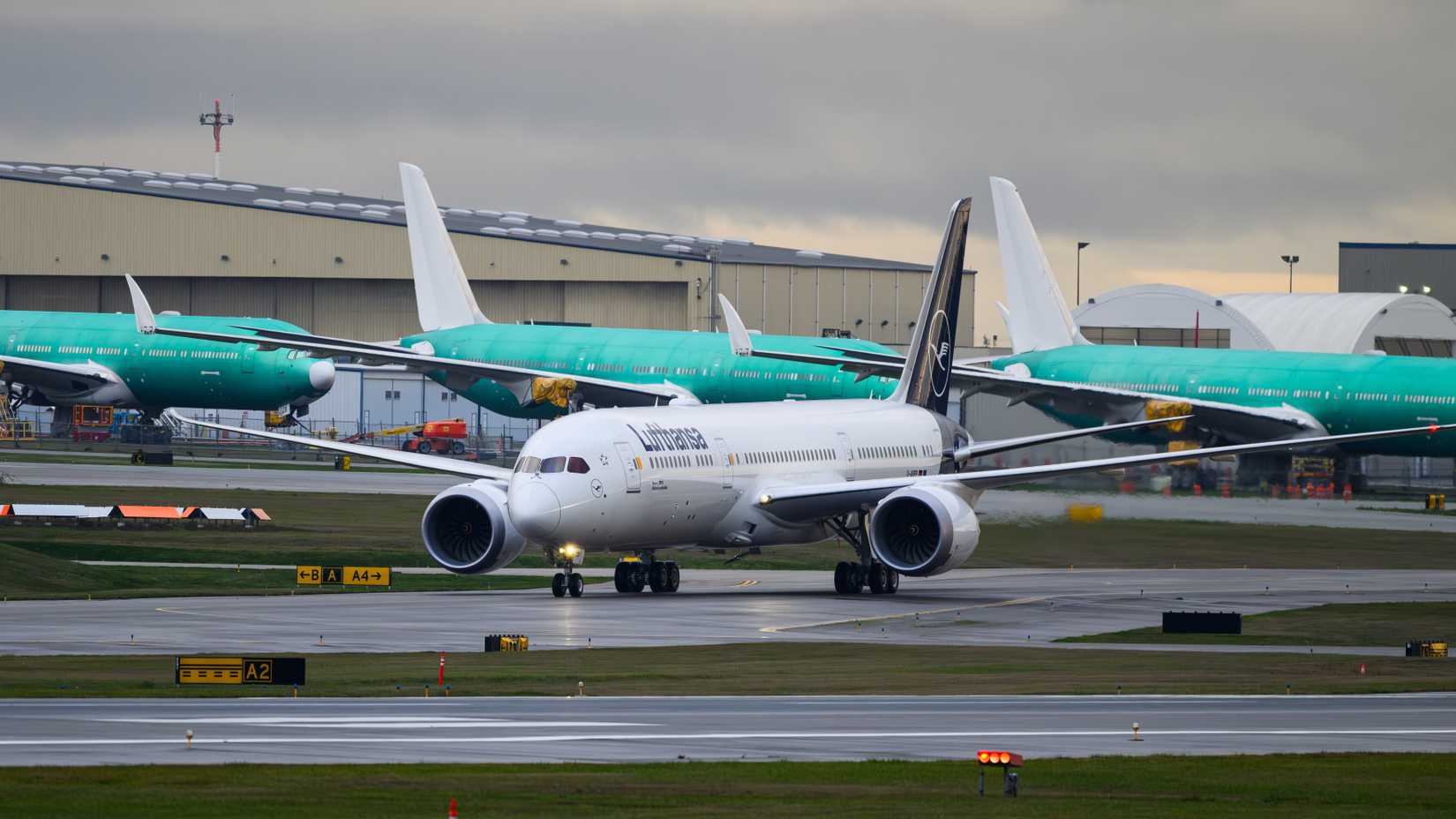
The Boeing 787 Dreamliner entered service in 2011 with two certified powerplant options — the General Electric GEnx-1B and the Rolls-Royce Trent 1000 — and the competition between them initially appeared balanced. Rolls-Royce held approximately 50% of 787 engine market share in the aircraft's early years, powered the first prototype, and logged the type's inaugural commercial revenue flights with All Nippon Airways. The two engines carried genuine technical differentiation: the Trent 1000's triple-spool architecture conferred a measurable fuel burn advantage on routes under 3,000 nautical miles, while the GEnx proved marginally more efficient on longer sectors. Airline selection was largely driven by fleet commonality preferences, manufacturer relationships, and pricing negotiations — the kind of commercial calculus that has always shaped powerplant competitions. What neither airlines nor Rolls-Royce anticipated was that a cascade of structural and metallurgical failures would soon render the choice far less ambiguous.
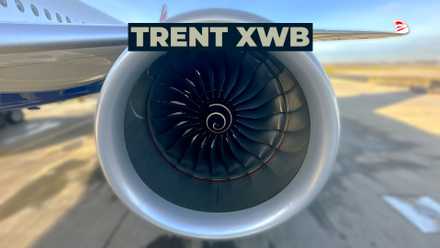
The erosion of the Trent 1000's position began in 2016, when ANA identified corrosion-related fatigue cracking in the intermediate-pressure turbine blades of engines already in revenue service. What followed was operationally damaging in ways that went well beyond normal service disruption. By 2018, inspection intervals had been compressed from every 200 flights to every 80 — a roughly 60% reduction that imposed severe maintenance burden on operators — and the ETOPS certification for Trent 1000-powered 787s was downgraded from 330 minutes to 140 minutes. For carriers operating transoceanic routes in regions with limited diversion airports, a 140-minute ETOPS rating is not merely a restriction; it is a fundamental rerouting of the aircraft's commercial utility. British Airways, ANA, and other major Trent 1000 operators were forced to ground aircraft and restructure network schedules while awaiting repairs that Rolls-Royce, stretched across simultaneous Trent XWB production ramp-up and Trent 7000 development, could not turn around quickly enough.
The Trent 1000 TEN variant, introduced in 2017, was engineered as a comprehensive fix — incorporating compressor technology derived from the Trent XWB-84 and core architecture from Rolls-Royce's Advance3 demonstrator program, with only 25% parts commonality with earlier variants. It promised 2% lower fuel burn and substantially improved durability. It delivered neither outcome reliably. The TEN variant developed its own suite of failure modes, including premature high-pressure turbine blade deterioration and intermediate-pressure compressor cracking driven by internal vibration loads. The repetition of structural failures across successive variants — not just in one component family, but across multiple turbine and compressor stages — signaled to the market that the root causes were systemic rather than isolated. By 2018, GEnx had captured over 53% of cumulative 787 engine orders, while the Trent 1000 had fallen to 32%, with additional undecided orders representing airlines actively deferring the selection.
For working pilots and flight operations departments, the Trent 1000 episode is a case study in how powerplant reliability failures translate directly into network disruption at the operational level. ETOPS restrictions are not abstract certification metrics — they determine which city pairs are commercially viable and which approach corridors are legally accessible in the event of an engine shutdown. A 787 certified to 330-minute ETOPS can operate routes across the Pacific and Indian Oceans that a 140-minute-rated aircraft physically cannot serve without unacceptable diversion exposure. Operators who had built schedule commitments around the 787's range and flexibility found themselves operating aircraft that could not legally fly the routes for which they were purchased. Maintenance planning was similarly disrupted; compressing inspection intervals by 60% while simultaneously awaiting a spare engine supply constrained by manufacturer production bottlenecks forced fleet managers into ad hoc capacity decisions with direct revenue implications.
The broader significance of this competitive shift lies in what it reveals about the economics of sole-source versus dual-source powerplant strategies. Boeing's decision to offer two engine options on the 787 was commercially conventional — airlines valued the leverage it provided in negotiations — but the Trent 1000's reliability record effectively collapsed the competition from the market side rather than through any deliberate Boeing intervention. GE's GEnx-1B emerged dominant not by winning a technical competition on paper, but by not losing the reliability competition in service. That distinction matters as the industry evaluates future narrowbody and widebody programs, where manufacturers face increasing pressure to reduce certification complexity through sole-sourcing while airlines simultaneously push for competitive choice. The 787 engine market outcome suggests that when reliability diverges significantly between dual-source options, the market consolidates around the more dependable choice regardless of contractual flexibility — a dynamic that engine manufacturers and their airline customers are watching closely as next-generation powerplant programs mature.









 Read original article