5 Airlines With The World's Most Superior Premium Economy Seats For Transatlantic Flights
Premium economy has matured into a distinct and commercially significant cabin class, and the competitive differentiation among carriers on transatlantic routes is now substantial enough to influence corporate travel policies and passenger routing decisions. The five airlines highlighted in this ranking — led at the top tiers by undisclosed carriers, with United Airlines at third, Air France at fourth, and Lufthansa at fifth — illustrate that the segment has moved well beyond the original concept of marginally improved economy seating. Configuration choices, seat hardware, catering philosophy, and technology integration now collectively define a product that sits meaningfully between economy and lie-flat business class, and operators and travel departments booking frequent transatlantic passengers need to understand these distinctions.
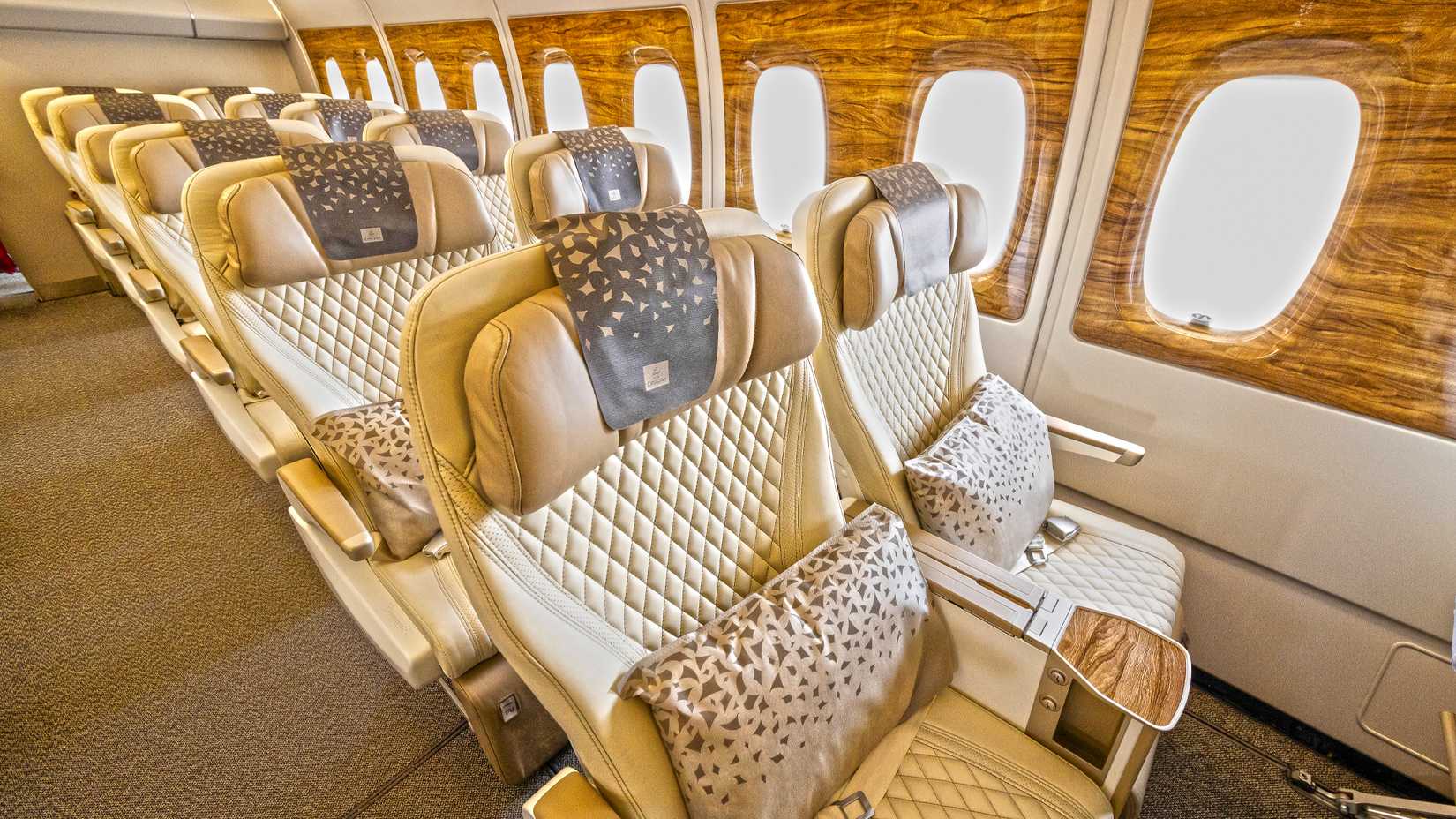
Lufthansa's positioning at fifth place is notable given that its A350 premium economy cabin is objectively among the widest in the industry. The carrier's decision to configure the A350-900 in a seven-abreast premium economy layout — yielding 19-inch seats on standard aircraft and 19.5-inch seats on Allegris-equipped frames — runs counter to the industry norm of eight-abreast configurations, which airlines typically favor to maximize revenue density. Lufthansa and its affiliate SWISS are deploying the ZIMPrivacy PC-02 fixed-shell seat, which also appears on the 787-9 fleet, though with narrower dimensions due to fuselage constraints. For corporate travel managers routing employees on Lufthansa's A350 services, the wider seating and reduced middle-seat density represent a tangible comfort advantage worth factoring into booking decisions, particularly on overnight transatlantic legs where rest quality has productivity implications.
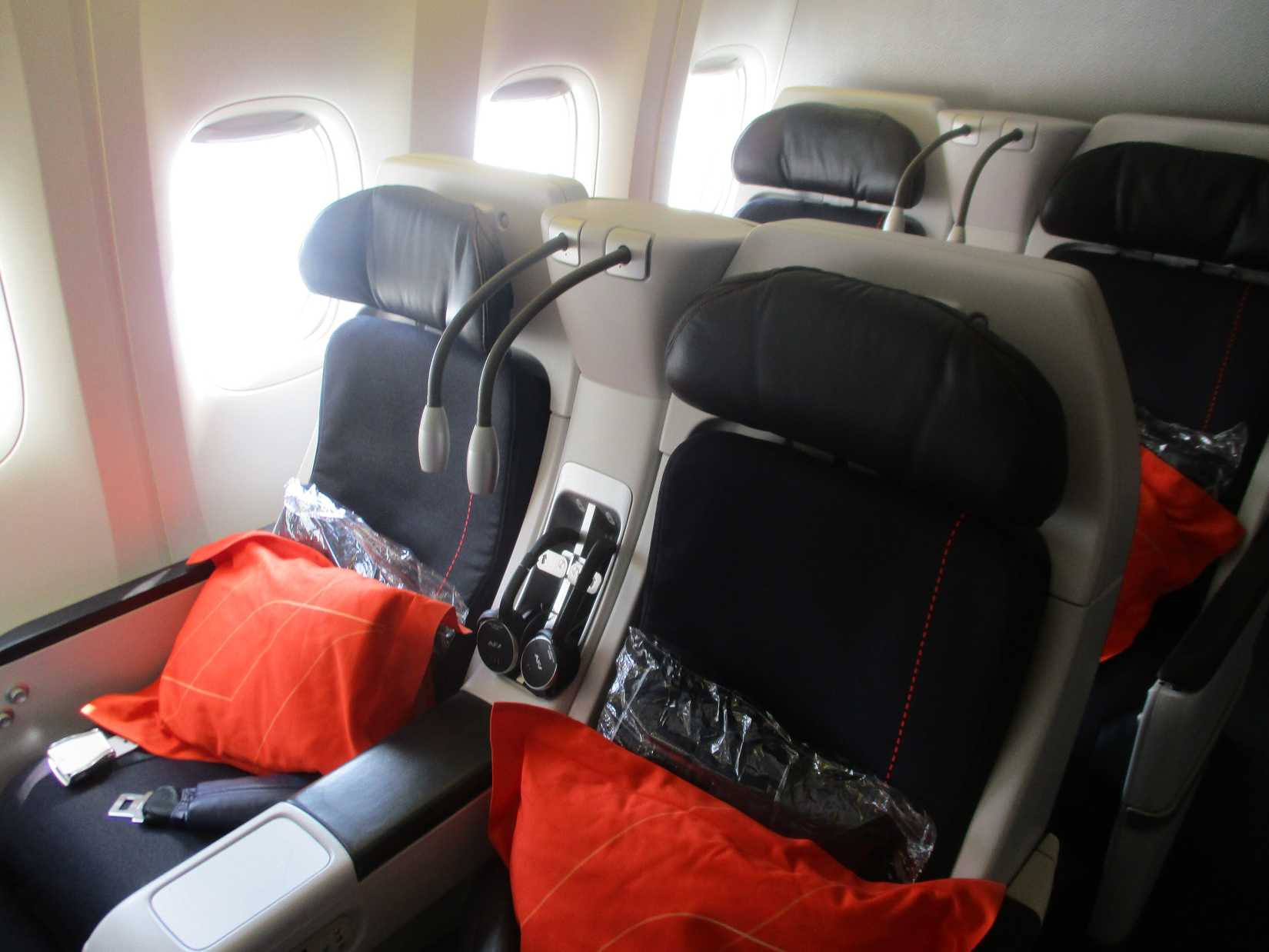
Air France's fourth-place ranking reflects a product that is competitively adequate in hardware but is increasingly differentiated through soft product — catering in particular. The carrier's pivot away from economy-standard meals to Michelin-starred menu planning by chef Frédéric Simonin, combined with champagne service, metal cutlery, and upgraded amenity kits, represents a service-layer investment that hardware specs alone do not capture. Air France's mixed fleet of fixed-shell and recliner seats across different aircraft types creates some inconsistency in the passenger experience depending on which aircraft operates a given route, a consideration relevant to corporate bookers trying to standardize the travel experience for frequent flyers. The carrier's reliance on the Recaro PL3530 recliner on its high-density A350s is a particular point of differentiation from fixed-shell competitors, as recliners intrude on the row behind while fixed-shell seats do not — a meaningful distinction on dense transatlantic services.
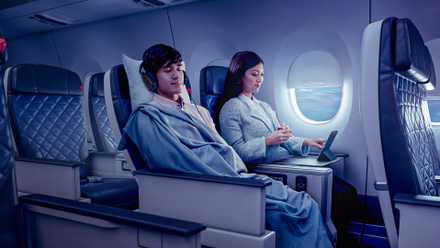
United Airlines' Premium Plus earns third place on the strength of its Collins Aerospace MiQ seat implementation and, more significantly, the technology package in its new Elevated Interior 787-9 deliveries. The 16-inch 4K OLED Bluetooth-capable display, USB-C and wireless charging, full-height privacy divider, and dedicated water bottle storage represent functional engineering that appeals to business travelers who use flight time productively. For aviation operators considering positioning flights or deadhead travel for crew and corporate passengers, United's Premium Plus on Elevated 787-9 routes — currently operating out of San Francisco — offers a measurable step above legacy premium economy hardware. The broader industry context here is that airlines are increasingly front-loading technology investment into premium economy as a hedge against business class yield dilution, recognizing that a growing segment of corporate travelers will accept a functional premium economy seat over a lie-flat seat if the price differential justifies it for shorter transatlantic sectors.
The competitive dynamics in transatlantic premium economy carry direct relevance for flight departments and charter operators who monitor commercial aviation trends as benchmarks for cabin standard expectations. As widebody aircraft like the 787-9 and A350 continue displacing older 777 and 767 frames on transatlantic routes, the baseline passenger expectation for seat width, screen size, and charging capability is rising. Business jet operators and Part 135 charter providers can use these benchmarks when advising clients on value-of-service positioning, since a well-configured premium economy seat on a modern widebody now competes meaningfully with the comfort level of some older or smaller charter aircraft on medium-haul transatlantic segments. The segment's ongoing investment cycle also signals that carriers view the premium economy revenue band as structurally durable, which has implications for aircraft procurement, cabin retrofit schedules, and long-term fleet planning across the commercial aviation industry.








 Read original article