Accolades - AskThePilot.com
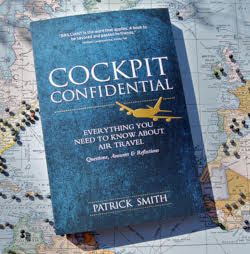
Patrick Smith's AskThePilot.com accolades page aggregates more than two decades of critical praise from journalists, authors, and readers, collectively affirming his standing as the most widely recognized pilot-writer working in American aviation media. Launched in 2002 as a column on Salon.com and migrating to its own platform in 2012, the site operates as a solo enterprise in which Smith — an active commercial airline pilot — writes all content himself, covering everything from cabin safety and aircraft operations to airline liveries and the sociology of modern air travel. The testimonials collected there span outlets including the *Boston Globe*, *The New York Times*, the *Atlantic*, *Condé Nast Traveler*, and *Air & Space Smithsonian*, a breadth of mainstream coverage that is essentially without precedent for a working-line pilot producing independent editorial content.
What distinguishes the Smith enterprise from a public-relations perspective is the consistent emphasis reviewers place on his ability to translate technical aviation knowledge into prose accessible to non-pilots — what the *Boston Globe*'s Alex Beam describes as communicating "in English, not in pilot-ese." For professional pilots and aviation operators, this distinction carries operational significance beyond literary appreciation. The chronic gap between what crews know about aircraft systems, risk statistics, and operational procedures and what the traveling public believes represents a persistent source of friction for airlines, charter operators, and corporate flight departments alike. Smith's two-decade effort to close that gap through high-readership journalism has functionally served as a public-education resource that no trade association or regulatory body has been able to replicate at comparable scale.
The reader testimonials embedded in the accolades page reinforce a pattern that has broader implications for how aviation communicates with its customers and stakeholders. Multiple readers describe having developed aerophobia before encountering the column, and attribute resolution of that fear directly to Smith's systematic debunking of popular myths about turbulence, structural failure, and collision risk. For Part 135 and Part 91K operators whose passengers skew toward high-net-worth individuals with scheduling flexibility — people who can choose alternative transportation if anxiety is unmanaged — this kind of accessible, authoritative third-party content represents a meaningful contribution to the business case for air travel itself. The testimonials suggest the column functions not merely as entertainment but as a form of pre-flight risk normalization for a segment of the flying public.
Within the broader context of aviation media, Smith's trajectory from Salon columnist to independent platform operator tracks a wider industry shift in which credible, practitioner-authored digital content has displaced legacy aviation journalism as the primary information source for engaged lay readers. Traditional aviation trade publications have historically served professional audiences, while consumer-facing outlets have tended toward sensationalism around accidents and incidents. Smith occupies a third category: technically rigorous, commercially accessible, and maintained by a credentialed operator. The praise from Christine Negroni, Clive Irving, and Joe Sharkey — all professional aviation journalists themselves — underscores that this positioning is recognized within the industry, not merely by general-interest readers. That a single working pilot, writing independently and without institutional backing, has sustained that level of recognition across more than twenty years reflects both the depth of public appetite for honest aviation information and the relative scarcity of practitioners willing or able to supply it.





 Read original article