Questions & Answers - AskThePilot.com
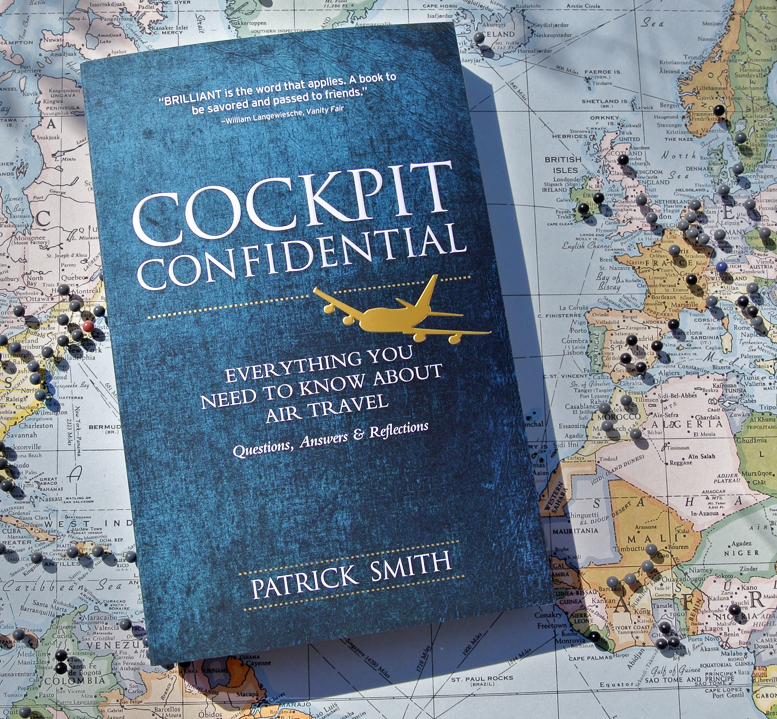
AskThePilot.com, maintained by airline pilot and author Patrick Smith, operates as a long-running public-facing Q&A platform drawing from his book *Cockpit Confidential* and a Salon.com column spanning 2002 through 2012. The site addresses a wide range of topics — from turbulence physiology and cabin air quality to approach procedures, go-arounds, and the aerodynamics of wingtip condensation — primarily aimed at demystifying commercial aviation for the traveling public. Smith flies Boeing 757/767 equipment and grounds his explanations in operational reality, offering technically accurate descriptions of routine procedures such as the post-takeoff thrust reduction at approximately 1,000 feet above ground level, the sequencing of flap and gear deployment on final approach, and the multi-layered redundancy systems that prevent configuration errors from reaching critical stages.
For working airline and corporate pilots, the site's value lies less in its operational content — which will be familiar ground — and more in its function as a benchmark for how aviation procedures are communicated to non-pilots. Smith's treatment of gear deployment, for instance, accurately reflects standard stabilized approach criteria: gear typically extended by 2,000 feet AGL, full configuration locked by 1,000 feet, with aural warning systems and checklist discipline serving as independent verification layers. His explanation of idle-power descents and the roughly 20:1 glide ratio achievable by transport-category jets directly counters widespread passenger misconceptions about engine-out survivability — a narrative that Part 121 and Part 135 crews frequently encounter when passengers misinterpret normal flight sounds and power changes as emergencies.
The Q&A structure also highlights persistent friction points between operational norms and passenger perception, several of which carry direct implications for crew resource management and passenger briefing practices. Topics such as aborted landings, tray table and window shade rules during critical phases, and the rationale behind electronics policies are areas where flight crews regularly field questions or encounter pushback. Smith's framing — that these procedures reflect disciplined conservatism rather than excessive bureaucracy — aligns with the safety culture emphasis found in FAA Advisory Circulars and ICAO documentation on crew-passenger communication. For corporate and charter operators flying under Part 91K or 135, where direct passenger interaction is more frequent and less structured than on commercial carriers, this kind of accessible technical framing has practical utility when briefing high-net-worth or executive clientele who may be less tolerant of unexplained protocols.
The site's broader significance sits within a wider trend of aviation transparency and public engagement that has accelerated since the mid-2000s. Smith's work predates and in many ways anticipated the explosion of aviation content on YouTube, podcasting, and social media, where platforms like Mentour Pilot, 74 Gear, and numerous others now serve millions of subscribers. The proliferation of this content has measurably shifted passenger baseline knowledge — crews today are more likely to encounter passengers who have watched an engine runup video or read about ETOPS than was the case a decade ago. This creates both opportunity and obligation for professional aviators: an informed passenger is generally a calmer one, but partial knowledge can also generate more specific and occasionally misguided concerns. The ongoing relevance of Smith's Q&A archive reflects the durability of core aviation misunderstandings and the continued need for authoritative, operationally grounded public communication from credentialed flight professionals.






 Read original article