China Completes First Flight Of Indigenous F406 Turbofan For UAS
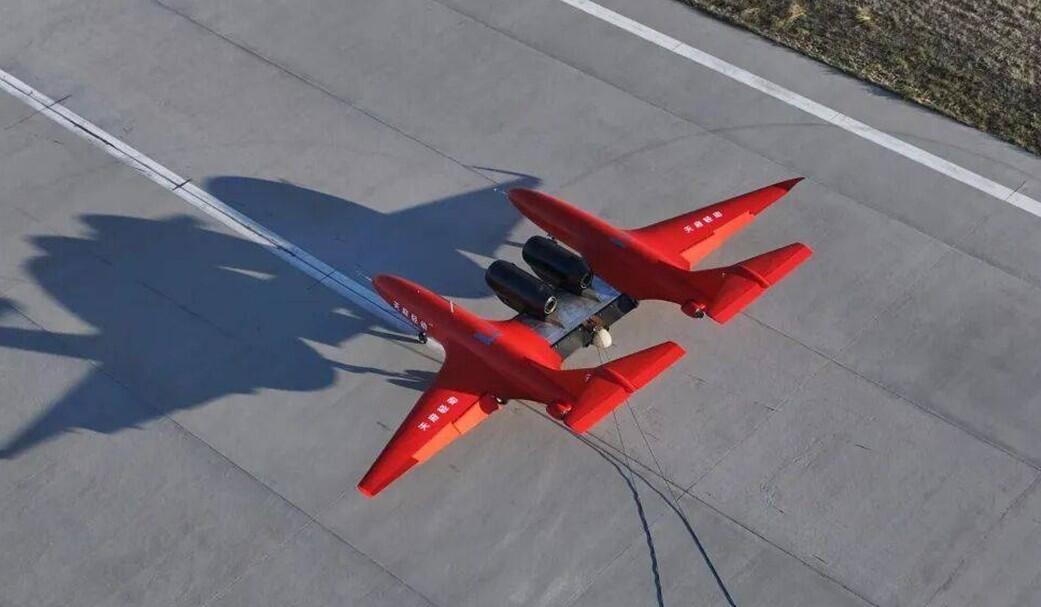
China's first successful flight test of the domestically developed F406 turbofan engine on May 23, 2026 marks a significant milestone in the country's long-running effort to achieve propulsion independence for its uncrewed aircraft systems. Developed by Sichuan Tianfu Light Power Technology, a subsidiary of the state-linked Aero Engine Corporation of China (AECC), the engine falls into the 600-kg (approximately 1,322-lb.) thrust class, a range suited to power small- and medium-sized UAS platforms across both military and emerging commercial applications. The successful first flight transitions the F406 from developmental testing into an early operational validation phase, signaling that China's indigenous turbofan capability for this class of aircraft has cleared a fundamental engineering threshold.
The 600-kg thrust bracket is operationally significant. Engines in this class are well-suited to medium-altitude, long-endurance (MALE) UAS platforms, jet-powered loyal wingman concepts, and high-speed tactical reconnaissance aircraft—categories that have become central to modern contested airspace operations. For comparison, Western equivalents in this thrust range include turbofan designs from Williams International and Safran, engines that power everything from advanced training aircraft to cruise missiles and next-generation autonomous platforms. China's historical difficulty in developing reliable, high-performance jet engines has long been a strategic vulnerability; the F406's first flight suggests meaningful progress in closing that gap at the smaller, UAS-relevant end of the propulsion spectrum.
For professional pilots operating in international airspace, particularly those flying military, government, or defense contractor missions in the Indo-Pacific theater, the maturation of Chinese indigenous UAS propulsion has direct implications for the threat environment. A domestically powered UAS force reduces China's dependence on foreign engine supply chains and sanctions exposure, enabling more rapid fleet scaling and lower per-unit operating costs over time. This development accelerates China's ability to deploy persistent ISR and strike-capable UAS in contested regions, which directly affects airspace management, threat assessment protocols, and rules of engagement considerations for aircrew operating in those environments.
From a broader aviation industry perspective, the F406 program reflects a global race among major aerospace powers to develop purpose-built propulsion for the UAS sector rather than adapting legacy manned-aircraft engines. The United States, United Kingdom, and European nations have invested heavily in small turbofan and turbogenerator development for autonomous systems, recognizing that UAS operational tempo and survivability depend on purpose-designed, highly efficient powerplants. China's entry into this space with a state-backed, indigenous design accelerates competitive pressure across the defense industrial base and has downstream implications for export markets in regions where Chinese UAS platforms—such as the Wing Loong and CH series—are already commercially active. Nations that have procured Chinese UAS will now have a clearer pathway to engine sustainment and upgrade cycles that bypass Western export controls entirely.
The F406 program also signals the broader maturation of China's aerospace manufacturing ecosystem in Sichuan Province, which has emerged as a center for defense propulsion research alongside the more established facilities in Beijing and Xi'an. For aviation operators and analysts monitoring Chinese aerospace development, the progression from design to first flight in this engine class warrants continued attention, particularly as subsequent testing addresses durability, fuel efficiency, and integration with specific UAS airframes. A production-ready variant would remove one of the remaining technical barriers to large-scale Chinese UAS exports and domestic military deployment at scale.







 Read original article