What Was The Longest Concorde Flight?
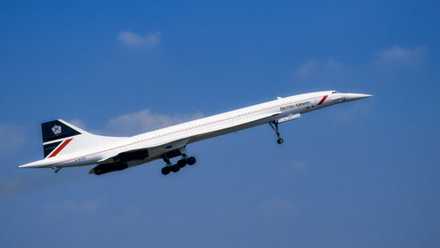
Concorde's operational range limitations defined the contours of every route the aircraft ever flew, and understanding those constraints illuminates both the aircraft's commercial struggles and the broader economics of supersonic transport. Despite carrying nearly 211,000 pounds of fuel, the four Rolls-Royce/Snecma Olympus 593 engines consumed fuel at a rate that capped usable range at approximately 3,900 nautical miles — less than a Boeing 757 operating at a fraction of Concorde's speed and altitude. That ceiling forced both British Airways and Air France into creative routing strategies, fuel stops, and interline partnerships that would be unusual by any standard, then or now. The aircraft's 100-seat, four-abreast cabin compounded the economics, leaving operators with minimal revenue-per-flight flexibility to offset the enormous fuel and maintenance costs.
The Singapore-Bahrain leg, operated jointly by Singapore Airlines and British Airways aboard G-BOAD, represented the longest regularly scheduled non-stop Concorde service ever conducted at four hours and 25 minutes. The arrangement was operationally distinctive: British Airways owned and crewed the aircraft while Singapore Airlines supplied cabin crew and sold tickets on the Singapore-Bahrain segment under its own flight numbers. The aircraft itself carried Singapore Airlines livery on its port side and British Airways colors on its starboard — a visual artifact of a partnership that reflected financial necessity rather than strategic synergy. Singapore Airlines found Concorde uneconomical to own outright, and the service was terminated in late 1980 after sustained losses, a pattern that would repeat across multiple Concorde routes as operators discovered that high-ticket pricing could not fully offset the aircraft's operating costs at commercially viable load factors.
The record for the longest single non-stop Concorde flight belongs not to a scheduled service but to an occasional operational reality on Air France's Paris-Caracas route. Under favorable wind conditions with a light passenger load, the aircraft could bypass its customary refueling stop in the Azores and fly direct at 4,123 nautical miles — roughly 223 nautical miles beyond its published maximum range. That figure underscores a reality familiar to long-range operators in any era: published range figures represent a performance envelope that winds, weight, and routing can shift meaningfully in either direction. The Paris-Rio inaugural flight, by contrast, required a Dakar stop regardless of conditions, illustrating how South American routes pushed the aircraft's capabilities to a degree that transatlantic North Atlantic routes did not. Air France's willingness to operate to Caracas, Mexico City, and Rio — all requiring fuel stops or conditional direct routing — reflected a competitive imperative to demonstrate global reach even where the economics were marginal.
For professional operators, Concorde's routing history is a case study in how range limitations cascade into commercial and operational compromises. The Braniff International arrangement — where Concordes were reregistered with US tail numbers, flown subsonic by Braniff crews between Dulles and Dallas-Fort Worth, and then returned to British Airways or Air France for the transatlantic crossing — is an early example of what modern operators would recognize as a wet-lease or capacity-sharing structure, deployed here to navigate regulatory prohibitions rather than pure commercial strategy. The US ban on supersonic overland flight, which forced all North Atlantic operations to use oceanic corridors exclusively, remains directly relevant today: that same regulatory framework has shaped every current supersonic development program, including Boom Supersonic's Overture and other contenders, which must demonstrate acceptable sonic boom signatures or fly routes that avoid overland supersonic segments entirely.
The Concorde era established a clear market reality that subsequent supersonic developers have spent decades working to solve: an aircraft that can only fly over water at supersonic speeds, seats fewer than 120 passengers, and burns fuel at extraordinary rates will struggle to generate sustainable unit economics regardless of the premium its speed commands. Boom's Overture program has explicitly targeted the range problem, promising approximately 4,250 nautical miles of supersonic range with a 65-80 seat configuration and 100% sustainable aviation fuel compatibility. Whether that program can clear certification, production, and commercial hurdles that eluded Concorde's successors for two decades remains an open question, but the specific range figure is not accidental — it is calibrated precisely against the operational ceiling that defined and ultimately constrained one of aviation's most technically ambitious aircraft.





 Read original article