US "Drawing Up Plans" To Pull Customs Officers From 10 Major Airports [Full List]
The Trump administration is actively formulating plans to withdraw Customs and Border Protection officers from ten major US international airports located in so-called sanctuary cities, a move that, if implemented, would effectively close those airports to international arrivals. The ten airports under consideration — Boston Logan (BOS), Denver (DEN), Philadelphia (PHL), Chicago O'Hare (ORD), Chicago Midway (MDW), Los Angeles (LAX), New York JFK (JFK), Newark (EWR), Seattle (SEA), and San Francisco (SFO) — collectively represent some of the most critical international gateways and airline hub infrastructure in the country. Secretary of Homeland Security Markwayne Mullins confirmed the plans publicly while stating no final decision has been made, framing the action as a response to local governments resisting cooperation with federal immigration enforcement. The announcement arrives weeks before the FIFA World Cup 2026, which runs June 11 through July 19 across US, Canadian, and Mexican host cities, guaranteeing an exceptionally high volume of inbound international traffic precisely when this disruption would be most operationally damaging.
For professional pilots operating international routes — whether on Part 121, Part 135 charter, or corporate Part 91 operations — the practical consequences of losing CBP presence at these airports would be immediate and operationally severe. International flights, including those operated under private and charter certificates, are legally required to arrive at airports designated with CBP facilities. If JFK, EWR, LAX, SFO, and ORD lose those designations, operators would be compelled to reroute arrivals to airports retaining CBP coverage, most likely Atlanta (ATL), Dallas/Fort Worth (DFW), Miami (MIA), Houston Bush Intercontinental (IAH), Minneapolis (MSP), and Charlotte (CLT). For airline crews, this translates into altered pairings, extended duty periods, and cascading scheduling implications as aircraft and crews end up out of position relative to hub infrastructure. For business aviation operators, international trips into the northeastern US corridor or the West Coast — markets that depend heavily on JFK, EWR, BOS, LAX, and SFO — would require complete replanning of arrival airports and ground handling arrangements, with no guarantee that alternative CBP airports have the ramp capacity or FBO infrastructure to absorb diverted bizav traffic.
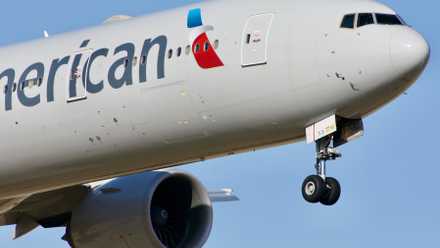
The airline network disruption potential is substantial. United Airlines, which maintains hub operations at five of the ten affected airports — Newark, Denver, O'Hare, San Francisco, and Los Angeles — faces the greatest structural exposure among the legacy carriers. Delta's operations at JFK and Seattle, along with American's significant presence at Philadelphia and O'Hare, are similarly at risk. Beyond hub carriers, the ripple effects on domestic connectivity are equally serious: a passenger or crew member arriving internationally would be forced to clear customs at a surviving gateway, then reposition domestically to their intended destination, adding connections, cost, and time to itineraries that currently operate as single-stop or nonstop international routings. The OAG data cited in the underlying report — showing that O'Hare, Denver, LAX, and JFK alone processed over 183 million passengers in 2025 — illustrates the sheer scale of the throughput that would need to be absorbed elsewhere.
The article references the US Preclearance program as a partial mitigation pathway, but its scope is limited. CBP Preclearance currently operates at a relatively small number of foreign airports, primarily in Canada, Ireland, the United Arab Emirates, and select Caribbean locations, allowing passengers from those points to arrive in the US as domestic travelers. While this would benefit passengers originating at preclearance-equipped airports, the vast majority of inbound international traffic — particularly transatlantic and transpacific flows — does not originate at preclearance stations, meaning the program would do little to address the volume problem. For charter operators and corporate flight departments flying international trips into affected markets, the immediate practical guidance is to monitor this situation closely and identify contingency arrival airports that retain CBP access, update eAPIS and flight planning procedures to reflect alternate entry points, and begin stakeholder communication now regarding potential trip disruptions during the summer peak. The uncertainty itself carries operational weight: contract negotiations, crew scheduling, and trip acceptance decisions for June and July cannot be made with confidence until a definitive policy outcome is established.








 Read original article