First Chinese Mainland A350F Customer Boosts Order To 10 Aircraft
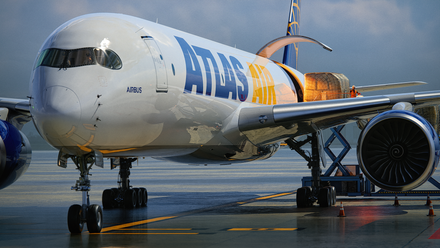
Air China Cargo's conversion of its remaining four A350F purchase options into firm orders brings its total commitment to 10 aircraft and solidifies the carrier's position as the first mainland Chinese operator to stake a meaningful fleet bet on Airbus' newest purpose-built freighter. The expanded agreement, confirmed May 26, 2026, arrives as the A350F program crosses the 100-order threshold globally, a milestone that signals growing industry confidence in a platform that is not yet in revenue service. Powered by Rolls-Royce Trent XWB-97 engines, the A350F is certified to carry up to 111 tonnes of payload over approximately 8,700 kilometers while delivering roughly 20% better fuel efficiency than comparable prior-generation widebody freighters. Deliveries to Air China Cargo are projected between 2029 and 2031, giving the carrier a defined modernization runway as portions of its existing fleet — particularly its aging Boeing 747-400Fs — approach the end of economically viable service life.
The strategic significance of this order extends well beyond fleet replacement arithmetic. Airbus has historically operated at a structural disadvantage in the dedicated freighter segment, a market Boeing has dominated for decades through the 747F lineage and, more recently, the 777F. The A350F represents Airbus' most direct challenge to that dynamic, targeting operators facing a generational transition away from four-engine heavies toward more fuel-efficient twin-engine alternatives. For Air China Cargo, which currently operates a mixed fleet of Boeing 747-400Fs, Boeing 777Fs, and Airbus A330 converted freighters, the A350F acquisition is not simply about capacity growth — it is about replacing high-cost, high-emission aircraft with a platform that meets ICAO's forthcoming 2027 CO2 standards, which Airbus claims the A350F is uniquely positioned to satisfy among current freighter designs. Entry-into-service compatibility with up to 50% sustainable aviation fuel further hedges the carrier against tightening regulatory environments in both Chinese domestic aviation policy and international markets.
For professional pilots and aviation operators tracking fleet and route trends, this development carries several layers of practical relevance. Air China Cargo's long-haul route network is heavily oriented toward manufacturing export corridors and e-commerce logistics lanes connecting China to Europe, North America, and Southeast Asia — routes where the A350F's range and economics offer a meaningful competitive edge over the aircraft it will replace. The emergence of a mainland Chinese operator as an early adopter of the A350F also has implications for maintenance, training, and ground infrastructure development within Chinese aviation hubs, as MRO providers and simulator operators will need to build A350F-specific capabilities ahead of the aircraft's commercial debut. Pilots transitioning from A350 passenger operations may find type familiarity advantageous, as Airbus has structured the A350F to maximize cockpit commonality with the A350-900 and A350-1000.
The broader competitive picture reinforces how aggressively both major manufacturers are pursuing the freighter replacement cycle. Boeing is simultaneously advancing the 777-8F, which targets the ultra-long-range heavy cargo segment and is aimed squarely at operators looking beyond even the 777F's capabilities. The A350F and 777-8F are on converging development timelines, and both programs are courting the same pool of carriers weighing what may be 20-to-30-year fleet commitments. Air China Cargo's full conversion of its options into firm orders sends a signal to the market that at least one significant operator has evaluated that competitive field and allocated its capital to the Airbus solution. As Chinese airlines continue expanding cross-border freight capacity tied to the country's manufacturing and e-commerce export base, additional orders from mainland Chinese carriers for next-generation freighters from either manufacturer remain a strong probability before the decade closes.








 Read original article