Why America's KC-46 Tanker Fleet Is Already Falling Behind The Demand Its Own Air Force Created
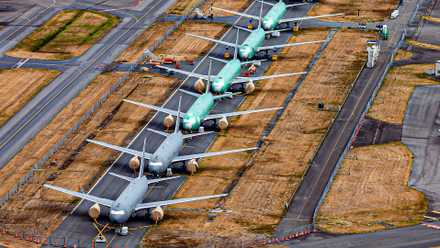
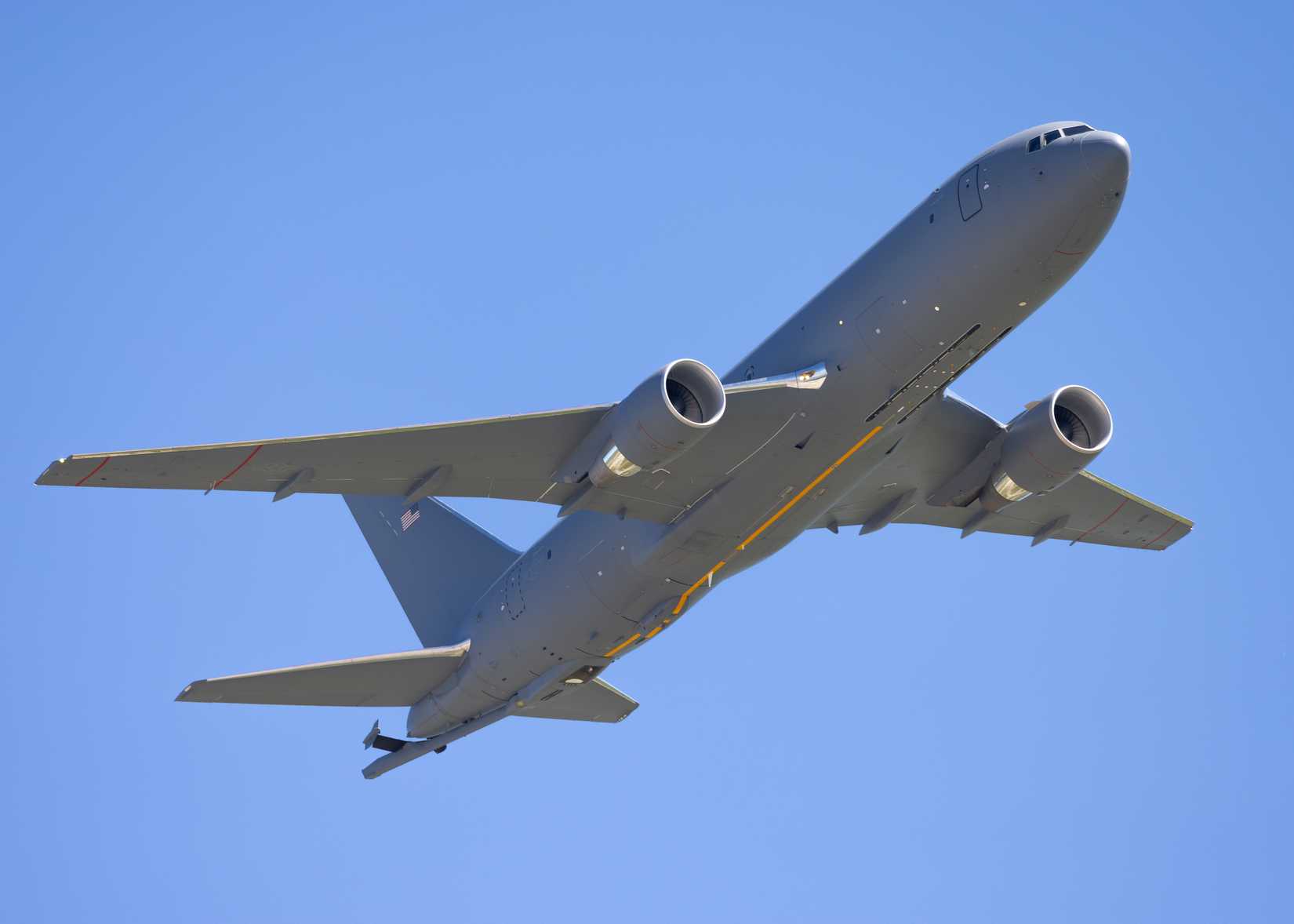
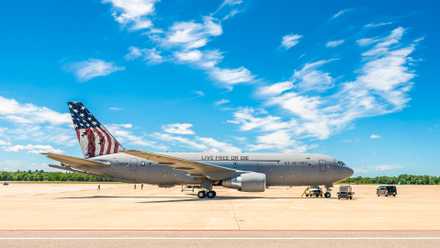
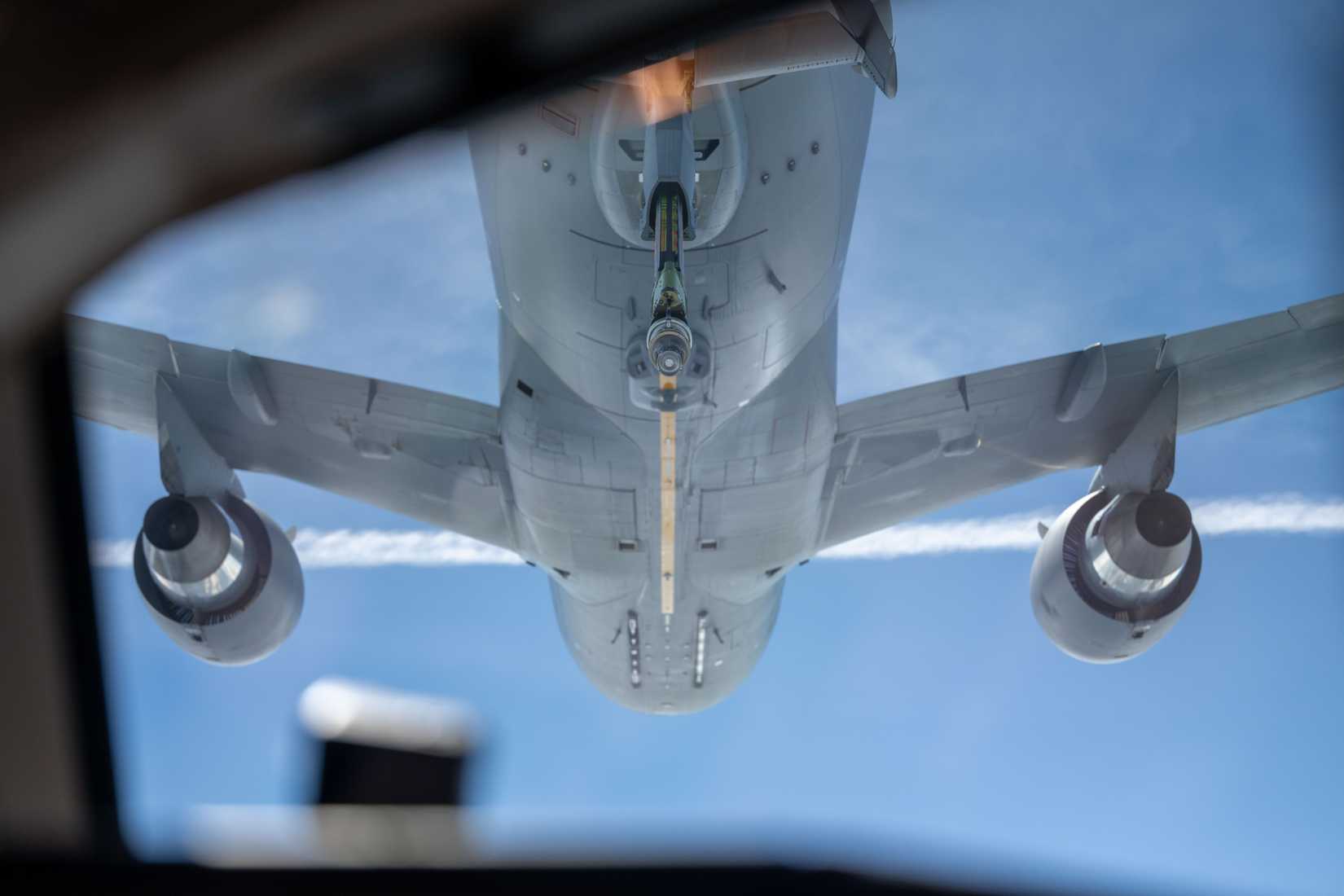
The Boeing KC-46A Pegasus, the U.S. Air Force's primary next-generation aerial refueling tanker, continues to face a compounding set of technical and programmatic challenges even as the service grows increasingly dependent on the aircraft to sustain its global power projection mission. Originally conceived as a bridge platform between the retiring KC-10 Extender and KC-135R fleets and a future stealthy tanker known as the Next Generation Air Refueling System (NGAS), the KC-46 entered service in 2019 — years behind schedule — and has since accumulated a significant record of technical deficiencies. These include structural cracks across primary and secondary airframe structures, recurring aerial refueling boom failures, software instabilities, fuel system concerns, and persistent problems with the Remote Vision System (RVS) that boom operators rely upon to conduct contact-refueling operations. The RVS issues alone — which manifest as distorted depth perception, inaccurate boom placement, and operator fatigue — directly degrade the aircraft's ability to execute its core mission reliably. Boeing's replacement system, RVS 2.0, has experienced repeated schedule slippages and is now not expected to reach initial fielding until 2028.
The operational consequences of these deficiencies have moved beyond test ranges and depot facilities. During the buildup to the 2026 air campaign over Iran, a deployment of F-22 Raptors was forced to abort an Atlantic crossing after the assigned KC-46A suffered software failures mid-mission. A replacement tanker then malfunctioned as well, compounding the delay. That incident illustrates a critical operational reality for military aviators: tanker reliability is not an abstract logistics metric but a direct determinant of mission success and, in contested environments, aircrew survivability. The KC-46's below-expectation readiness rates mean that sortie planners and mission commanders must account for a higher probability of tanker unavailability when building air refueling tracks, alternate recovery plans, and contingency fuel strategies — workload that falls directly on the aircrew and staff who execute those missions.
The structural and programmatic pressures driving KC-46 procurement are now self-reinforcing in ways that leave the Air Force with little flexibility. Congress, through the 2026 National Defense Authorization Act, raised the minimum tanker inventory requirement from 466 to 502 aircraft, effective October 2026. Simultaneously, the NGAS program — which would have provided a stealthy, long-range successor better suited to contested airspace — remains developmentally uncertain. The retirement of the last KC-10s in 2024 has already removed the service's most capable large-body tanker from the inventory, placing the entire offload burden on aging KC-135Rs and a KC-46 fleet still working through maturation. In response, the Air Force has effectively doubled down on the KC-46, with planned purchases expanding from an original 179 aircraft to a current plan of 259, with a potential ceiling of 319. Boeing remains the only viable domestic supplier for this mission, and the program's continuation is not seriously in question regardless of its technical record.
For the broader commercial and business aviation communities, the KC-46's difficulties carry instructive parallels. The aircraft is derived from the Boeing 767-200C platform — a commercially proven airframe that nevertheless required substantial military-specific modifications, including the addition of the RVS, boom assembly, fuel transfer systems, and structural reinforcements. The resulting integration complexity demonstrates that even well-understood commercial airframes can generate unexpected certification and reliability burdens when adapted for demanding military roles. Notably, the KC-46 is powered by Pratt & Whitney PW4000 engines rather than the General Electric CF6-80C2 powerplants standard on commercial 767-300F freighters, a divergence from the commercial norm that complicates parts commonality and maintenance ecosystem alignment. Operators accustomed to leveraging the broad commercial support infrastructure around the 767 platform would find the KC-46's logistics chain considerably more specialized and constrained.
The KC-46's trajectory ultimately reflects a broader tension in military aviation procurement between schedule, cost, and capability maturity — a tension with direct relevance to any operator managing complex aircraft across long service lives. Historical precedent, including the Lockheed C-5A Galaxy's wing-cracking crisis that imposed severe payload restrictions for years before the 1980s wing replacement program, suggests that large military aircraft programs can and do recover from early-life structural and systems deficiencies given sustained investment and institutional commitment. The Air Force's decision to expand KC-46 procurement while simultaneously pressing Boeing on RVS 2.0 development reflects that institutional calculus. Whether the tanker fleet can close the gap between its current readiness performance and the operational demands being placed on it — particularly as global commitments intensify — will remain one of the more consequential questions in U.S. airpower logistics through the early 2030s.










 Read original article