Toys in the Attic - AskThePilot.com
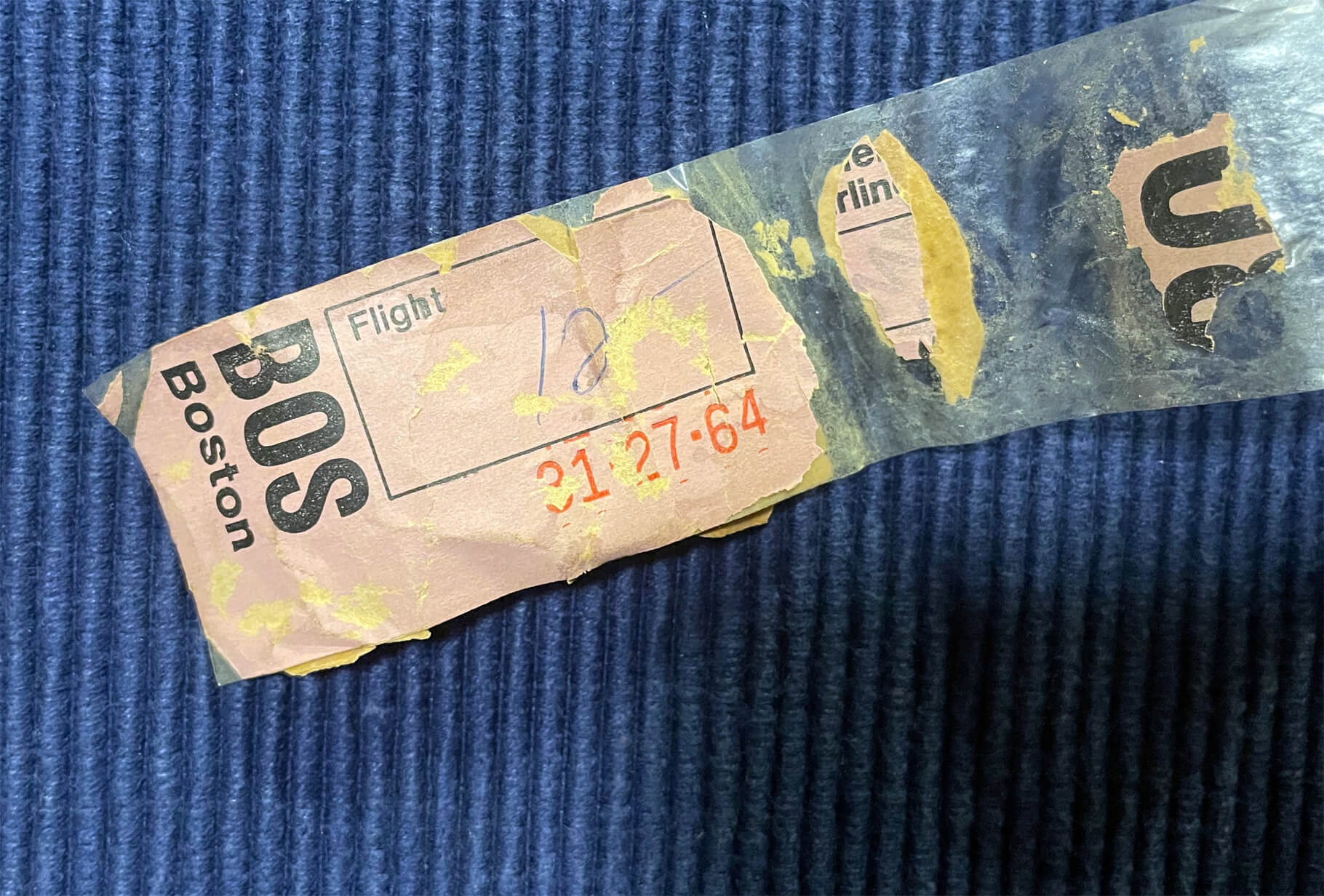
A vintage American Airlines luggage tag recovered from a family attic serves as the entry point for Patrick Smith's November 2025 examination of flight numbering conventions, IATA coding systems, and the physical artifacts through which commercial aviation's operational history is preserved. The tag, traced to approximately 1964 and bearing flight number 12 — American's Los Angeles-to-Boston nonstop — illustrates how airline timetable logic encoded geography, prestige, and directionality directly into the numbering scheme. Eastbound routes carried even numbers; westbound routes carried odd. Lower-digit numbers signaled flagship or long-haul status, a tradition that persists today in carriers assigning single- or double-digit designators to their most prominent transatlantic and transcontinental routes. The flight numbers 11 and 12, which American operated across multiple aircraft generations from the Boeing 707 through the DC-10 to the 767, were retired permanently on September 12, 2001 — the day following the destruction of American 11.
The operational grammar of flight numbering remains directly relevant to professional crews, dispatchers, and operators who interact daily with the IATA two-letter carrier prefix system. Smith's primer on this structure — DL, AA, UA, LH, EK, BA, B6 — reflects the standard by which every flight is internationally identified and tracked, from ATC coordination to ACARS messaging to crew scheduling systems. The cultural dimension of number assignment also carries practical weight: United Airlines' convention of using three-digit 8-series numbers for transpacific routes reflects deliberate market positioning for Asian-origin and Asian-destination passengers, a practice that demonstrates how commercial strategy intersects with operational identification. Four-digit codes beginning with 3 or higher function as a near-universal signal of codeshare operations, a shorthand every professional operating in the current airline environment should recognize instinctively, particularly when reviewing MEL applicability, crew rest rules, or liability structures across marketing and operating carrier relationships.
The broader historical arc embedded in a single luggage tag spans the transformation of American commercial aviation from propeller-era regional travel to the widebody jet age. The Boeing 707 that operated flights 11 and 12 in the late 1960s represented the first generation of practical transoceanic jet service; the DC-10 that succeeded it brought high-capacity domestic range at a moment when deregulation was reshaping the industry; the 767 that followed introduced ETOPS-capable twin-engine efficiency that would eventually redefine transatlantic economics. That a single flight number pairing traced this entire arc — and was then retired under the weight of a singular historical catastrophe — illustrates how deeply operational numbering systems are entangled with the institutional memory of airlines and the broader culture of commercial flight.
Smith's piece, while reflective in tone, points toward a dimension of aviation history that professional operators increasingly encounter as legacy carriers consolidate, fleets retire, and institutional knowledge migrates out of analog records into digital systems that often lack contextual depth. The thousands of timetables, tags, pins, and inflight publications sitting in attics worldwide represent primary-source documentation of how airlines once communicated their networks, scheduled their equipment, and structured their passenger experience — data that rarely survives in official archives. For historians, aviation journalists, and operators tracing the lineage of routes, certification bases, or predecessor carrier structures, these physical artifacts carry information that no ACARS database or digital scheduling platform was designed to preserve. The instinct Smith describes — reading operational codes and decoding the story they carry — is, in a different register, precisely the same literacy that underlies competent airspace navigation, regulatory interpretation, and systems awareness in a modern flight deck.










 Read original article