"More To Come": Boeing CEO Says 200-Jet China Order Could Rise To 700 Aircraft
Boeing's potential re-entry into the Chinese aviation market at scale represents one of the most consequential fleet procurement developments in years, with CEO Kelly Ortberg describing an initial 200-aircraft commitment from China as merely the opening tranche of a deal that industry sources project could ultimately reach 700 jets. The commitment emerged during President Trump's visit to China in mid-May 2026 and has not yet been formally finalized or allocated to specific carriers — that process is being managed by the Chinese government, which will distribute the order among the three state-owned flag carriers before Boeing can begin direct negotiations with Air China, China Southern, and China Eastern individually. Reuters-sourced projections suggest an additional 300 to 500 aircraft commitment could follow, making the total scope potentially transformative for Boeing's order book and production planning.
The significance of this development is rooted in how dramatically Boeing's Chinese market share deteriorated over the preceding decade. China once absorbed roughly 25% of all 737 deliveries, but cumulative deliveries over the past five years reached only 152 aircraft — a sharp contraction against a historical baseline of 675 deliveries between 2016 and April 2026. Boeing's current Chinese delivery backlog sits at just 98 aircraft as of late April 2026. For professional operators and fleet planners watching OEM production rates and delivery slot availability, a potential 700-aircraft order from a single national bloc carries real downstream implications: it would substantially affect 737 MAX and 787 Dreamliner production queues, slot allocation timelines, and the global secondhand and lessor markets that many Part 135 and smaller commercial operators depend upon for aircraft availability and pricing.
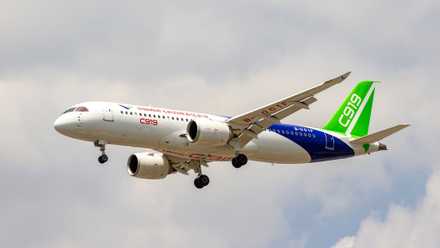
Airbus had systematically filled the void left by Boeing's geopolitical displacement in China, most recently closing a $15.8 billion deal for 101 A320neo-family narrowbodies with China Eastern — the same carrier that would be among Boeing's primary negotiating counterparts under the new commitment. All three Chinese state carriers currently operate mixed Airbus-Boeing narrowbody and widebody fleets alongside domestically produced COMAC C919 aircraft on internal routes. The C919's own production struggles — with COMAC slashing its 2026 output target from 75 to just 25 aircraft — have created an opening that both Western OEMs are positioned to exploit. If Boeing secures the larger end of the projected order range, it would represent a meaningful rebalancing of the Airbus-Boeing duopoly's position in what both manufacturers' market forecasts identify as the world's highest-growth aviation region over the next two decades.
For pilots and aviation professionals, the broader operational implications extend beyond fleet counts. A large-scale return of 737 MAX and 787 deliveries to Chinese carriers will influence pilot training pipelines, type rating demand, and simulator availability across the Asia-Pacific region. Chinese carriers have historically moved aggressively to build pilot capacity ahead of fleet expansions, and a deal of this magnitude — particularly on the 737 MAX side — would increase international demand for qualified MAX crews and instructors. The competitive pressure this places on Airbus's A320neo training infrastructure in China is also notable, as both manufacturers vie for dominance in what both project will be among the world's two or three largest aviation markets through 2045. The formal finalization and allocation announcement, expected later in 2026, will be a critical data point for operators, lessors, and aviation professionals tracking global fleet strategy and aircraft availability across all segments of commercial and business aviation.








 Read original article