Signature Aviation breaks ground on $10m hangar in Virginia | Corporate Jet Investor | CJI news
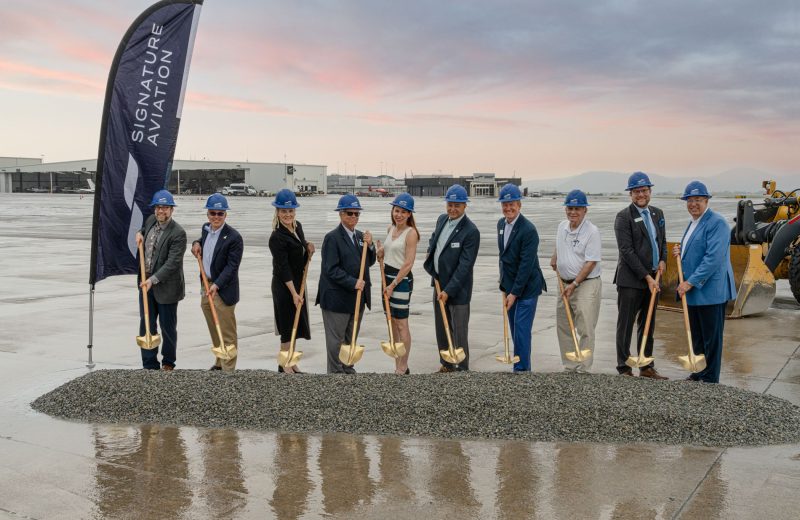
Signature Aviation has broken ground on a $10 million hangar and office development at Roanoke-Blacksburg Regional Airport (ROA) in Virginia, marking a significant infrastructure commitment at a mid-sized regional airport that has served corporate aviation for nearly seven decades. The project encompasses a 22,000-square-foot hangar with an attached 3,000-square-foot office facility and a 14-bay aircraft parking apron. A 28-foot high hangar door is a deliberate design specification, sized to accommodate the tall tails and wide wingspans of modern large-cabin business jets such as the Gulfstream G650, Bombardier Global 7500, and Dassault Falcon 10X. Roanoke-based Lionberger Construction is leading the build, with completion targeted for 2027.
The project carries operational relevance for flight departments and charter operators that serve the Roanoke-Blacksburg market, which draws corporate traffic from the broader western Virginia and New River Valley corridor, including Virginia Tech, Carilion Clinic, and a growing cluster of manufacturing and technology enterprises. Historically, ROA has offered a practical alternative to congested metro-area airports such as Washington Dulles (IAD) and Reagan National (DCA) for operators positioning to serve clients in the region. The addition of purpose-built large-cabin hangar space addresses a persistent constraint at many secondary business aviation airports, where aging infrastructure designed for smaller piston or turboprop aircraft creates scheduling and accommodation challenges for modern ultra-long-range jets.
The ROA investment is not occurring in isolation. Signature is simultaneously rebuilding its fuel storage facility at the airport and completed installation of a self-serve avgas pump in December 2025, signaling a multi-phase infrastructure upgrade rather than a single speculative build. This layered approach — covering both corporate jet infrastructure and general aviation fuel access — reflects an FBO strategy of serving the full spectrum of aircraft operations at a given field. For operators planning into ROA, the completed avgas infrastructure is immediately relevant for piston and light turbine traffic, while the 2027 hangar completion will expand overnight and transient accommodation options for heavy iron.
Signature's history at ROA extends to 1957 under the Piedmont Aviation name, giving the operator a tenure of nearly 70 years at the field. That legacy, combined with the current capital deployment, suggests the company views ROA as a strategically viable location with long-term demand fundamentals rather than a marginal market. Roanoke Regional Airport Commission CEO Mike Stewart's public endorsement of the project underscores alignment between the FBO and airport authority — a relationship that often shapes how smoothly large-scale FBO construction projects advance through permitting and coordination phases.
The broader trend this investment reflects is the continued expansion of Signature's ground-up infrastructure at non-hub airports across the United States, a pattern driven by increasing large-cabin jet utilization at secondary and tertiary markets. Business aviation departure and utilization data from recent years has consistently shown growth outside the traditional top-ten hub airports, as fractional ownership programs, charter operators, and large flight departments diversify routing to avoid congestion and slot constraints at primary facilities. For professional pilots and flight planners, developments like ROA's Signature hangar represent the gradual maturation of the infrastructure network supporting that diversification — expanding the number of airports where large-cabin operations can be conducted with modern, purpose-built ground support.