Avionics Reviews & News | Plane & Pilot Magazine
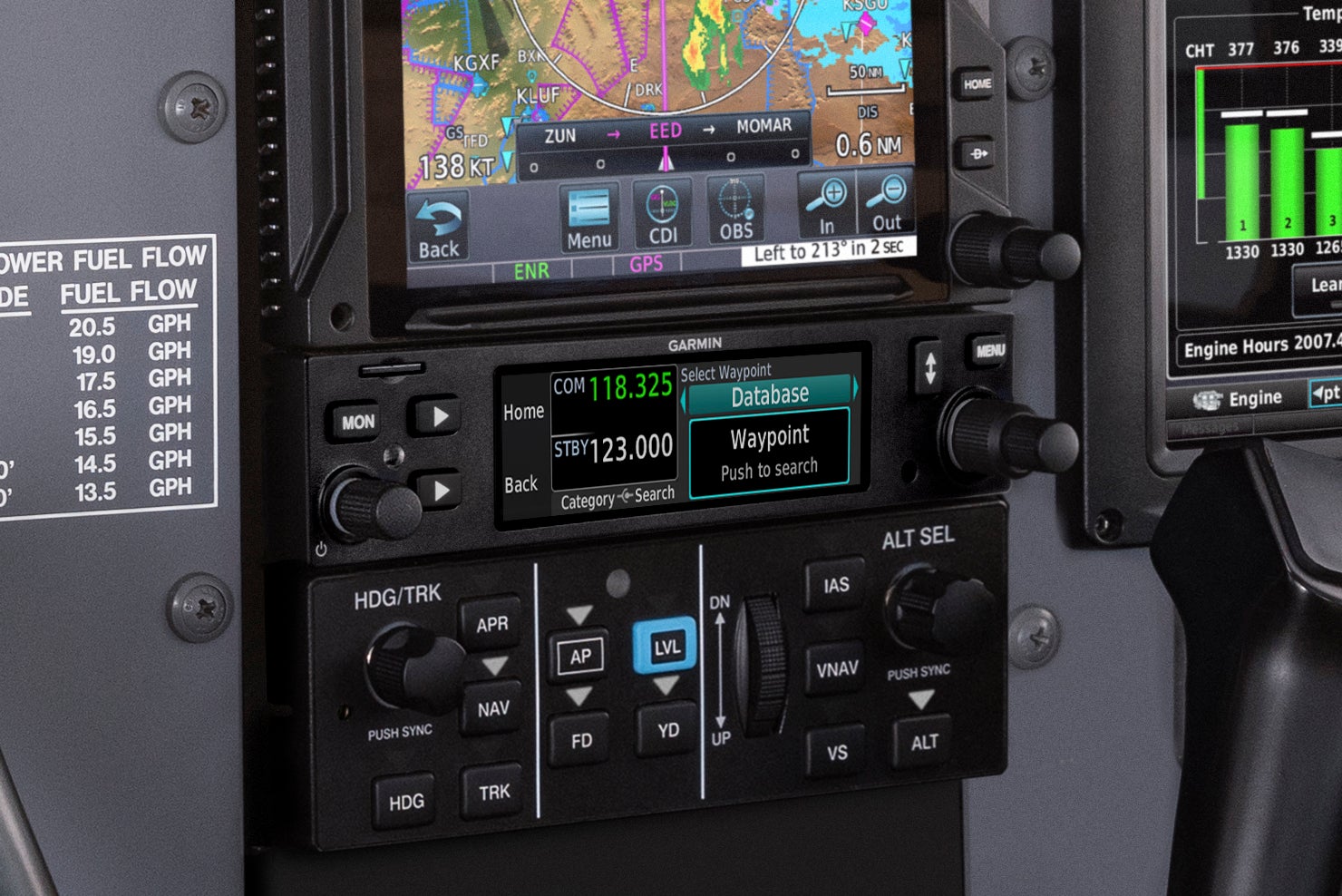
The general aviation avionics market continues to consolidate around a small number of dominant manufacturers, with Garmin commanding approximately 58 percent of the market among piston single-engine pilots according to recent Aviation Consumer survey data, followed by Dynon at 23 percent and uAvionix at 14 percent. That concentration reflects both Garmin's long-standing integrated ecosystem advantage — particularly the G3X Touch for experimental aircraft and the GTN navigator series for certified platforms — and the ongoing maturation of a post-ADS-B-mandate landscape in which most active owners have already made their primary avionics investments. The survey population skews heavily toward piston singles, with experimental kitbuilt aircraft comprising 52 percent of respondents and FAA-certified aircraft accounting for 43 percent, leaving light-sport aircraft as a marginal segment at 5 percent.
Reliability data from the same survey reinforces the market's stability: 72 percent of owners rated newly installed avionics as very reliable, and roughly half reported no component replacements following installation. That satisfaction rate carries practical significance for Part 91 operators and owner-flown aircraft, where avionics downtime translates directly to schedule disruption and out-of-pocket maintenance cost without the redundancy buffers available to Part 135 or airline operations. The strength of these reliability numbers also underscores why retrofit avionics spending among owner-operators has remained robust even as new aircraft deliveries face supply constraints — owners are willing to invest in known-quantity platforms with proven track records rather than risk unproven alternatives.
On the capability side, Dynon's SkyView HDX system represents one of the more significant recent developments for IFR-capable experimental aircraft, having achieved integration with Trio Pro Pilot autopilots to enable fully coupled RNAV approaches. That pairing brings LPV approach capability — with decision altitudes as low as 200 feet — to homebuilt aircraft operating under IFR, a combination that was financially out of reach for most experimental builders just a decade ago. For pilots who fly kitbuilt IFR-capable aircraft in IMC, this integration closes a meaningful gap between experimental and certified avionics capability at a fraction of the cost of equivalent certified equipment. The trajectory points toward continued erosion of the performance differential between certified and experimental avionics suites, particularly as manufacturers like uAvionix continue pushing STC'd ADS-B solutions into the certified market at competitive price points.
The product roundup content from Plane & Pilot's March 2022 issue — featuring the Sentry ADS-B receiver alongside lifestyle gear — reflects a broader editorial approach that serves the full spectrum of GA participants, from IFR-currency-focused instrument pilots to VFR recreational fliers seeking situational awareness tools. The Sentry, produced by ForeFlight parent company, exemplifies the portable ADS-B receiver category that matured rapidly following the FAA's January 2020 ADS-B Out mandate deadline. While that mandate applied to ADS-B Out transmitters and did not require portable receivers, the regulatory change accelerated adoption of tablet-based EFB setups pairing portable ADS-B In receivers with apps like ForeFlight, Garmin Pilot, and FlyQ — an ecosystem now considered standard equipment for serious VFR and IFR pilots across GA and business aviation segments. The continued coverage of such products in mainstream aviation media signals that equipping decisions in the GA cockpit increasingly blend certified panel avionics with portable supplemental systems, a hybrid approach that operators of all sizes and regulatory categories have broadly embraced.











 Read original article