How An American-United Merger Would Have Shaken Up US Aviation
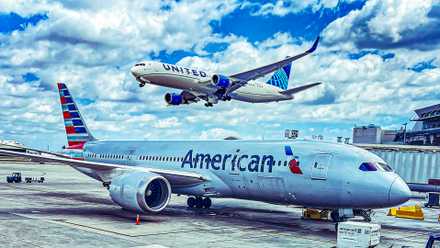
United Airlines CEO Scott Kirby's proposal to merge with American Airlines — pitched directly to President Donald Trump — represents the most significant failed consolidation attempt in recent US aviation history. Kirby's rationale centered on the economic pressures bearing down on major carriers, particularly fuel costs, arguing that the scale of a combined entity would create efficiencies neither airline could achieve independently. American's swift and pointed rejection, framing a potential deal as both anti-competitive and contrary to the administration's own regulatory philosophy, effectively killed the proposal before any formal process could begin. Kirby has since publicly closed the door on further merger discussions, acknowledging that American was the only viable partner at this scale, leaving United to pursue growth through organic means and its existing Star Alliance relationships.
The network consequences of such a combination would have been profound for the competitive landscape that airline and corporate flight department schedulers navigate daily. The combined carrier would have controlled roughly 30% of all US air travel and operated from an unprecedented hub footprint spanning both coasts, the Gulf, the Mountain West, and extending into the Pacific via Guam — a market currently underserved by US mainline carriers relative to its strategic importance as a gateway to Asia. Chicago O'Hare, where American and United have long competed for gate dominance and connecting traffic, would have shifted from a battleground to a consolidated stronghold. Similarly, the dual New York and Washington presences would have locked down premium corporate travel corridors that business aviation operators and fractional providers compete against aggressively. The West Coast concentration, covering LAX and SFO together, would have created enormous leverage over trans-Pacific routes.
From a fleet perspective, the numbers involved are staggering by any industry standard. American's current mainline fleet of approximately 1,030 aircraft, combined with United's 1,104, plus the combined order books totaling roughly 887 additional deliveries, would have produced a single operator managing well over 3,000 mainline jets. That concentration of Boeing-dominated widebody capacity — both carriers rely almost exclusively on Boeing for long-haul operations, with United's prospective Airbus A350 order remaining uncertain — would have created enormous leverage in maintenance, pilot contract negotiations, and slot allocation at congested airports. For Part 135 and corporate operators who routinely coordinate with major carriers on interline agreements, ground handling, and FBO access at hub airports, a carrier of this scale would have reshaped pricing power and service availability across the board.
The broader significance of this failed merger lies in what it reveals about the current regulatory and political environment surrounding airline consolidation. American's invocation of antitrust principles as a rejection rationale is notable given that the current administration has generally signaled skepticism toward heavy regulatory intervention in business. The fact that even that political context was insufficient to make the deal viable underscores how thoroughly the industry's consolidation wave — which produced Delta-Northwest, United-Continental, and American-US Airways between 2008 and 2013 — has already restructured the competitive landscape. Regulators and airline executives alike appear to have concluded that further reduction in the number of major US network carriers crosses a threshold that no political tailwind can easily overcome. For pilots holding seniority lists at either carrier, the collapse of the proposal also removes what would have been an enormously complex and contentious seniority integration process from the horizon, a factor that carries significant career implications at the major airline level.
The episode nonetheless signals that Kirby's United is actively searching for structural advantages in an environment of sustained cost pressure, and that the impulse toward consolidation has not disappeared — only the available partners have. Alaska Airlines' ongoing absorption of Hawaiian Airlines, still the most recent completed merger in the sector, continues to demonstrate that combination strategies remain a live option for carriers outside the big-three structure. For corporate flight departments and charter operators evaluating long-term vendor relationships, competitive route pricing, and airport infrastructure planning, the stability of the current three-carrier mainline structure now appears likely to persist for the foreseeable future, with competitive pressure among United, American, and Delta continuing to be fought through capacity deployment, loyalty program enhancements, and international joint venture arrangements rather than domestic consolidation.





 Read original article