Why The Royal Air Force Can't Actually Afford To Fill Its New Aircraft Carriers With F-35Bs
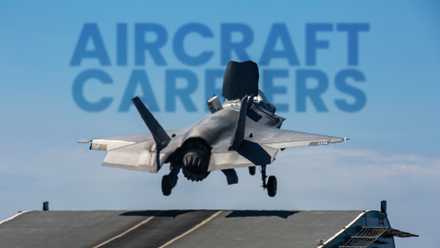
The United Kingdom's F-35B program is caught in a convergence of procurement shortfalls, workforce deficits, and software delays that have effectively prevented the Royal Air Force and Royal Navy from simultaneously fielding full carrier air wings aboard both HMS Queen Elizabeth and HMS Prince of Wales. With only 47 airframes remaining after one loss in an accident, the Joint Lightning Force — the pooled RAF and Royal Navy organization governing all UK F-35 operations — cannot generate the 36 to 40 jets required to staff each carrier concurrently. Because the aircraft belong to a joint pool rather than service-specific fleets, land-based RAF deployments such as those to Cyprus continually draw down the number of jets available for maritime strike operations, creating a structural tension between the two services that budget constraints alone cannot resolve.
The workforce problem compounding the aircraft shortage is severe by any operational metric. The UK is managing just 14 maintenance personnel per jet against a US Marine Corps benchmark of 25, and the National Audit Office has documented acute shortages of qualified engineering supervisors, flight instructors, and carrier-qualified technicians. Cross-service maintenance at RAF Marham, where RAF and Royal Navy personnel must share responsibilities and cross-training pipelines remain congested, has suppressed mission-capable rates to roughly one-third of the active fleet at any given time. For pilots operating in high-tempo environments, a one-third availability rate represents a critical planning constraint — it means that even if procurement targets were met, operational sortie generation would remain throttled by the depth of the maintainer corps rather than the size of the airframe inventory.
Lockheed Martin's Technology Refresh Three software package is layering additional risk onto the program's already strained timeline. A recent Pentagon assessment characterized the TR-3 infrastructure as predominantly unusable and cut US F-35 procurement in half for the remainder of the year. For UK operators specifically, TR-3 is a prerequisite for integrating the Meteor beyond-visual-range missile and the Spear 3 cruise missile — two weapons central to British air-combat doctrine — pushing full combat capability into the 2030s. Combined with delays attributed to both Skunk Works and Pratt & Whitney, TR-3 full readiness is now projected as late as 2031, meaning the F-35B fleet will spend much of the next decade operating below its intended combat effectiveness ceiling.
The strategic response from London is a deliberate pivot toward sovereign capability. The planned purchase of 12 conventional F-35A variants for land-based RAF missions represents a cost-control measure — the A-model carries a 15% lower purchase price and 8% lower operating costs than the B — but the larger signal is the redirection of approximately £16.2 billion toward the BAE Systems Tempest, developed under the Global Combat Air Program as an equal partnership with Japan and Italy. GCAP is explicitly designed to give the UK 100% sovereign control over software, upgrades, and operational deployment decisions, a direct response to growing concerns within NATO partner nations about the existence of US-controlled digital access protocols embedded in F-35 systems. A Tempest supersonic flight demonstrator is scheduled for 2027, and the concurrent investment in extending Eurofighter Typhoon service life ensures the BAE manufacturing base and roughly 20,000 domestic defense jobs remain active through the transition period.
For aviation professionals tracking fleet modernization trends, the UK's situation illustrates a pattern increasingly visible across allied air forces: the F-35 program's unit and lifecycle costs, combined with its dependency on US-controlled software upgrade cycles, are prompting mid-tier and upper-tier NATO operators to hedge their long-term force structures toward domestically sovereign platforms. The RAF's move to cap F-35 procurement at 75 aircraft and invest heavily in GCAP mirrors similar recalibrations in Germany and France around the Future Combat Air System. The workforce dimension — pilot and maintainer shortages limiting availability rates independent of airframe counts — is equally instructive for operators and schedulers across commercial and business aviation, where the same human capital constraints are suppressing operational capacity in MRO facilities and flight departments globally.








 Read original article