Airfares Fall On 13 Of The 20 Busiest US Routes, Driven By LCC Capacity & Competition
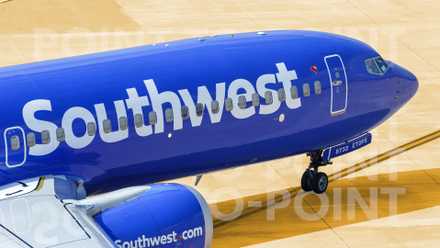
U.S. domestic airfares declined on the majority of the country's busiest routes during Q1 2026, with OAG data revealing an average fare drop of 11.5% across the ten highest-volume domestic corridors even as aggregate seat capacity rose 3.9% year-over-year. The most dramatic compression occurred on the Atlanta–Fort Lauderdale route, which ranked as the single busiest domestic corridor by seat count at over 837,000 seats in the quarter, where average one-way fares collapsed 41.7%. The mechanism was straightforward: Southwest's exit from the route created a vacuum that JetBlue filled with three-daily frequencies while Frontier more than doubled its operations, pushing total capacity up 23.6% across five competing carriers. A similar dynamic played out on the Orlando–Chicago O'Hare corridor, where capacity surged 28.9% with five carriers competing, pulling average fares down 15.2%. The pattern across the domestic table is consistent — wherever low-cost carrier consolidation of market share accelerated in the wake of Spirit Airlines' collapse and Southwest's ongoing strategic restructuring, fares followed capacity downward.
The broader structural backdrop matters significantly for airline network planning and capacity allocation decisions. Spirit's exit from the market removed one of the most effective fare-disciplining forces in domestic aviation, but rather than allowing remaining carriers to raise yields, the gap was rapidly filled by surviving ultra-low-cost and low-cost carriers executing opportunistic expansion. Frontier's aggressive capacity deployment on Florida routes and JetBlue's Fort Lauderdale buildout illustrate how quickly LCCs respond to competitive vacuums. At the same time, the article notes that current load factors on some of these over-capacitated routes may be unsustainable, flagging the Orlando–Chicago corridor specifically. That dynamic has direct implications for flight operations departments and Part 135 charter operators monitoring the commercial marketplace: routes showing unsustainable overcapacity today tend to see carrier pullbacks and fare normalization within one to two quarters, which can shift business traveler behavior back toward premium options.
The international data presents a notably different yield environment, one that professional aviation operators serving corporate clients should track closely. The JFK–London Heathrow route — the largest U.S. international corridor by seats — saw capacity cut 10.8% while average fares rose 6.5%, reflecting the sustained pricing power carriers maintain on premium business-heavy transatlantic flows. JFK–Paris CDG showed the same pattern with a 5.9% fare increase alongside a 2.5% capacity reduction and a carrier count that dropped from five to four. These routes serve the corporate travel segment that business aviation competes with most directly, and the data confirms that business-class pricing on marquee North Atlantic routes remains firm even as the wider market softens. The contrast with Miami–Heathrow, a more leisure-oriented transatlantic flow where fares fell 8.1%, underscores that the compression being driven by LCC competition is concentrated in leisure-heavy markets rather than the premium corridors where airlines hold greater pricing discipline.
The overarching trend reflected in this OAG dataset is a U.S. aviation market undergoing simultaneous structural disruption on multiple fronts — carrier consolidation, strategic pivots by legacy low-cost operators, jet fuel cost pressure from elevated geopolitical risk, and persistent aircraft delivery delays constraining capacity recovery. For corporate flight departments and Part 91K/135 operators, the relevant takeaway is bifurcated. On one side, the collapse of ultra-low-cost competition and resulting fare drops on leisure routes will suppress the commercial cost comparison that sometimes argues against charter or fractional use for shorter domestic segments. On the other side, sustained premium pricing on key transatlantic and transcontinental business routes reinforces the value proposition of business aviation for time-sensitive corporate travel where schedule control and cabin environment justify the cost differential. The New York–Toronto corridor's extraordinary 41.9% fare decline alongside a 21.3% capacity surge signals that cross-border LCC competition is now extending meaningfully into transborder markets as well, a development worth monitoring for operators serving the U.S.-Canada business travel corridor.







 Read original article