How The F-35's Cooling System Solves A Problem That Grounded Its Predecessor For Years
Thermal management has long been one of the defining engineering constraints of short takeoff and vertical landing aircraft, and the transition from the AV-8B Harrier to the F-35B illustrates how dramatically design philosophy has evolved to address it. The Harrier's Rolls-Royce Pegasus engine routed all thrust through four rotating nozzles, directing an intensely concentrated column of hot exhaust directly downward during hover. This single-column approach produced extreme thermal stress on flight decks and runways, caused dangerous hot gas recirculation back into the engine intake, limited operational use in high-temperature environments or with heavy payloads, and imposed substantial maintenance burdens on both the aircraft and the ships and bases that hosted it. These were not minor inconveniences — they were structural limitations that constrained the Harrier's operational envelope for its entire service life and contributed to its retirement from Royal Navy service in 2010 and its scheduled final withdrawal from US Marine Corps inventory in 2026.
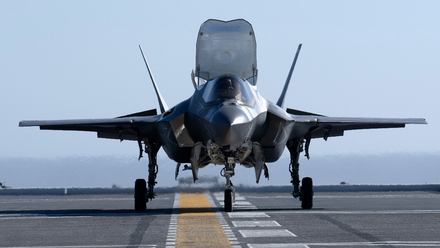
The F-35B addresses the core thermal problem through distributed thrust architecture rather than concentrated exhaust. The Rolls-Royce LiftSystem — comprising the LiftFan, driveshaft, three-bearing swivel module, and roll posts — divides vertical lift between the large 48-inch LiftFan mounted behind the cockpit, the rear swiveling exhaust nozzle, and wing-mounted roll posts. This arrangement spreads heat over a wider footprint, lowers the average exhaust temperature reaching the deck, reduces hot gas recirculation, and produces a more stable multi-column lift platform that is considerably easier and safer to control during vertical landings than the Harrier's single-axis balancing act. The combined vertical thrust output of the F-35B's F135-PW-600 engine and Rolls-Royce LiftFan reaches approximately 40,000 pounds — nearly double the roughly 23,500 pounds produced by the later AV-8B Harrier II variant — which is what makes it possible to field a far heavier, more capable aircraft in the STOVL role at all.
It is important not to overstate the degree to which the F-35B has solved the problem rather than managed it more effectively. Peak exhaust temperatures from the F-35B can in some test conditions exceed those of the Harrier, and amphibious assault ships hosting the aircraft have still required thermal deck coatings and structural modifications to safely support sustained F-35B operations. The Navy similarly had to retrofit carrier decks for the F-35C. The engineering achievement is not elimination of heat but rather its distribution, reduction of localized intensity, and integration of thermal loads into a platform that can sustain a far more complex and electronics-dense aircraft. The Harrier's comparatively simple avionics were, in part, a reflection of what the thermal environment could tolerate; the F-35B carries sensor fusion systems, advanced radar, and electronic warfare suites that introduce their own internal cooling demands independent of propulsion exhaust.
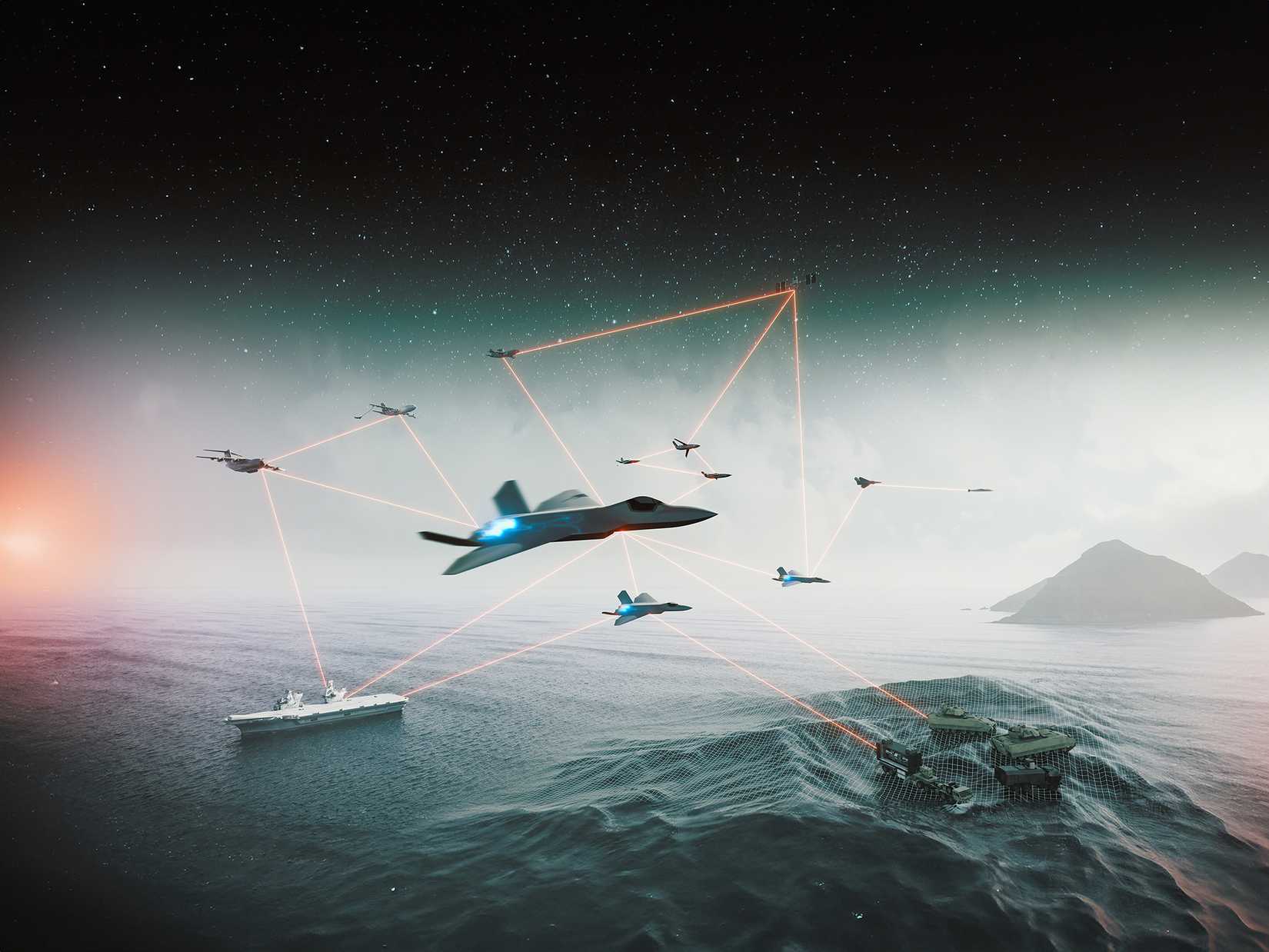
The broader operational transition underway underscores how thermal management has become a systemic constraint in next-generation military aviation design, with implications that extend into the discussion of sixth-generation aircraft programs. US Marine Corps Harrier retirement in 2026 and Italian Navy phase-out by 2028 mark the near-complete handover to F-35B in Western STOVL roles, with Spain remaining an outlier by sustaining its AV-8B fleet into the 2030s without a declared replacement. For aviation engineers and operators working on advanced propulsion platforms — including those in the business and commercial sectors grappling with thermal certification challenges in new turbofan and hybrid-electric architectures — the F-35B program represents a useful case study in how distributed propulsion and active thermal management can expand the performance envelope when concentrated-exhaust legacy designs have reached their ceiling. The dependency on Rolls-Royce as the sole contractor for critical LiftSystem components also reflects a supply chain concentration risk that defense planners and procurement officers continue to monitor as production and sustainment demands grow across the expanding F-35B operator base in the US, UK, Italy, and Japan.







 Read original article