Big Mistake? The Airline That Had To Redesign Its Loyalty Program Months After Overhauling It
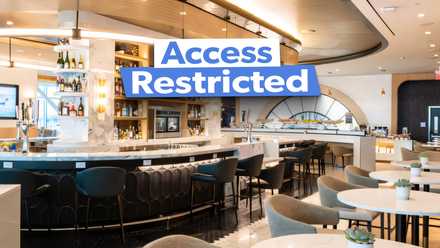
Delta Air Lines' September 2023 overhaul of its SkyMiles program represented one of the most aggressive restructurings of a major airline loyalty program in recent memory, replacing a system that rewarded flight activity with one almost entirely driven by credit card and ancillary spending. Under the revised structure, elite Medallion status was no longer achievable primarily through flying volume or fare class; instead, Medallion Qualification Dollars became the singular metric, demanding that passengers spend between $5,000 and $28,000 annually — figures that, after the partial rollback, were reduced from the initially proposed $6,000 to $35,000 range. Sky Club lounge access, long treated as a cornerstone benefit for frequent travelers, was simultaneously restricted or capped for a wide range of cardholders, including those holding premium Amex Platinum products. Delta CEO Ed Bastian publicly acknowledged the airline moved too aggressively, telling the Rotary Club of Atlanta that leadership wanted to "rip the Band-Aid off," but the resulting customer defection forced a partial retreat that nonetheless preserved the program's fundamental philosophical shift away from flight-based accrual.
For professional airline pilots and regional carrier crews, the SkyMiles restructuring carries direct practical significance beyond the experience of their passengers. Many line pilots who commute to base or deadhead on partner carriers have historically leveraged personal miles accumulation as an informal benefit of high-frequency flying, and the shift to a spend-based model effectively decouples that value from seat time. A first officer commuting twice weekly on a Delta or partner flight accrues meaningful flight segments but may spend little relative to a leisure traveler charging luxury goods through an Amex portal — the new system rewards the latter far more generously. Additionally, Sky Club access restrictions directly affect pilots using SkyClub memberships during layovers or commutes, a population that frequently relies on these facilities for rest, meals, and workspace during extended ground time.
For corporate flight department operators and Part 91K/135 charter professionals, the Delta SkyMiles situation illuminates a broader strategic tension relevant to their own travel planning and client service conversations. Business aviation passengers frequently cross between private and commercial travel, and many high-net-worth individuals who charter also hold airline elite status as a hedge for commercial legs. The Delta overhaul — and the industry commentary it triggered — has accelerated skepticism about whether legacy airline loyalty programs retain meaningful value for heavy travelers, a sentiment that business aviation operators can leverage when positioning the economics of charter or fractional ownership against the diminishing returns of airline status chasing. When The Points Guy publicly declared that elite status "just isn't worth the effort and cost," that editorial reflects a sentiment increasingly common among exactly the traveler demographic that overlaps with business aviation's core clientele.
The Delta episode also reflects a structural challenge facing all three major U.S. network carriers as their loyalty programs have become enormous profit centers, in some cases more profitable than the flying operation itself. Delta, American, and United have all used co-branded credit card revenue — which runs into billions of dollars annually through agreements with Amex, Citi, and Chase respectively — as a primary financial stabilizer, particularly through the COVID-19 contraction. That financial dependency has created pressure to funnel status rewards toward credit card spending rather than flying, because card revenue is more predictable and margin-rich than ticket sales. The consequence, as Delta's rollback demonstrated, is that elite travelers who built status through genuine flight loyalty now occupy a structurally less valued position in the airline's revenue model, a shift that has no obvious reversal point as long as co-branded card agreements remain the dominant loyalty financing mechanism.
Looking ahead to 2026 and beyond, the partial nature of Delta's rollback suggests the industry should expect continued incremental tightening of loyalty benefits rather than a return to mileage-run culture. Dynamic award pricing — which the article notes remains a persistent frustration even post-rollback — makes it increasingly difficult for any category of traveler, including professional pilots personally navigating the commercial travel ecosystem, to extract predictable value from accumulated points balances. For aviation operators advising frequent-flying clients or managing their own corporate travel spend, the practical takeaway is that loyalty program value optimization now requires active monitoring and multi-program diversification rather than single-carrier allegiance. The Delta SkyMiles episode serves as a high-profile case study in what happens when an airline miscalibrates how aggressively it can restructure a program that its most profitable customers have treated as a long-term investment.








 Read original article